Salado Creek
The name 'Salado' might suggest something about the water, but the creek's true nature is a surprising contradiction.
Full story unlocks in the tour
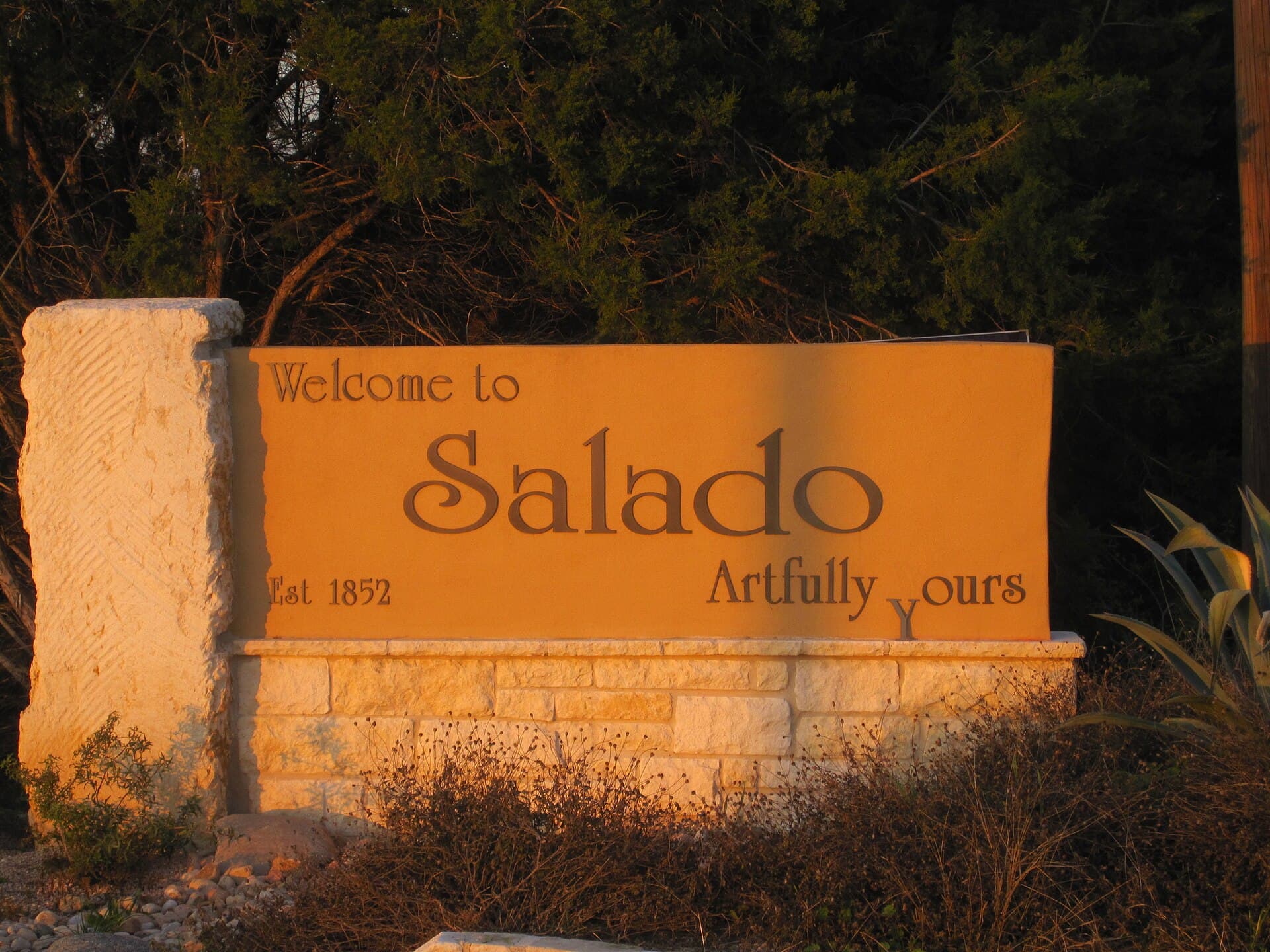 Billy Hathorn / CC BY-SA 3.0, via Wikimedia Commons
Self-guided audio walking tour of Salado — GPS route, offline playback, story-driven narration in 32 languages.
“Where Texas history flows with spring-fed creeks and artistic spirit.”
Not the postcards. The stories even locals don't know — whispered in your ear, right where they happened.
The name 'Salado' might suggest something about the water, but the creek's true nature is a surprising contradiction.
This pioneering educational institution was ahead of its time in more ways than one, but its ambitious start was met with a fiery end.
Before it was a renowned hotel and restaurant, this historic building welcomed some of the most legendary — and notorious — figures of the American West.
Discover every secret of Salado
Every address, every reveal in full — in your ear, right where it happened.
You pick your stops. You walk. The voice reveals what the others miss.
Your self-guided audio tour of Salado is ready — pick your landmarks, choose your language, and start the moment you arrive.
BuySalado, Texas, is a village where the past and present intertwine along the banks of a spring-fed creek. Situated between Austin and Waco, this Central Texas destination offers a unique blend of historical charm, a thriving arts scene, and natural beauty. From its origins as an ancient Native American settlement to its role as a pivotal stop on the Chisholm Trail, Salado invites visitors to explore its storied past and engaging contemporary culture.
Main Street, lined with 19th-century limestone buildings, serves as the heart of Salado, bustling with unique boutiques, art galleries, and inviting restaurants. Beyond the shops, the village offers opportunities for outdoor enjoyment along Salado Creek, recognized as the first Natural Landmark in Texas. Whether you're seeking a leisurely stroll, a treasure hunt through antique stores, or an immersion in local history, Salado provides a distinctive and enriching experience.
The area now known as Salado has been a significant site for thousands of years, first recognized by Paleo-Indian tribes and later the Tawakoni Indians for its abundant springs. The Tawakoni called it Salado Springs, a term meaning 'salty' in their language, likely referring to the taste of sulfur springs in the area. Spanish explorers, such as Juan Antonio Bustillo y Ceballos in 1732, also noted the springs during their westward travels.
The first permanent Anglo-American settler, Archibald Willingham, arrived in 1850, and by 1852, a post office was established, marking Salado as a well-known stage stop. The formal founding of Salado occurred on October 8, 1859, coinciding with the establishment of Salado College. Colonel E.S.C. Robertson donated 100 acres of land for the college and town lots, with the sale of these lots funding the college's construction. Salado College was groundbreaking, being the first in Texas to operate without state or church funds and notably, it was co-educational.
From 1866 to 1885, Salado became an integral part of the Chisholm Trail, with thousands of cattle being driven directly down Main Street. The Stagecoach Inn, built in 1852, served as a crucial stop for travelers and drovers, hosting notable figures like Sam Houston and Jesse James. In 1867, Salado briefly incorporated to fund a bridge across Salado Creek, but this formal government was short-lived. By the early 1880s, Salado thrived with a population of nearly 1,000, supporting numerous churches, stores, hotels, and mills along Salado Creek. However, the town's prosperity began to wane when the railroads bypassed Salado, drawing trade and population to nearby railheads like Temple and Belton.
The early 20th century saw Salado's population dwindle, but a revitalization began in the 1940s, fueled by the growing fame of the Stagecoach Inn's dining room. The founding of the Central Texas Area Museum (now Salado Museum and College Park) in 1959 and new residential developments further spurred growth. In 1966, Salado Creek was recognized as the first Natural Landmark in Texas, highlighting its enduring natural significance. Over time, the renovation of historic buildings and the establishment of new businesses transformed Salado into a destination known for its antique shops, specialty stores, and artistic community. Despite its long history, Salado operated without a formal city government for over 130 years, finally reincorporating in 2000 to prevent annexation by Belton, ensuring its continued independent spirit.
Salado offers a diverse range of attractions, blending history, art, and nature. Begin your exploration on Main Street, where 19th-century limestone buildings house a collection of boutiques, art galleries, and antique shops. Don't miss the Salado Sculpture Garden, an outdoor art space showcasing various works.
Delve into the village's past at the Salado Museum and College Park, where exhibits detail Salado's pioneer history and the stabilized ruins of the pioneering Salado College stand. The Stagecoach Inn, a Texas Historical Landmark and one of the oldest continuously operating hotels in Texas, offers a glimpse into its storied past, having hosted historical figures and serving as a key stop on the Chisholm Trail.
For nature enthusiasts, Salado Creek, the first designated Natural Landmark in Texas, provides a peaceful retreat for wading, wildlife viewing, or simply relaxing under the trees. Pace Park along the creek offers a chance to see wagon wheel ruts carved into the limestone from the Chisholm Trail. You can also experience local craftsmanship at Salado Glassworks, where you can create your own art piece, or enjoy a craft brew at Barrow Brewing Company by the creek.
The best times to visit Salado are during the spring (March to May) and fall (September to November), when the weather is mild and pleasant, with average temperatures ranging from 64°F to 84°F. These seasons offer comfortable conditions for exploring the village's outdoor attractions and enjoying local events. Summers (June to September) can be hot and humid, with average daily highs around 95°F, making late May to mid-September ideal for hot-weather activities like swimming. Salado also hosts various annual events throughout the year, including the Wildflower Arts & Crafts Festival in March, the Salado Springs Beer Festival in June, and the popular Salado Christmas Stroll in December.
Salado is conveniently located off Interstate 35, approximately halfway between Austin and Waco. While the historic Main Street is walkable, a car is recommended for exploring attractions outside the immediate downtown area and for reaching nearby natural sites. The village offers a range of accommodations, including charming bed and breakfasts, historic inns like the Stagecoach Inn, and modern hotels. Dining options range from casual eateries to fine dining, with many establishments featuring local Texas comfort food. For more detailed visitor information, including a list of historical sites and upcoming events, consult the Salado Historical Society and the Village of Salado websites.
Salado in Korean, in Chinese or in Hebrew — and 29 more languages, every stop narrated by a native voice. The widest language range of any self-guided audio tour.
Available in: