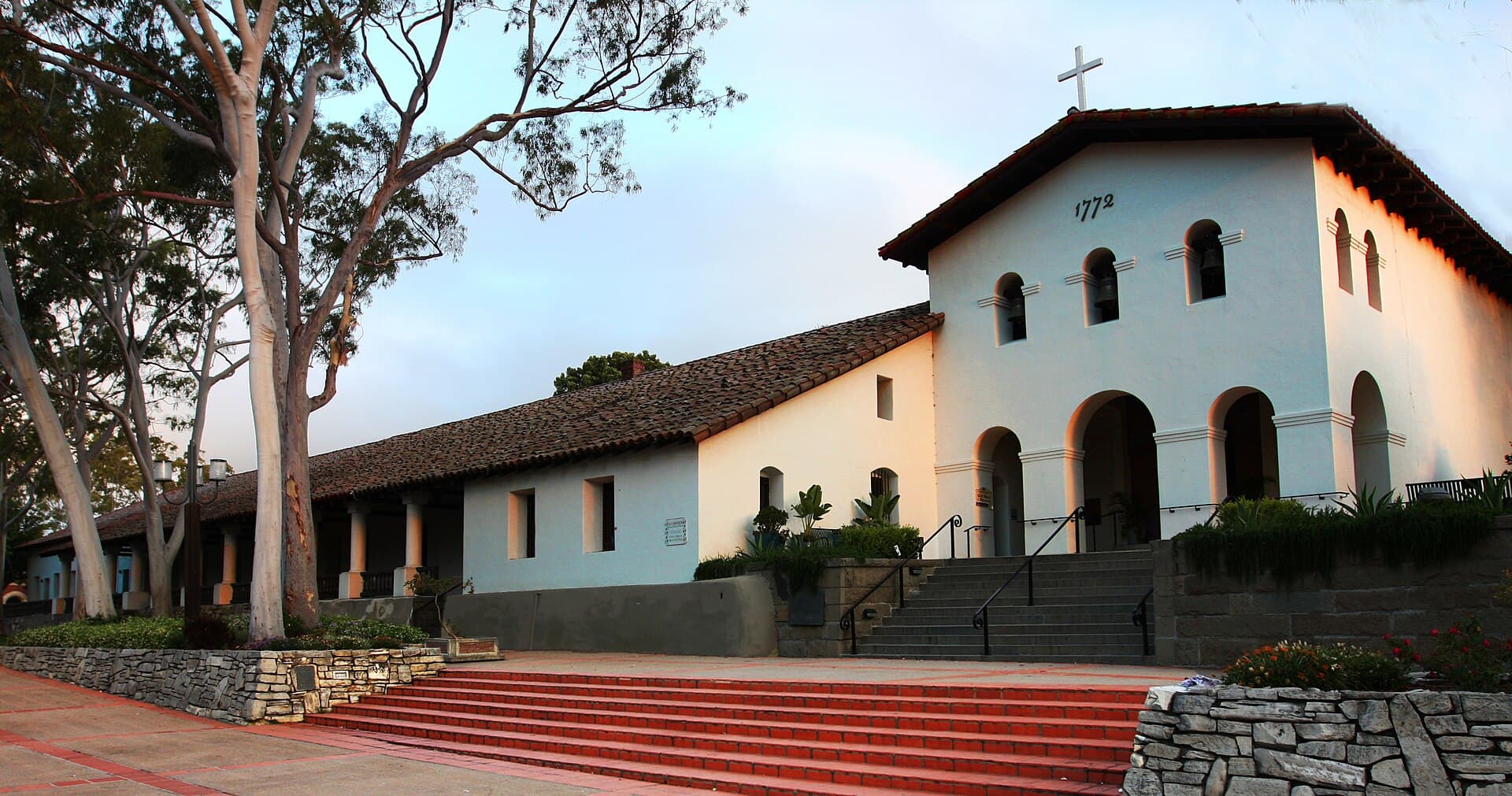
Missione San Luis Obispo de Tolosa
Il design distintivo a forma di L della missione è più di una curiosità architettonica.
La storia completa si sblocca nel tour
 Rennett Stowe / CC BY 2.0, via Wikimedia Commons
Tour audio autoguidato di San Luis Obispo — percorso GPS a piedi, riproduzione offline, narrazione coinvolgente in 32 lingue.
“Dove colline baciate dal sole accolgono una città di missioni, vicoli stravaganti e cieli aperti.”
Non le cartoline. Le storie che nemmeno i locali conoscono — sussurrate nel tuo orecchio, proprio dove sono accadute.
Il design distintivo a forma di L della missione è più di una curiosità architettonica.
Questo vivido vicolo si erge come un monumento appiccicoso ed evolutivo alle rivalità locali.
Questo teatro in stile Streamline Moderne accolse un tempo luminari di Hollywood e facilitò la vendita di buoni di guerra.
Scopri ogni segreto di San Luis Obispo
Ogni indirizzo, ogni rivelazione completa — nel tuo orecchio, proprio dove è accaduta.
Scegli le tue tappe. Cammini. La voce rivela ciò che gli altri perdono.
Il tuo tour audio autoguidato di San Luis Obispo è pronto — scegli i tuoi punti di interesse, seleziona la tua lingua e inizia nel momento in cui arrivi.
AcquistaLume include una guida in realtà aumentata. Alza il telefono: la fotocamera mostra la strada davanti a te, con una freccia luminosa sovrapposta all'immagine reale che punta sempre verso la tua prossima tappa — nessuna mappa da decifrare, nessuna svolta sbagliata. Come tutto in Lume, funziona completamente offline.
San Luis Obispo, affettuosamente conosciuta come SLO, adorna la Central Coast della California, posizionata quasi precisamente tra le aree urbane di San Francisco e Los Angeles. Si estende lungo il dolce corso del San Luis Obispo Creek, adagiata ai piedi delle Montagne di Santa Lucia. La città è riconosciuta per la sua architettura duratura, le verdi distese dei suoi vigneti e come sede accademica della California Polytechnic State University (Cal Poly).
Con una popolazione che si avvicina ai 47.550 abitanti, San Luis Obispo presenta un mix di fascino rilassato e vivace attività. Il fascino della città deriva dal suo equilibrio, offrendo un'atmosfera tranquilla e allo stesso tempo fornendo uno spettro di eventi comunitari, spazi verdi e un variegato panorama culinario. Serve come destinazione preferita per le gite del fine settimana, con opportunità di esplorare le vicine coste come Pismo e Avila, e grandi tenute come Hearst Castle.
Il territorio ora conosciuto come San Luis Obispo fu abitato dal popolo Chumash per millenni. La narrazione moderna della città iniziò il 1° settembre 1772, quando Padre Junípero Serra fondò la Missione San Luis Obispo de Tolosa, la quinta nella catena californiana di 21 missioni spagnole. La missione, chiamata così in onore di San Luigi, Vescovo di Tolosa, Francia, deteneva un'importanza strategica grazie alla sua posizione intermedia tra San Diego e Monterey lungo lo storico El Camino Real. La valle fu inizialmente battezzata “La Cañada de los Osos” o “Valle degli Orsi” dalla spedizione di Gaspar de Portolá nel 1769, a causa degli abbondanti orsi grizzly, che in seguito divennero una fonte di cibo vitale per le missioni.
La vita nel primo insediamento ruotava attorno alla missione, con un'economia basata sull'agricoltura di sussistenza, coltivando colture come grano, mais e legumi. Anche l'allevamento di bestiame divenne un pilastro economico significativo, con pelli e sego (grasso fuso per candele) che fungevano da principali fonti di reddito e commercio. Nel 1776, un incendio, appiccato da una freccia infuocata di un nativo americano, danneggiò gravemente le strutture della missione, spingendo i padri a iniziare a produrre localmente tegole resistenti al fuoco. Dopo l'indipendenza del Messico dalla Spagna all'inizio del 1800, San Luis Obispo divenne parte della provincia messicana dell'Alta California. Nel 1845, il Governatore Pío Pico vendette la missione al Capitano John Wilson. Dopo la guerra messicano-americana, la California si unì agli Stati Uniti nel 1850 e la Contea di San Luis Obispo fu istituita come una delle 27 contee originali. La città fu formalmente incorporata nel 1856.
Nell'era americana iniziale, la regione si guadagnò una reputazione di illegalità, conosciuta come “Barrio del Tigre” o “Tiger-Town”. Tuttavia, la città si espanse come centro per l'allevamento e l'agricoltura. L'avvento delle ferrovie alla fine del 1800, con la Southern Pacific Railroad che raggiunse la città nel 1894, accelerò significativamente il commercio, il turismo e la crescita della popolazione. Il San Luis Obispo Railroad Museum, ospitato in un Freighthouse della Southern Pacific del 1894, preserva questo aspetto cruciale del passato della città. Oggi, San Luis Obispo continua la sua evoluzione, bilanciando le sue fondamenta storiche con lo sviluppo contemporaneo e una comunità dinamica.
Inizia la tua esplorazione dalla Missione San Luis Obispo de Tolosa, il segnale storico centrale della città. Fondata nel 1772, la sua distintiva chiesa a forma di L e i giardini tranquilli offrono uno spaccato del passato coloniale della California. Nelle vicinanze, scopri Bubblegum Alley, un vicolo unico e colorato dove i visitatori hanno lasciato gomme da masticare sui muri per decenni, creando un'opera d'arte comunitaria in continua evoluzione.
Per un tocco di fascino vintage, visita il Fremont Theater, uno storico cinema in stile Streamline Moderne costruito nel 1942. Ora serve principalmente come sala da concerto, ma il suo stile architettonico e la sua storia meritano apprezzamento. Il San Luis Obispo Railroad Museum, situato in un Freighthouse della Southern Pacific del 1894, illustra la storia ferroviaria della regione con mostre, reperti e un plastico ferroviario.
Oltre a questi punti di riferimento, esplora i diversi stili architettonici in tutta la città, dal Revival Spagnolo e bungalow Craftsman alle residenze vittoriane nel quartiere storico delle ferrovie. Il Dallidet Adobe & Gardens, costruito a metà del 1850, offre uno sguardo sulla vita della prima California e sull'industria vinicola locale. Per panorami mozzafiato, sali sul Cerro San Luis, noto anche come Madonna Mountain.
San Luis Obispo gode di un clima piacevole tutto l'anno, rendendola una destinazione invitante in ogni stagione. Per attività all'aperto con clima caldo, il momento più opportuno per visitarla va da fine giugno a fine settembre, quando le temperature medie giornaliere massime superano i 24°C. Agosto registra tipicamente il mese più caldo, con una media massima di 26°C. La primavera (marzo-maggio) porta temperature miti, che vanno da 13°C a 18°C, insieme a fiori selvatici in fiore, perfetti per escursioni e attività all'aperto. L'autunno (settembre-novembre) offre anch'esso condizioni piacevoli, con temperature comprese tra 16°C e 21°C, ideali per la degustazione di vini e l'esplorazione di sentieri. Sebbene l'inverno (dicembre-febbraio) sia più fresco e presenti una maggiore probabilità di pioggia, offre un'esperienza più tranquilla per attività al chiuso come la visita a musei e gallerie.
San Luis Obispo si trova lungo la Highway 101, a distanza quasi uguale da San Francisco e Los Angeles, garantendo un facile accesso in auto. La città stessa è molto percorribile a piedi, in particolare il centro, permettendo ai visitatori di esplorare molte attrazioni a piedi. Sono disponibili opzioni di trasporto pubblico per spostarsi in città e raggiungere le comunità vicine. Per chi arriva in aereo, l'Aeroporto Regionale della Contea di San Luis Obispo (SBP) offre voli regionali. Le sistemazioni spaziano da hotel storici a opzioni contemporanee, per soddisfare diverse preferenze e budget. Le esperienze culinarie sono diverse, con scelte che vanno da caffè locali a ristoranti raffinati, completate da una fiorente regione vinicola a Edna Valley. Considera la partecipazione a eventi locali come il Downtown SLO Farmers' Market, che si tiene ogni giovedì sera, o la serie Concerts in the Plaza durante i mesi estivi.
San Luis Obispo — coreano, cinese, ebraico e altre 29 lingue, ogni tappa narrata da una voce madrelingua. La più ampia scelta di lingue tra i tour audio autoguidati.
Disponibile in: