Le Port
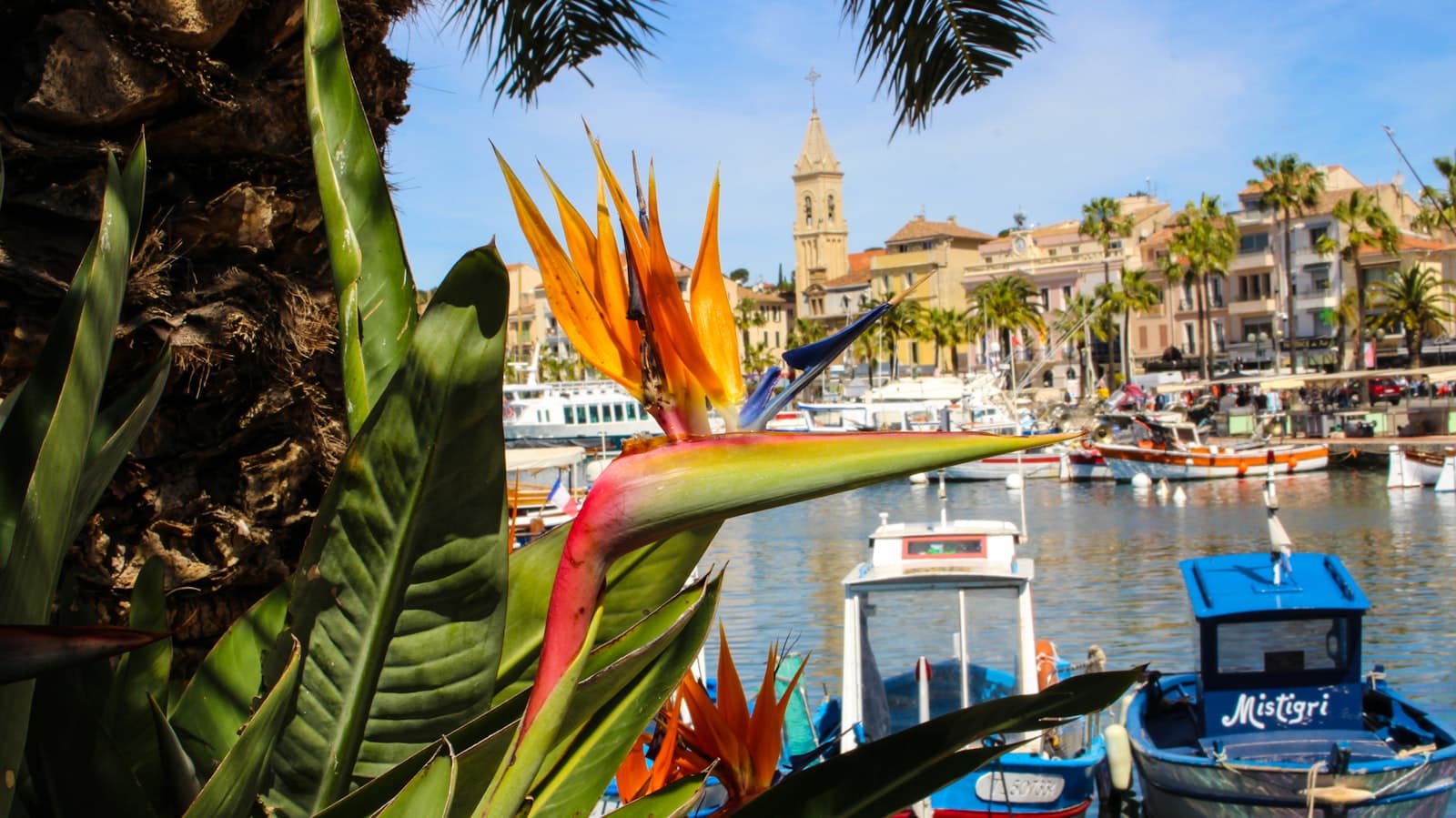
Les barques de pêche colorées, appelées 'pointus', qui bordent le port, sont un symbole de Sanary-sur-Mer.
L'histoire complète se débloque dans le tour
 Binabik155 / CC BY-SA 3.0, via Wikimedia Commons
Visite audio autoguidée de Sanary-sur-Mer — parcours GPS à pied, lecture hors ligne, narration en 32 langues.
“Là où les eaux azur rencontrent le charme provençal et des histoires inédites.”
Pas les cartes postales. Les histoires que même les habitants ignorent — soufflées à l'oreille, là où elles se sont passées.
Les barques de pêche colorées, appelées 'pointus', qui bordent le port, sont un symbole de Sanary-sur-Mer.
Sanary-sur-Mer revendique un lien unique avec l'invention de la plongée sous-marine moderne.
Élu 'Plus Beau Marché de France' en 2018, le marché du mercredi de Sanary est un spectacle vivant.
Découvrez tous les secrets de Sanary-sur-Mer
Chaque adresse, chaque révélation en entier — dans ton oreille, là où elle s'est passée.
Tu choisis tes lieux. Tu marches. La voix te révèle ce que les autres ignorent.


Votre visite audioguidée de Sanary-sur-Mer vous attend — choisissez vos lieux, votre langue, et lancez-vous dès votre arrivée.
AcheterLume intègre un guide en réalité augmentée. Levez votre téléphone : sa caméra montre la rue devant vous, avec une flèche lumineuse posée sur l'image réelle qui pointe toujours vers votre prochain arrêt — aucune carte à déchiffrer, aucun mauvais virage. Comme tout dans Lume, ça fonctionne entièrement hors-ligne.
Sanary-sur-Mer, une ville provençale captivante sur la côte méditerranéenne, offre un mélange de caractère authentique de village de pêcheurs et d'ambiance de station balnéaire décontractée. Située dans le département du Var, à environ 13 kilomètres à l'ouest de Toulon et 49 kilomètres au sud-est de Marseille, c'est une destination qui invite à l'exploration tranquille. La ville est célébrée pour son port évocateur, où les bateaux de pêche traditionnels, appelés 'pointus', peints de couleurs vives, créent une scène animée sur fond de bâtiments aux teintes pastel et de palmiers ondulants.
Sanary-sur-Mer est plus qu'un joli visage ; c'est une communauté active toute l'année, contrairement à de nombreuses petites villes côtières. Avec un climat exceptionnel offrant une moyenne de seulement 61 jours de pluie par an et un ensoleillement abondant comparable à celui de la Sicile, c'est une destination attrayante en toute saison. Les rues piétonnes de la ville, ses cafés accueillants et ses marchés réputés contribuent à une expérience provençale par excellence, ce qui en fait un favori parmi ceux qui recherchent un goût authentique du Sud de la France.
De son marché quotidien animé à son rôle significatif dans l'histoire de la plongée sous-marine, Sanary-sur-Mer révèle des couches d'intrigues culturelles et historiques. Que vous soyez attiré par son patrimoine maritime, l'attrait de ses produits locaux ou simplement la tranquillité de ses plages, Sanary-sur-Mer offre une évasion unique et mémorable.
L'histoire de Sanary-sur-Mer remonte au Moyen Âge, avec des traces d'occupation grecque et romaine trouvées dans et autour de la région. Initialement connue sous le nom de Gobran, un monastère dédié à Saint Nazaire fut établi vers le XIIe siècle, d'où le nom de la ville, 'Sant Nazari' en dialecte provençal, a progressivement évolué. Le port naturel stratégique, protégé des vents forts comme le Mistral, a attiré les marins bien avant l'établissement d'un port majeur.
Au XIIIe siècle, une tour de guet médiévale, la Tour Romane, fut construite pour défendre la côte contre les raids de pirates et les Sarrasins, offrant un sentiment de sécurité qui encouragea l'établissement plus près de la mer. Le village de pêcheurs commença à prendre véritablement forme au début du XVIe siècle, alors que des familles s'installaient près de cette tour protectrice et que le port était construit et approfondi pour faciliter le commerce.
Un moment charnière survint le 10 juillet 1688, lorsque le Roi Louis XIV accorda à Sanary-sur-Mer son indépendance de la commune voisine d'Ollioules. Cette autonomie retrouvée permit aux habitants de construire leur propre église paroissiale et de gérer les revenus du port, déclenchant une expansion active autour du port. La ville reçut officiellement son nom français, 'Sanary', le 12 novembre 1890, avec 'sur-Mer' ajouté le 27 juillet 1923, pour souligner son attrait balnéaire et stimuler le tourisme.
La période entre les deux guerres mondiales vit Sanary-sur-Mer devenir un refuge inattendu pour les intellectuels et artistes allemands et autrichiens fuyant le régime nazi. Des figures telles que Thomas Mann, Aldous Huxley, Bertolt Brecht et Lion Feuchtwanger trouvèrent refuge ici, conduisant Ludwig Marcuse à la surnommer en plaisantant la 'capitale de la littérature allemande en exil'. Cet afflux d'esprits créatifs ajouta une couche culturelle unique au paisible village de pêcheurs.
Sanary-sur-Mer détient une autre distinction historique significative en tant que berceau de la plongée sous-marine moderne. C'est ici que Jacques Cousteau, avec ses partenaires Frédéric Dumas et Philippe Tailliez, développa et testa le premier Aqua-Lung (scaphandre autonome) en 1943. Cette invention révolutionnaire transforma l'exploration sous-marine et cimenta la place de Sanary dans l'histoire maritime. Le Musée International de la Plongée Frédéric Dumas, abrité dans la tour médiévale, commémore cet héritage avec une collection d'équipements et d'artefacts de plongée. Aujourd'hui, Sanary-sur-Mer perpétue ses traditions maritimes, avec des pêcheurs locaux qui vendent toujours leur pêche quotidienne directement depuis leurs bateaux au port.
Commencez votre exploration au Port, un centre animé où les 'pointus' traditionnels, certains reconnus comme monuments historiques, flottent sur l'eau. Promenez-vous le long des quais, observant les pêcheurs vendre leur pêche fraîche. Juste derrière le port, la Tour Romane, une tour de guet médiévale du XIIIe siècle, offre des vues panoramiques sur la ville et la baie depuis son sommet. À l'intérieur, vous trouverez le Musée International de la Plongée Frédéric Dumas, qui met en valeur le rôle central de la ville dans l'invention de la plongée sous-marine moderne.
L'Église Saint Nazaire, une église de style néo-gothique de la fin du XIXe siècle, est remarquable pour ses vastes fresques liturgiques d'inspiration chrétienne orthodoxe qui ornent presque tous les murs et plafonds. Pour une évasion tranquille, visitez la Chapelle Notre-Dame-de-Pitié, construite en 1560 sur un promontoire à l'ouest de la ville, offrant des vues imprenables sur la baie de Sanary et une collection d'ex-voto. Les rues étroites de la ville sont un plaisir à parcourir, remplies de boutiques, de galeries d'art et de cafés. Sanary-sur-Mer offre également plusieurs plages, dont la populaire plage de sable de Portissol, connue pour ses eaux claires et ses fonds marins exceptionnels, et les plus grandes plages du Lido et de la Plage Dorée, idéales pour les familles.
Sanary-sur-Mer bénéficie d'un climat méditerranéen doux, ce qui en fait une destination attrayante toute l'année. Les étés sont chauds et secs, avec des maximales quotidiennes moyennes supérieures à 24°C de juin à septembre, atteignant un pic à 28°C en juillet et août. Cette période est idéale pour les activités de plage, bien qu'elle puisse être très fréquentée par les touristes. Le printemps et l'automne offrent des températures confortables pour les promenades et les excursions, avec des moyennes allant de 10°C en mars à 20°C en septembre. Les précipitations sont minimes en été, juillet étant le mois le plus sec, et légèrement plus élevées en octobre et novembre. Pour une visite plus tranquille, envisagez mai, juin ou septembre pour éviter les foules de juillet et août.
Sanary-sur-Mer est une ville agréable à explorer à pied, parfaite pour la marche. Pour vous rendre dans les villes voisines comme Toulon ou Bandol, des bus locaux sont disponibles. Des taxis peuvent être réservés à l'avance, surtout en haute saison. Louer une voiture est utile pour une exploration plus large de la Provence, mais sachez que le stationnement dans le centre-ville peut être difficile, en particulier en été. La monnaie officielle est l'Euro (EUR), et les cartes de crédit et de débit sont largement acceptées dans la plupart des établissements. Des distributeurs automatiques de billets sont facilement accessibles. Le français est la langue locale. La plupart des magasins et entreprises sont ouverts de 8h ou 9h à 18h30 ou 19h30, du lundi au samedi pour les grands magasins, et du mardi au samedi pour les plus petits, avec certains commerces alimentaires ouverts le dimanche matin. Pour les activités de plongée, un certificat médical peut être requis pour la formation ou l'exploration, mais pas pour les baptêmes de plongée.
Sanary-sur-Mer en coréen, en chinois ou en hébreu — et dans 29 autres langues, chaque étape narrée par une voix native. La plus large gamme de langues de tous les audioguides autoguidés.
Disponible en :