Sonoma Barracks
Questo edificio in adobe, un tempo roccaforte militare, ebbe una sorprendente seconda vita che coinvolse i bachi da seta.
La storia completa si sblocca nel tour
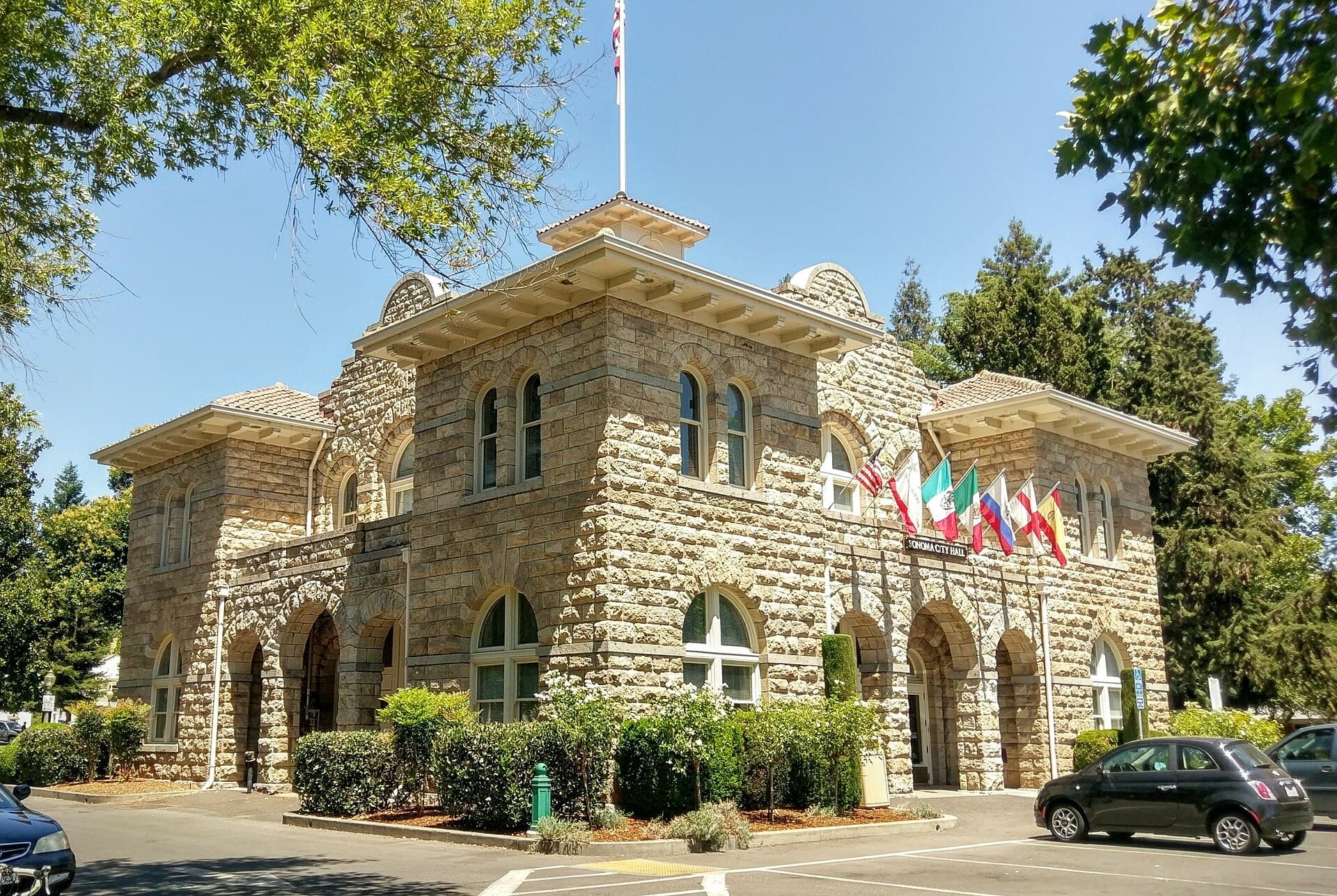 Cullen328 / CC BY-SA 3.0, via Wikimedia Commons
Tour audio autoguidato di Sonoma — percorso GPS a piedi, riproduzione offline, narrazione coinvolgente in 32 lingue.
“Oltre le vigne, scopri il passato stratificato e il presente vivace di Sonoma.”
Non le cartoline. Le storie che nemmeno i locali conoscono — sussurrate nel tuo orecchio, proprio dove sono accadute.
Questo edificio in adobe, un tempo roccaforte militare, ebbe una sorprendente seconda vita che coinvolse i bachi da seta.
La piazza più grande della California non è sempre stata solo per passeggiate e eventi; ha svolto un ruolo chiave in una repubblica di breve durata.
L'ultima delle 21 missioni della California detiene una distinzione unica riguardo alla sua fondazione.
Scopri ogni segreto di Sonoma
Ogni indirizzo, ogni rivelazione completa — nel tuo orecchio, proprio dove è accaduta.
Scegli le tue tappe. Cammini. La voce rivela ciò che gli altri perdono.

Il tuo tour audio autoguidato di Sonoma è pronto — scegli i tuoi punti di interesse, seleziona la tua lingua e inizia nel momento in cui arrivi.
AcquistaLume include una guida in realtà aumentata. Alza il telefono: la fotocamera mostra la strada davanti a te, con una freccia luminosa sovrapposta all'immagine reale che punta sempre verso la tua prossima tappa — nessuna mappa da decifrare, nessuna svolta sbagliata. Come tutto in Lume, funziona completamente offline.
Sonoma, California, è un luogo dove storia, viticoltura e un ritmo rilassato convergono. A circa 45 miglia a nord di San Francisco, la città si trova nella Sonoma Valley, lunga 17 miglia, essa stessa parte della più grande Sonoma County. La regione è celebrata a livello mondiale per i suoi vini, un'eredità che risale all'inizio del XIX secolo. Eppure, Sonoma offre più di un semplice assaggio delle sue rinomate annate; è una destinazione che invita all'esplorazione della sua storica piazza cittadina, della sua diversificata scena culinaria e dei suoi paesaggi naturali panoramici.
La città di Sonoma crebbe attorno alla Mission San Francisco Solano, fondata nel 1823, e fu ulteriormente plasmata dal Generale Mariano Guadalupe Vallejo, che sviluppò il pueblo circostante. Oggi, la centrale Sonoma Plaza, la più grande della California, rimane un punto focale, ospitando eventi e offrendo uno spazio ombreggiato ai visitatori. Oltre la piazza, la più ampia Sonoma Valley e la Contea presentano opportunità per attività all'aperto, dall'escursionismo tra le sequoie all'esplorazione della costa.
Per almeno 12.000 anni prima dell'arrivo degli europei, la Sonoma Valley fu la dimora di popoli indigeni, tra cui i Pomo-Kashaya, i Wapo e i Patwin. L'influenza europea iniziò a plasmare l'area all'inizio del XIX secolo. Nel 1823, Padre José Altimira fondò la Mission San Francisco Solano, la 21ª e ultima missione californiana, e l'unica fondata sotto il Messico indipendente. La fondazione della missione era in parte intesa a scoraggiare l'espansione russa dal loro avamposto a Fort Ross.
Dopo la secolarizzazione delle missioni nel 1834, lo statista Californio Generale Mariano Guadalupe Vallejo fondò il Pueblo di Sonoma sulle ex terre della missione nel 1835. Vallejo, che era stato comandante del Presidio di San Francisco, trasferì la sua guarnigione a Sonoma, rendendola il quartier generale della frontiera provinciale messicana del nord. Supervisionò lo sviluppo della città attorno alla piazza, ponendo le basi per la sua economia agricola, in particolare la coltivazione dell'uva e la produzione di vino.
Il ruolo di Sonoma nella transizione della California verso lo stato è significativo. Nel giugno 1846, un gruppo di immigrati americani, desiderosi di stabilire la propria Repubblica Californiana, sequestrò il Pueblo di Sonoma in quella che divenne nota come la Rivolta della Bandiera dell'Orso. Alzò una bandiera raffigurante un orso e una stella nella Sonoma Plaza, e le Sonoma Barracks, costruite da Vallejo per ospitare soldati messicani, divennero il quartier generale di questa effimera insurrezione. Solo 23 giorni dopo, nel luglio 1846, la bandiera degli Stati Uniti fu issata nelle caserme, segnalando la fine della Repubblica Californiana e l'inizio del periodo territoriale americano della California.
Dopo che la California divenne uno stato nel 1850, Sonoma fu inizialmente incorporata come città. Tuttavia, il Generale Vallejo la fece successivamente sciogliere nel 1862, una mossa che avvantaggiò proprietari terrieri come lui. Sonoma fu nuovamente incorporata come città nel 1883. Le Sonoma Barracks continuarono a servire vari scopi, ospitando forze statunitensi fino al 1852, e in seguito furono utilizzate da Vallejo come cantina. Oggi, le Sonoma Barracks e la Mission San Francisco Solano fanno parte del Sonoma State Historic Park, preservando questi siti cruciali per i visitatori.
Inizia la tua esplorazione dalla Sonoma Plaza, la più grande piazza cittadina del suo genere in California. Questo ampio parco ombreggiato da alberi è circondato da storici edifici in adobe che raccontano la storia della prima California. Nell'angolo nord-est della piazza, troverai la Mission San Francisco Solano, l'ultima delle missioni californiane, che offre uno sguardo sul patrimonio spagnolo e messicano della regione. Adiacente alla Missione ci sono le Sonoma Barracks, una struttura in adobe a due piani che servì come quartiere militare e quartier generale della Rivolta della Bandiera dell'Orso. Le caserme ospitano ora mostre e un documentario sulla storia di Sonoma.
Per gli appassionati d'arte, Sonoma offre diverse gallerie, tra cui la Lori Austin Gallery Sonoma e la FLOWER + HEWES Art Gallery, che espongono arte americana e internazionale contemporanea, oltre a opere di artisti californiani. L'Arts Guild of Sonoma presenta anche artisti locali. Oltre il centro città, considera una visita al Jack London State Historic Park per escursioni e storia, o esplora le sequoie costiere all'Armstrong Redwoods State Natural Reserve. Per attività per famiglie, il TrainTown Amusement Park offre giri in trenino in miniatura e il Safari West offre un'esperienza di safari africano a Santa Rosa.
Sonoma offre un'esperienza piacevole tutto l'anno, grazie al suo clima mediterraneo con estati calde. La stagione calda, da inizio giugno a metà ottobre, porta temperature medie giornaliere massime superiori a 25°C, con luglio come mese più caldo. Questo periodo, in particolare settembre e ottobre, è l'alta stagione turistica, che coincide con la vendemmia e il vivace fogliame autunnale. La primavera (aprile-maggio) è anche altamente raccomandata, con temperature confortevoli tra i 15°C e i 20°C, paesaggi verdi e meno folla. L'inverno (dicembre-febbraio) è il periodo più tranquillo e piovoso, con temperature miti tra i 10°C e i 15°C, offrendo l'opportunità per esperienze più intime nelle cantine.
Sonoma è facilmente raggiungibile in auto, a breve distanza in auto a nord di San Francisco. Sebbene ci sia un aeroporto regionale (Charles M. Schulz Sonoma County Airport, STS), volare a Sacramento può talvolta essere un'opzione più economica. Un'auto è generalmente consigliata per esplorare la più ampia Sonoma Valley e Contea. Le opzioni di alloggio vanno da hotel di lusso e resort a incantevoli bed and breakfast e locande. Le scelte popolari includono l'El Dorado Hotel, il MacArthur Place Hotel & Spa e The Lodge at Sonoma. Per coloro che cercano di esplorare oltre la degustazione di vini, considera escursioni al Sonoma Valley Regional Park o al Jack London State Park, o visite alla costa. Molte cantine sono anche adatte alle famiglie, offrendo attività come il bocce e aree picnic.
Sonoma — coreano, cinese, ebraico e altre 29 lingue, ogni tappa narrata da una voce madrelingua. La più ampia scelta di lingue tra i tour audio autoguidati.
Disponibile in: