The Clock Tower
The hourly chime of Tende's clock tower has a deep history.
Full story unlocks in the tour
 Mark Fischer / CC BY-SA 2.0, via Wikimedia Commons
Self-guided audio walking tour of Tende — GPS route, offline playback, story-driven narration in 32 languages.
“Where alpine ruggedness meets Italian flair, a village carved from green stone.”
Not the postcards. The stories even locals don't know — whispered in your ear, right where they happened.
The hourly chime of Tende's clock tower has a deep history.
Observe the facades and doorways to discern a distinct local signature.
Even the menu at a local eatery can narrate Tende's complex identity.
Discover every secret of Tende
Every address, every reveal in full — in your ear, right where it happened.
You pick your stops. You walk. The voice reveals what the others miss.


Your self-guided audio tour of Tende is ready — pick your landmarks, choose your language, and start the moment you arrive.
BuyLume has a built-in augmented-reality guide. Hold your phone up and its camera shows the street ahead of you, with a glowing arrow laid over the real view that always points to your next stop — no map to puzzle over, no wrong turns. Like everything in Lume, it works fully offline.
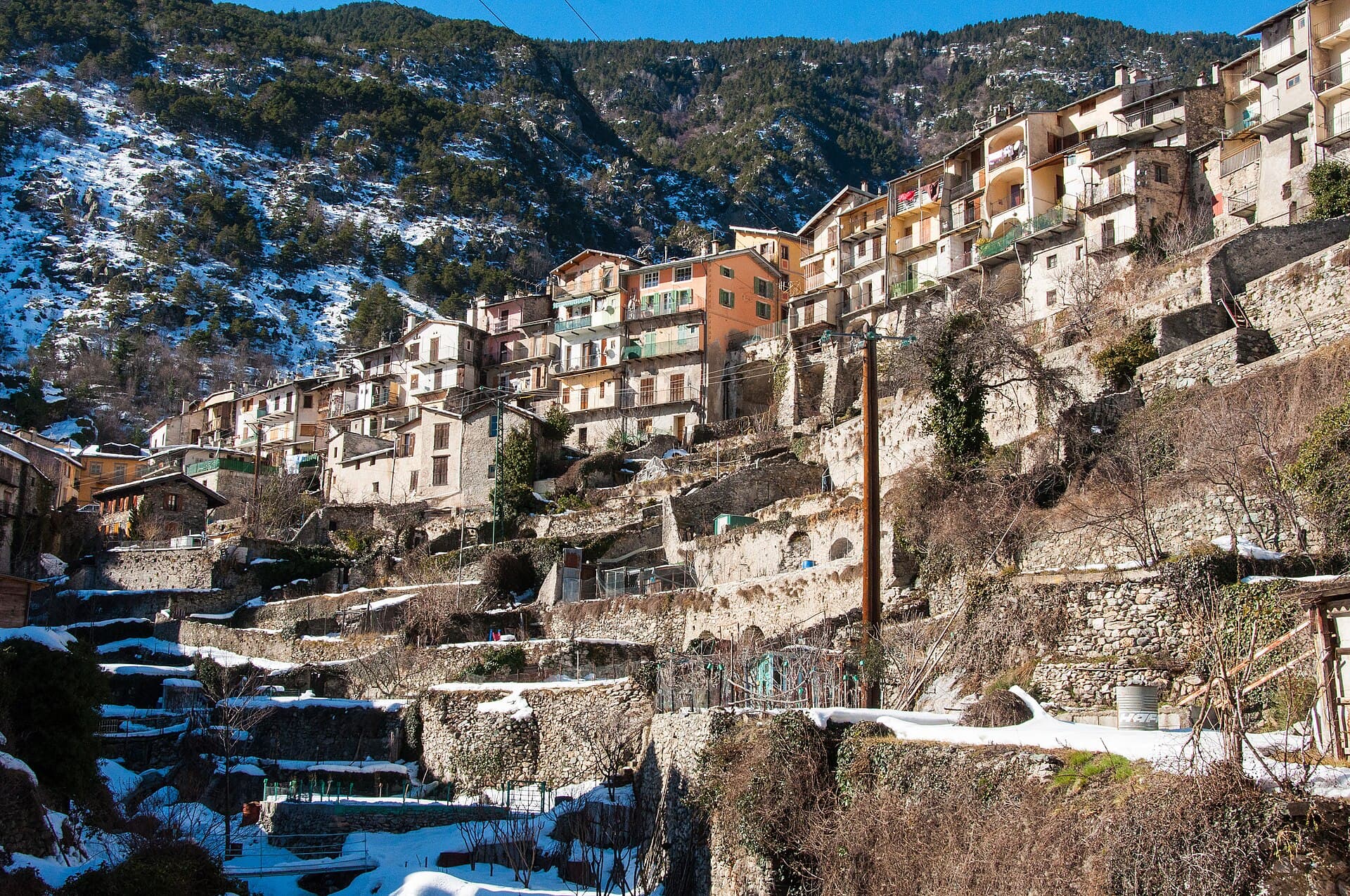
Tende, a commune within the Alpes-Maritimes department of southeastern France, is a captivating village in the Roya Valley. At an altitude of 800 meters, it stands as the final French stop before the Italian Piedmont, imbuing it with a singular blend of French and Italian influences in its architecture, cuisine, and local dialect. The village is dramatically situated, resembling an amphitheater overlooking the Roya River, with tall houses and slate roofs appearing to overlap one another. It serves as an entry point to the Mercantour National Park and the Vallée des Merveilles, offering a blend of cultural discovery and outdoor adventure.
With a population of approximately 1,775 as of 2023, Tende retains its medieval layout, characterized by narrow streets, vaulted passages, and stone bridges. The village invites exploration on foot, with its winding alleys, intimate squares, and ancient doorways revealing layers of history. From its green marble accents to the trompe-l'oeil facades, Tende offers a visual narrative of its past and the people who have shaped it.
Tende's history is a complex narrative woven from centuries of shifting allegiances between Provence, Savoy, France, and Italy. Known as a populated place since 690, the exact origins of its organized settlement remain unclear, though prehistoric rock engravings in the surrounding area suggest ancient human presence. In the 10th century, it was part of the County of Ventimiglia, later passing to the Counts of Provence and then the Counts of Lascaris of Ventimiglia. The Lascaris counts, strategically positioned at the Col de Tende, maintained a degree of independence, leveraging the pass as an important route for the salt trade between Nice and Turin.
In 1581, Tende was acquired by the House of Savoy, further cementing its Italian ties. A significant turning point came in 1860 when, despite a plebiscite indicating popular demand, Tende and nearby La Brigue were excluded from the reunion with France and remained with Italy. It wasn't until after World War II, in 1947, that Tende was definitively ceded to France, a decision endorsed by a local referendum. This relatively recent integration into France explains the strong Italian influences still evident in the village's architecture, cuisine, and local dialect, Tendasque.
Throughout its history, Tende has been a fortified town, guarding a crucial pass into the Piedmont region. The remains of the 14th-century Château des Lascaris, largely destroyed in 1692 by order of King Louis XIV, stand as a testament to its strategic importance. The village's medieval layout, with streets running parallel to the slope and connected by perpendicular alleys, reflects its long and varied past. Renaissance and Baroque architectural features, along with the ubiquitous green marble, recount the story of the Tendasque community.
Begin your exploration in the old village, an amphitheater of houses overlooking the Roya Valley. Wander through the narrow, winding streets, vaulted passages, and small squares, admiring the stone bridges and ancient doorways. Observe the trompe-l'oeil motifs painted on some facades, adding an artistic touch to the historic buildings.
Dominating the center is the Collégiale Notre-Dame de l'Assomption, a 15th-century church with a striking Baroque facade. Its Renaissance gateway, crafted from local green marble, features carvings of Christ and the twelve apostles. Inside, you'll find a collection of ancient items and a decorative blue ceiling. Nearby, the 13th-century Eglise Saint Michel also displays a Baroque style with an unusual glass window.
Ascend the steep path to the remains of the Château Lascaris, where a single spire of the 14th-century castle still stands, offering wide views of the town and surrounding mountains. Adjacent to the ruins is the cemetery, providing a poignant perspective. For a deeper dive into the region's ancient past, visit the Musée des Merveilles. This museum houses original and replica rock engravings from the nearby Vallée des Merveilles, dating back to the Copper and Bronze Ages. You can also explore the Maison du Mercantour to learn about the national park's biodiversity.
The ideal time to visit Tende for pleasant weather is from May through October. During these months, temperatures are generally agreeable, and rainfall is moderate, making it suitable for exploring the village and engaging in outdoor activities. July and August offer the warmest conditions, with daytime highs around 28°C. August is also a good time to experience local festivals. Winters are cold, with freezing nights, and snowfall is common, making it suitable for winter sports in nearby areas.
Tende is located approximately 80 kilometers inland from the French Riviera. The easiest way to reach the town is by following the picturesque Roya Valley north from Sospel. While the historic center is best explored on foot due to its narrow, winding streets, parking is available near the main road (RD 6204). The village offers various facilities along its main street. For tourist information, the Tende tourist office can provide details on local events and activities. Many locals speak Tendasque, a Ligurian dialect with Provençal influences, in addition to French. Be aware that some information about local sites may primarily be in French.
Tende in Korean, in Chinese or in Hebrew — and 29 more languages, every stop narrated by a native voice. The widest language range of any self-guided audio tour.
Available in: