Heshun Ancient Town
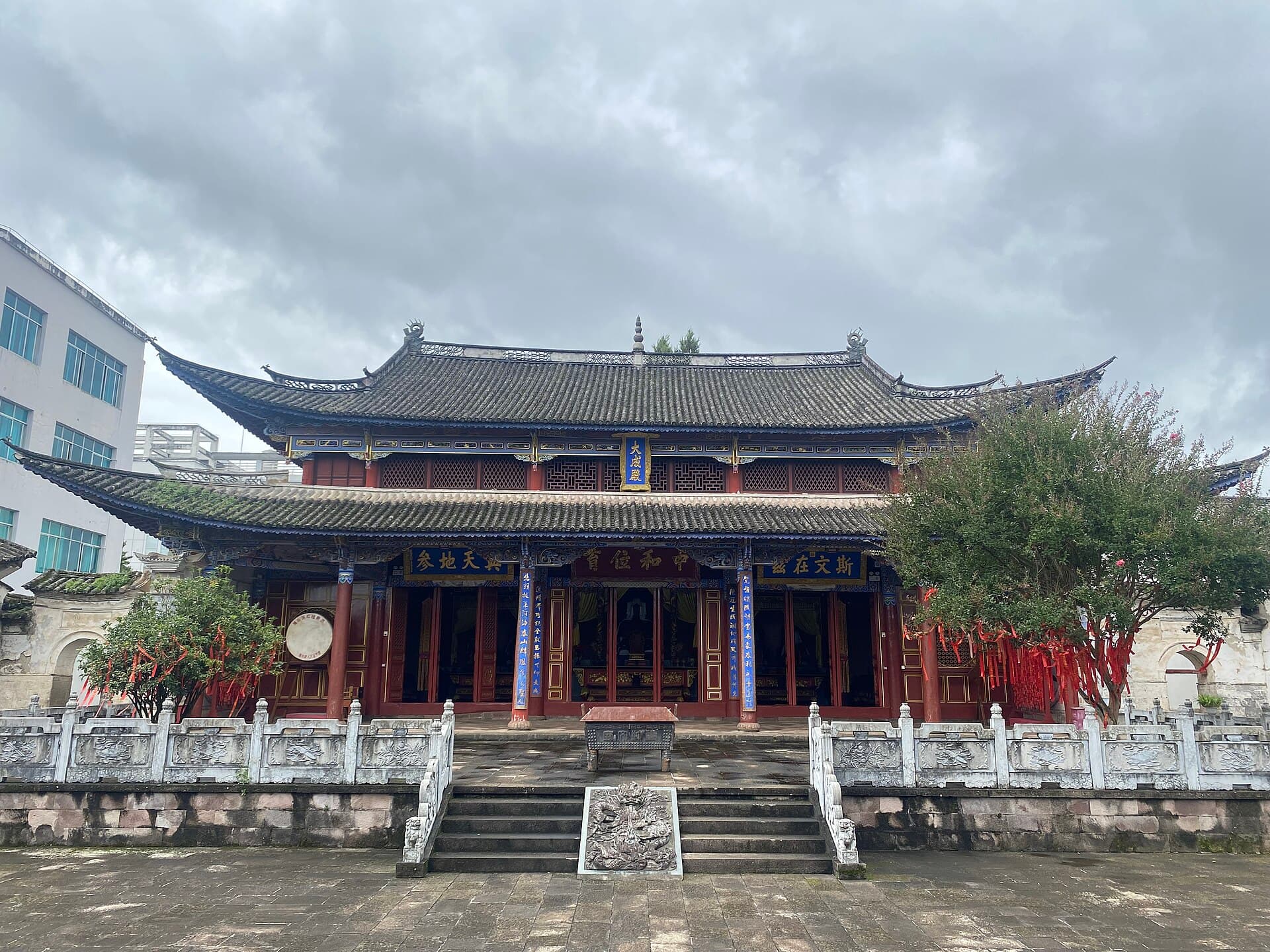
Beyond its serene courtyards and traditional architecture, Heshun guards a secret about its literary past.
Full story unlocks in the tour
 瑞丽江的河水 / CC BY-SA 4.0, via Wikimedia Commons
Self-guided audio walking tour of Tengchong — GPS route, offline playback, story-driven narration in 32 languages.
“Where volcanic earth meets ancient trade routes and golden ginkgos fall.”
Not the postcards. The stories even locals don't know — whispered in your ear, right where they happened.
Beyond its serene courtyards and traditional architecture, Heshun guards a secret about its literary past.
The steamy landscape of Rehai offers more than just relaxation; it provides a distinctive culinary experience.
During a pivotal World War II battle, the ancient defenses of Tengchong faced an unexpected assault.
Discover every secret of Tengchong
Every address, every reveal in full — in your ear, right where it happened.
You pick your stops. You walk. The voice reveals what the others miss.


Your self-guided audio tour of Tengchong is ready — pick your landmarks, choose your language, and start the moment you arrive.
BuyLume has a built-in augmented-reality guide. Hold your phone up and its camera shows the street ahead of you, with a glowing arrow laid over the real view that always points to your next stop — no map to puzzle over, no wrong turns. Like everything in Lume, it works fully offline.
Tengchong, a county-level city in Yunnan, Southwest China, rests near the border with Myanmar, a region defined by its dramatic volcanic landscape and deep historical roots. Known for its numerous volcanoes and abundant hot springs, Tengchong offers a singular blend of geological wonders and cultural depth. The city's identity has been shaped by its strategic position on ancient trade routes, connecting China with Southeast Asia and India for centuries.
Referred to as a "natural volcanic geology museum," Tengchong experiences a mild subtropical highland climate, ensuring comfortable travel throughout much of the year. While popular with domestic tourists, it remains a less-traveled path for international visitors, offering an authentic glimpse into a corner of China that is both wild and culturally significant. From the golden hues of its ginkgo forests in autumn to the therapeutic steam of its geothermal fields, Tengchong invites exploration beyond the familiar tourist trails.
This region is not only a geological marvel but also a confluence of cultures, home to nearly half of China's 55 ethnic minority groups, contributing to its varied cuisine and traditions. Its history, marked by its role on the Southern Silk Road and as a strategic point during World War II, adds layers of intrigue to its natural beauty.
The history of Tengchong, once known as Tengyue, stretches back to the Western Han Dynasty (206 BC – 24 AD), when it was part of the Yizhou Commandery. From its earliest mentions, the city's development was intrinsically linked to its strategic location on vital trade routes. It served as a crucial hub on the Southern Silk Road, connecting China with India and Southeast Asia, facilitating the exchange of silk, tea, spices, and precious stones.
Over the centuries, Tengchong solidified its reputation as the primary center for processing and trading Burmese jade, earning it the moniker "Jade Capital." Local artisans were renowned for their carving skills, and the jade business continues to be a part of the city's economy today. The city's unique geographical position, often more connected to Burma (modern-day Myanmar) than to central China due to mountains and rivers, fostered a distinct cultural atmosphere.
In the 19th and early 20th centuries, Tengchong's international significance grew, becoming a key point in trade between China and British Burma, evidenced by the establishment of a British Consulate in 1921. However, its most poignant historical chapter unfolded during the Second Sino-Japanese War (1937–1945). Tengchong became a strategic point on the Burma Road, a critical supply route for the Allies.
In May 1942, Japanese troops occupied the city, halting supplies via the Burma Road and initiating a period of fierce battles. The city's liberation in September 1944 by the Chinese Expeditionary Force, after a bloody 51-day siege, marked a significant moment in the China-Burma-India theater of World War II. A museum and a major war cemetery in Tengchong now commemorate this difficult period.
In more recent times, infrastructure improvements, including a modern motorway with a large suspension bridge and a new airport, have further opened Tengchong to the outside world, transforming it into a popular tourist destination.
Tengchong offers a diverse array of attractions, blending natural wonders with cultural sites. The Tengchong Volcanic Geological Park displays a unique volcanic landscape with around 90 volcanic cones, 22 of which have intact craters. Visitors can climb Dakong Mountain for crater views or take a hot air balloon ride for a panoramic perspective. Adjacent to the volcanic park is the Rehai (Hot Sea) Scenic Area, a geothermal wonderland with over 80 hot springs, some reaching temperatures of over 90°C. Here, you can witness the famous 'Big Boiling Pot' and even cook eggs in its steaming waters.
For a journey into the past, Heshun Ancient Town is a compelling destination. This 600-year-old overseas Chinese hometown features traditional architecture, tranquil courtyards, and China's earliest rural library. Stroll along its century-old vegetable street and absorb the serene atmosphere. Another seasonal highlight is Ginkgo Village (Jiangdong Village), particularly enchanting from mid-November to early December when its thousands of ginkgo trees turn a brilliant golden hue, creating a fairytale-like landscape. The village is home to over 30,000 ginkgo trees, with some over a thousand years old.
The Dianmian Anti-Japan War Museum and the nearby National Martyrs' Cemetery offer a poignant look into Tengchong's crucial role in World War II. For nature enthusiasts, the Beihai Wetland is a national wetland park spanning two volcanogenic lakes, ideal for birdwatching, especially in winter.
Tengchong experiences a mild subtropical highland climate, making it a comfortable destination almost year-round. The city avoids extreme heat or severe frosts, with average annual temperatures around 15-18°C. Summers (June to August) are warm and rainy, often overcast, with August averaging around 20.3°C. This period is ideal for appreciating wetlands and waterfalls. Spring (March to May) is relatively dry and sunny, with an uptick in rainfall towards May. Autumn (September to November) sees a reduction in rainfall and a return to sunny conditions. The best time to witness the golden ginkgo leaves in Ginkgo Village is from mid-November to early December. Winters are mild, very dry, and sunny, with January lows barely above freezing. Layering clothing is recommended due to noticeable temperature changes throughout the day.
Tengchong Tuofeng Airport (TCZ) offers flights, with connections often made through Kunming or Baoshan. Once in Tengchong, buses are available for intercity travel and to major attractions like the Volcano Cluster and Rehai Geothermal Field. Taxis are also an option. While popular with Chinese tourists, English information and English-speaking staff can be limited in hotels, so a translation app or basic Mandarin phrases may be helpful.
Local cuisine is a highlight, with dishes often featuring a medium sour and spicy profile and unique local ingredients. Specialties to try include Dajiujia (fried rice cakes with ham, egg, and vegetables), Ersi noodles (made from a special local rice), Pine Pollen Cake, and Jar Chicken. Tengchong is also known for its local tea, handcrafted pottery, silver jewelry, and herbal products, making for interesting souvenirs. When visiting hot springs, be mindful of the high temperatures of some sources and follow local guidelines.
Tengchong in Korean, in Chinese or in Hebrew — and 29 more languages, every stop narrated by a native voice. The widest language range of any self-guided audio tour.
Available in: