Alquézar's 'Callizos'
Some of Alquézar's narrow, covered alleys hold a secret about how residents once navigated the village.
Full story unlocks in the tour
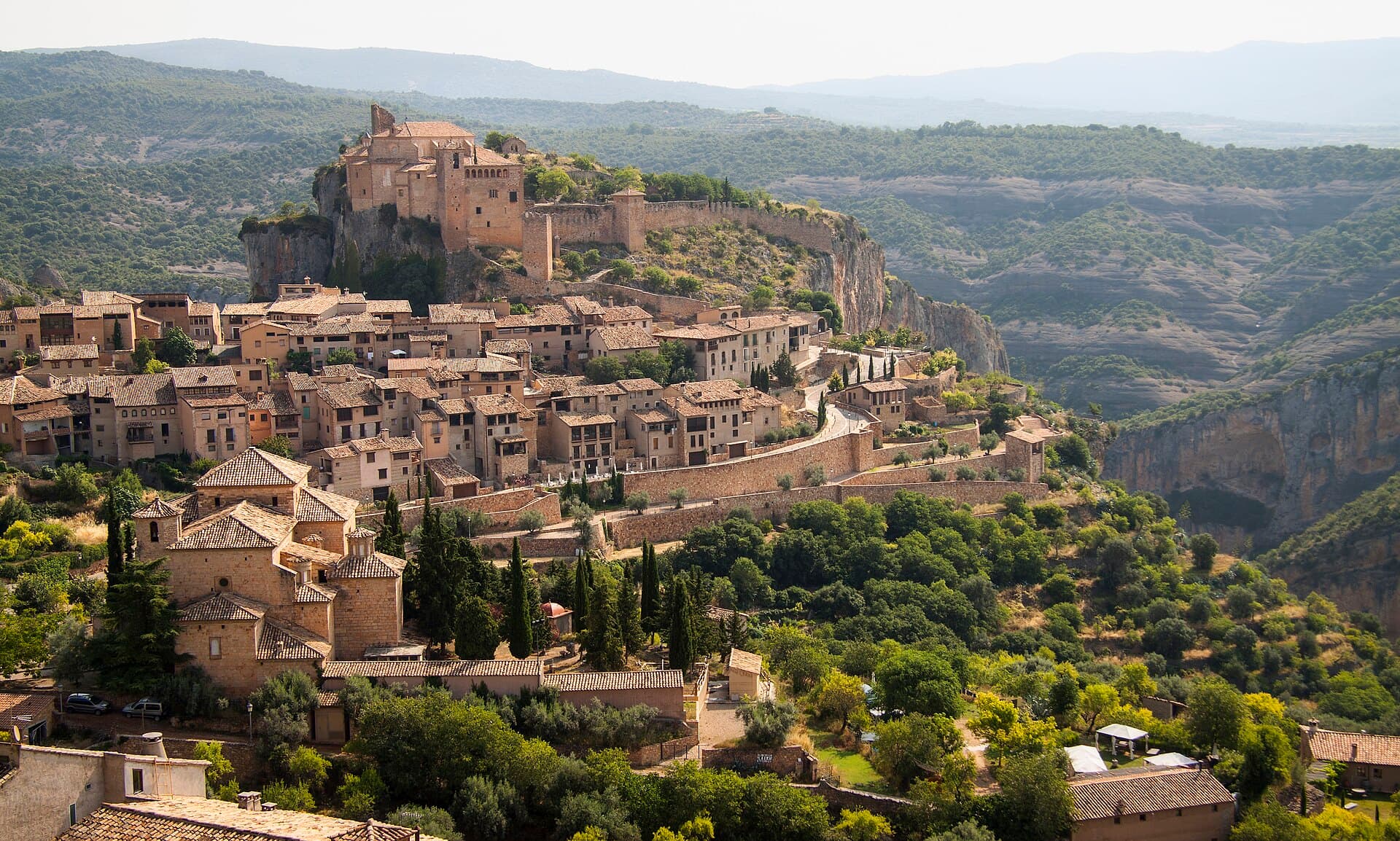 Mikipons / CC BY-SA 3.0 es, via Wikimedia Commons
Self-guided audio walking tour of Alquézar — GPS route, offline playback, story-driven narration in 32 languages.
“Where ancient stone meets wild canyons.”
Not the postcards. The stories even locals don't know — whispered in your ear, right where they happened.
Some of Alquézar's narrow, covered alleys hold a secret about how residents once navigated the village.
Look closely above some older doorways in Alquézar, and you might spot a peculiar charm believed to ward off evil.
The cloister of the Collegiate Church of Santa María la Mayor holds a unique artistic distinction within Aragon.
Discover every secret of Alquézar
Every address, every reveal in full — in your ear, right where it happened.
You pick your stops. You walk. The voice reveals what the others miss.


Your self-guided audio tour of Alquézar is ready — pick your landmarks, choose your language, and start the moment you arrive.
BuyLume has a built-in augmented-reality guide. Hold your phone up and its camera shows the street ahead of you, with a glowing arrow laid over the real view that always points to your next stop — no map to puzzle over, no wrong turns. Like everything in Lume, it works fully offline.
Alquézar, a medieval fortified town with a 1,200-year existence, stands on a hilltop at the edge of the Vero River in the Sierra y Cañones de Guara Natural Park. This small municipality in the Somontano de Barbastro region is recognized as one of Spain's most beautiful villages, a distinction it has held since 2015. In 2022, the World Tourism Organization (UNWTO) further honored Alquézar as one of the 'Best Tourism Villages of the World,' acknowledging its commitment to sustainable tourism and cultural heritage preservation.
The village’s stone houses, crafted from local materials like stone, clay, and wood, blend into the landscape. Its winding streets and alleys retain a distinct medieval character. Alquézar offers a blend of historical allure and natural attractions, making it a destination for those interested in history, outdoor activities, and local gastronomy.
## From Al-Qasr to Collegiate Church Alquézar’s origins trace back to the 9th century as an Arab castle, a defensive stronghold known as 'al-qasr,' meaning 'fortress.' It was strategically positioned on a steep rock to protect Barbastro from Christian forces.
King Sancho Ramírez of Aragon conquered Alquézar in 1064, incorporating it into the Kingdom of Aragon. Following the Christian reconquest, the fortress was transformed into a monastery and later a collegiate church. The Collegiate Church of Santa María la Mayor, consecrated in 1099, stands on the site of these former Arab fortifications. Over centuries, the structure evolved, incorporating Romanesque, Gothic, and Baroque elements. Its 13th-century cloister, with a trapezium-shaped floor plan, features six capitals depicting stories from the Book of Genesis. The cloister also contains frescoes illustrating biblical scenes and the lives of saints.
Throughout the 11th and 12th centuries, kings like Sancho Ramírez and Alfonso the Battler played crucial roles in Alquézar's development, granting it a charter and privileges that contributed to its economic prosperity. The village's medieval layout, with its narrow passageways, stone arches, and steep staircases, has remained largely unchanged, earning it the designation of a Historic-Artistic Site in 1982. This recognition has aided in the preservation and restoration of its architectural elements, including gateways, walls, cisterns, and communal ovens. Alquézar's commitment to preserving its authenticity has made it a model for rural heritage conservation in Spain.
Begin your exploration in the Plaza Mayor, also known as Rafael Ayerbe square. This arcaded space was historically a center for merchants and artisans, and today offers a place to observe local life.
The Collegiate Church of Santa María la Mayor is Alquézar's most iconic monument. Built on the site of a 9th-century Arab castle, its interior features a Romanesque cloister with frescoes, a Gothic church, a main altarpiece, and a Baroque organ. From its exterior courtyard and battlements, you can survey the Vero River canyon.
For a glimpse into traditional rural life in the Somontano region, visit the Casa Fabián Ethnological Museum, a preserved house with antique objects and furniture.
Alquézar is a gateway to the Sierra y Cañones de Guara Natural Park. A popular route is the Vero River walkways (Pasarelas del Vero), a three-kilometer path that takes you through the canyon, offering views of rock formations and the river. The area also holds prehistoric rock art sites, declared a UNESCO World Heritage Site, which can be explored through guided tours.
Seek out the Sonrisa del Viento viewpoint for views of the village and the Vero River canyon. It features a sculpture by Gabriel, a smile-shaped hole through which the wind blows, giving the viewpoint its name.
Alquézar experiences a Spanish continental climate, with warm, mostly clear summers and cold, partly cloudy winters. The warm season, with daily highs above 76°F (24°C), lasts from June to September, with July being the hottest month, averaging 83°F (28°C). The cool season, with daily highs below 55°F (13°C), runs from November to March, and January is the coldest month, with an average low of 32°F (0°C).
For warm-weather activities like canyoning and swimming, early July to mid-August is ideal. Spring (April, May, June) offers lush greenery and blooming flowers, while autumn (until late October) provides excellent hiking weather. Even in winter, sunny days are common, making it pleasant for hikes.
Alquézar is located 48 kilometers from Huesca and can be reached by car via the A-22. From Zaragoza, it's 123 kilometers via the E-7/A-23, and from Barcelona, 249 kilometers via the A-2. While it's possible to drive through the village, a free car park is available at the entrance.
The village has a permanent population of around 150 residents, with some small shops and a bakery open year-round. More restaurants, terraces, and shops are open during weekends and holidays, especially in summer. Alquézar is a popular starting point for canyoning, rock climbing, and mountain biking, with several local companies offering guided tours and equipment. The region is also known for its Somontano wines, and bodega visits are highly recommended.
Alquézar in Korean, in Chinese or in Hebrew — and 29 more languages, every stop narrated by a native voice. The widest language range of any self-guided audio tour.
Available in: