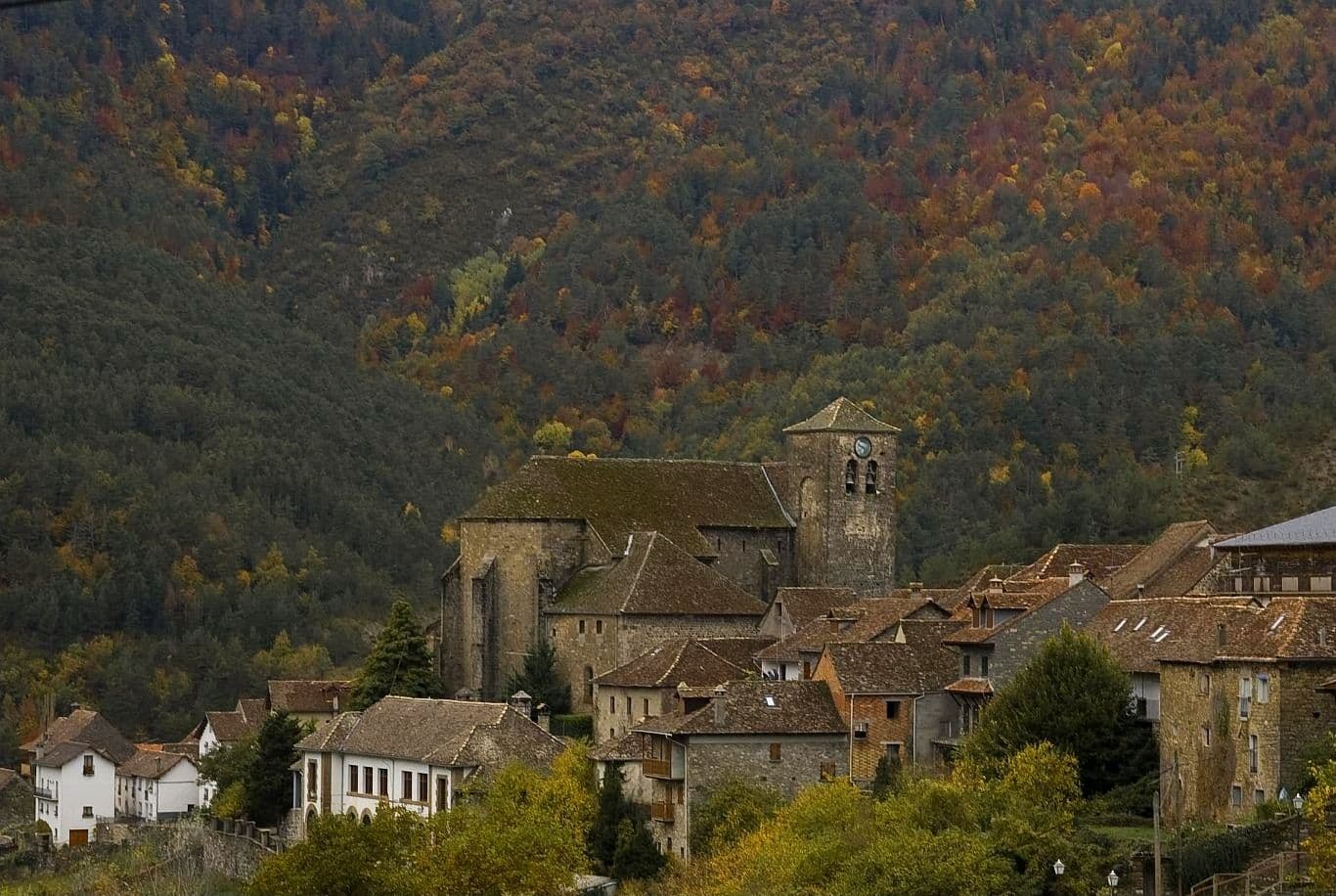
La Tour Médiévale
Cette tour du XVIe siècle, une structure emblématique d'Ansó, aurait abrité une prisonnière royale.
L'histoire complète se débloque dans le tour
 rjime31 / CC BY-SA 2.0, via Wikimedia Commons
Visite audio autoguidée de Ansó — parcours GPS à pied, lecture hors ligne, narration en 32 langues.
“Là où les traditions ancestrales et les sommets pyrénéens convergent.”
Pas les cartes postales. Les histoires que même les habitants ignorent — soufflées à l'oreille, là où elles se sont passées.
Cette tour du XVIe siècle, une structure emblématique d'Ansó, aurait abrité une prisonnière royale.
Chaque mois d'août, le village entier se transforme en un tableau vivant, exposant une extraordinaire collection de vêtements.
Promenez-vous dans les rues étroites d'Ansó et vous remarquerez d'étranges passages d'un demi-mètre de large entre les maisons.
Découvrez tous les secrets de Ansó
Chaque adresse, chaque révélation en entier — dans ton oreille, là où elle s'est passée.
Tu choisis tes lieux. Tu marches. La voix te révèle ce que les autres ignorent.

Votre visite audioguidée de Ansó vous attend — choisissez vos lieux, votre langue, et lancez-vous dès votre arrivée.
AcheterLume intègre un guide en réalité augmentée. Levez votre téléphone : sa caméra montre la rue devant vous, avec une flèche lumineuse posée sur l'image réelle qui pointe toujours vers votre prochain arrêt — aucune carte à déchiffrer, aucun mauvais virage. Comme tout dans Lume, ça fonctionne entièrement hors-ligne.
Ansó, un village niché dans les Pyrénées espagnoles, est un lieu où le temps semble s'attarder, préservant avec soin un héritage profond au milieu d'un environnement naturel saisissant. Reconnu comme Site Historique et Artistique, et membre de l'association des 'Plus Beaux Villages d'Espagne', Ansó attire les visiteurs par son architecture médiévale bien conservée et ses traditions profondément enracinées. Positionné au cœur des Pyrénées aragonaises, près des frontières avec la Navarre et la France, Ansó offre une fenêtre sur un mode de vie façonné par sa situation frontalière et les montagnes environnantes.
Les maisons en pierre du village, avec leurs toits à pignon caractéristiques, bordent les chemins, invitant à une exploration tranquille. Au-delà de son attrait architectural, Ansó sert de porte d'entrée au Parc Naturel des Vallées Occidentales, une zone d'une biodiversité exceptionnelle et un sanctuaire pour ceux qui apprécient le monde naturel. Cette fusion de préservation culturelle et de splendeur naturelle a fait d'Ansó une source d'inspiration pour les artistes, les écrivains et les anthropologues pendant des siècles.
Les origines d'Ansó remontent au XIIIe siècle, son cœur urbain reflétant des siècles d'existence pyrénéenne. Sa position stratégique, bordant à la fois la France et la Navarre, a conféré au village une importance considérable en tant que territoire frontalier. Pendant des siècles, Ansó a bénéficié de privilèges accordés par divers rois aragonais, ce qui a profondément influencé le caractère et les coutumes de ses habitants.
L'architecture du village, principalement construite avec de la pierre locale, du bois et du fer forgé, présente un mélange harmonieux de matériaux qui ont perduré à travers le temps. La Tour médiévale, datant du XVIe siècle, témoigne du passé turbulent de la région, faisant à l'origine partie d'un réseau défensif. L'église paroissiale de San Pedro, une éminente structure gothique du XVIe siècle avec un portail plateresque, occupe le site d'un temple antérieur du VIe siècle, indiquant une occupation continue et une dévotion religieuse. À l'intérieur, l'église abrite un orgue français du XVIIIe siècle, un retable baroque et une croix de procession de la Renaissance.
Le dévouement d'Ansó à son patrimoine est peut-être mieux illustré par son costume traditionnel. Cette tenue, aux origines médiévales possibles, faisait autrefois partie de la vie quotidienne et est aujourd'hui un symbole de l'identité du village. La Journée du Costume Traditionnel Ansotano, organisée chaque année depuis 1971 le dernier dimanche d'août, est une Fête d'Intérêt Touristique National. Ce jour-là, plus d'une centaine de résidents de tous âges revêtent les costumes ancestraux, transformant les rues en un musée vivant et recréant des scènes de la vie quotidienne d'époques révolues. Le Musée du Costume Ansotano, situé dans l'ancienne chapelle Santa Bárbara, préserve et expose en outre l'évolution et la variété de ces vêtements.
Un autre aspect distinctif du patrimoine culturel d'Ansó est la langue ansotane, un mélange de Fabla (aragonais) et de basque, qui continue d'être parlée par certains habitants, transmise de génération en génération.
Commencez votre exploration en vous promenant dans les ruelles d'Ansó, en vous laissant imprégner par l'architecture pyrénéenne traditionnelle. Les maisons distinctives en pierre grise du village, dont beaucoup ont deux ou trois étages, sont séparées par des passages étroits d'un demi-mètre de large connus sous le nom de 'callizos'.
Visitez l'imposante église paroissiale de San Pedro, une structure gothique du XVIe siècle au design défensif, comprenant des mâchicoulis et des meurtrières. À l'intérieur, admirez le retable baroque principal et une croix de procession de la Renaissance. L'église abrite également un musée d'ethnologie et d'art sacré, offrant un aperçu de la vie locale et des artefacts religieux.
Plongez plus profondément dans l'identité culturelle unique d'Ansó au Musée du Costume Ansotano, situé dans l'ancienne chapelle Santa Bárbara. Ce musée retrace l'évolution de la robe traditionnelle du village, considérée comme l'une des plus anciennes d'Europe. Pour avoir un aperçu d'une maison ansotane traditionnelle, visitez la Casa Morené, un exemple d'architecture locale qui abritait autrefois une famille et est maintenant utilisée pour des expositions occasionnelles.
Au-delà du village, Ansó sert de porte d'entrée aux paysages naturels spectaculaires du Parc Naturel des Vallées Occidentales. Explorez la forêt de Gamueta, connue pour ses sapins et ses hêtres et considérée comme un trésor botanique avec des arbres anciens monumentaux. La vallée de Zuriza, à quelques minutes en voiture d'Ansó, offre un magnifique environnement de haute montagne avec des prairies et des sommets imposants, idéal pour la marche et la connexion avec la nature.
La période la plus agréable pour visiter Ansó pour les activités par temps chaud s'étend de début juillet à fin août, lorsque les températures maximales moyennes quotidiennes dépassent 19°C (67°F). Juillet et août sont les mois les plus chauds, avec des maxima moyens d'environ 22-25°C (72-77°F). Les précipitations sont les plus faibles en juillet. Si vous êtes intéressé par les événements culturels, planifiez votre visite le dernier dimanche d'août pour vivre la Journée du Costume Traditionnel Ansotano.
Ansó est un petit village, et bien que ses rues charmantes soient agréables pour les piétons, il est recommandé d'avoir votre propre moyen de transport pour explorer les vallées environnantes et les attractions naturelles. Un parking public est disponible en contrebas de la ville, bien que les clients séjournant dans les maisons de tourisme rural puissent accéder au village pour décharger leurs bagages. Le village offre des services essentiels, notamment un centre de santé, des banques, un bureau de poste, une pharmacie, des épiceries, une boucherie et des boulangeries. Les hébergements comprennent de charmantes auberges installées dans des bâtiments en pierre traditionnels. N'oubliez pas que la région est idéale pour les sports de montagne, alors emportez l'équipement approprié si vous prévoyez de marcher, de faire du vélo ou de pratiquer d'autres activités de plein air.
Ansó en coréen, en chinois ou en hébreu — et dans 29 autres langues, chaque étape narrée par une voix native. La plus large gamme de langues de tous les audioguides autoguidés.
Disponible en :