Plaza del Torico
A pequena estátua de touro sobre uma coluna na praça principal de Teruel é mais do que um marcador charmoso.
História completa desbloqueada no tour
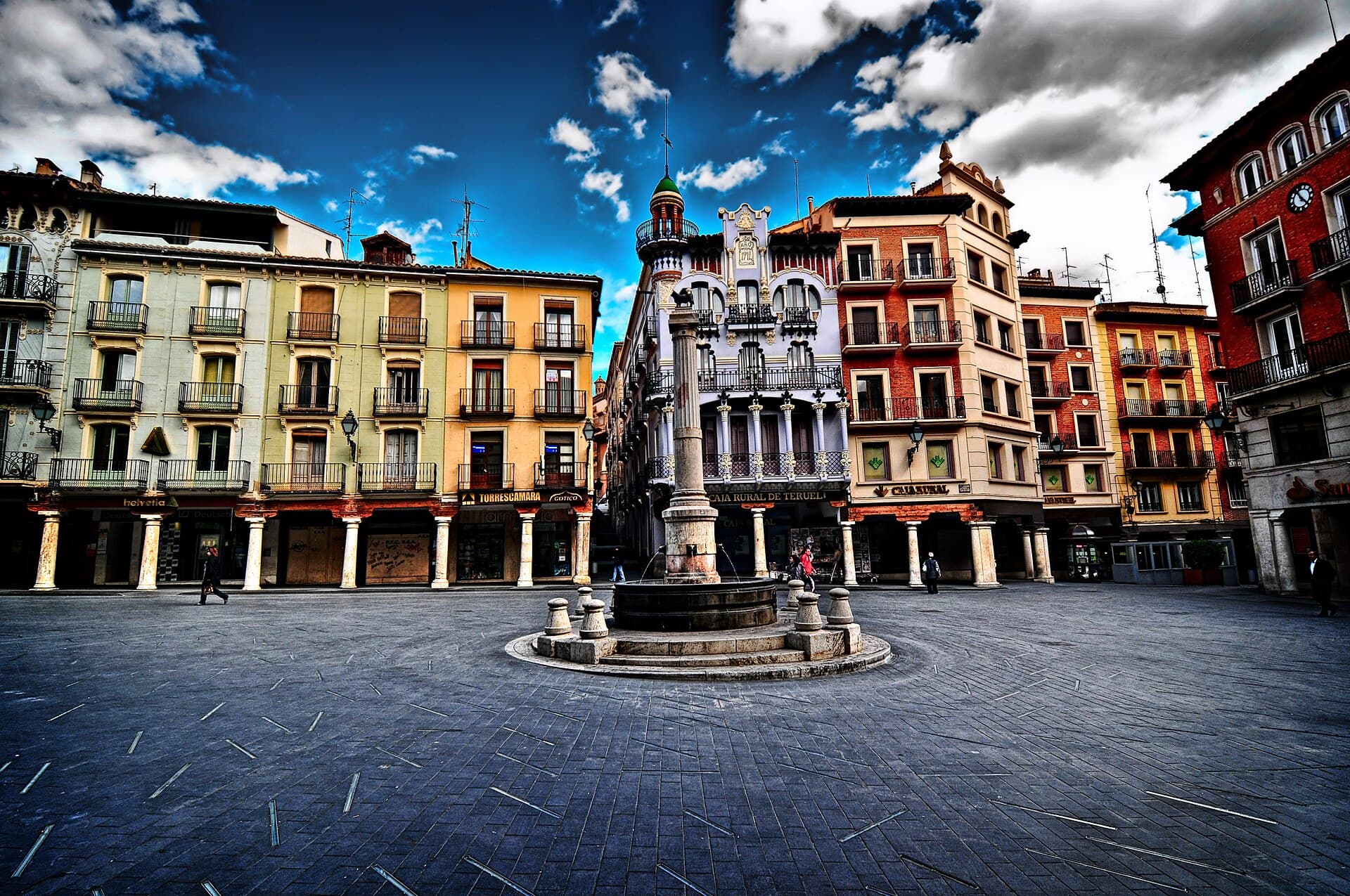 José Luis Mieza / CC BY 2.0, via Wikimedia Commons
Tour de áudio autoguiado por Teruel — rota GPS a pé, reprodução offline, narração envolvente em 32 idiomas.
“Onde antigas torres mudéjares compartilham histórias de amantes desafortunados e gigantes pré-históricos.”
Não os postais. As histórias que nem os locais conhecem — sussurradas ao seu ouvido, exatamente onde aconteceram.
A pequena estátua de touro sobre uma coluna na praça principal de Teruel é mais do que um marcador charmoso.
Olhe para cima na Catedral de Santa María de Mediavilla e você descobrirá um teto de madeira frequentemente chamado de 'Capela Sistina da arte Mudéjar.'
Estas duas proeminentes torres Mudéjares em Teruel apresentam uma semelhança impressionante, inspirando uma história local de rivalidade.
Descubra cada segredo de Teruel
Cada endereço, cada revelação na íntegra — no seu ouvido, exatamente onde aconteceu.
Você escolhe as suas paragens. Você caminha. A voz revela o que os outros perdem.


O seu tour áudio autoguiado de Teruel está pronto — escolha os seus pontos de interesse, selecione o seu idioma e comece no momento em que chegar.
ComprarA Lume inclui um guia de realidade aumentada. Levante o telemóvel: a câmara mostra a rua à sua frente, com uma seta luminosa sobreposta à imagem real que aponta sempre para a sua próxima paragem — sem mapa para decifrar, sem voltas erradas. Como tudo na Lume, funciona totalmente offline.
Teruel, uma cidade na região de Aragão, no leste da Espanha, é uma cativante mistura de romance medieval e maravilhas arquitetônicas. Frequentemente despercebida pelos viajantes, esta capital provincial oferece uma experiência distinta, caracterizada por sua arte Mudéjar listada pela UNESCO e a comovente lenda dos Amantes de Teruel.
Ruas de pedra serpenteiam pelo centro histórico que parece um museu a céu aberto, onde torres de tijolos adornadas com cerâmicas esmaltadas ascendem contra o céu. Além de seu patrimônio artístico, Teruel é uma cidade de sabores singulares, desde seu renomado presunto D.O.P. até trufas negras, e uma atmosfera acolhedora que incentiva a exploração sem pressa.
Apesar de suas dimensões relativamente modestas, Teruel é um tesouro para aqueles que buscam história, tradições duradouras e paisagens que inspiram a contemplação. É um lugar onde os ecos do passado se entrelaçam com atividades culturais, rotas gastronômicas e até aventuras no mundo pré-histórico em Dinópolis, o maior parque paleontológico da Europa.
A área ao redor de Teruel é habitada desde tempos Celta-Ibéricos, com o assentamento conhecido como Turboleta. Mais tarde, os romanos ocuparam a região, deixando vestígios em cidades próximas. A própria cidade de Teruel foi fundada em 1171 pelo Rei Afonso II de Aragão, estabelecida como um posto avançado de fronteira para fortificar as fronteiras sul contra o taifa muçulmano de Valência.
Durante a Idade Média, Teruel experimentou um considerável desenvolvimento, tornando-se um lugar de síntese cultural singular. Cristãos, muçulmanos e judeus viviam lado a lado, influenciando profundamente a arquitetura e o artesanato da cidade. Essa coexistência pacífica deu origem ao estilo Mudéjar, uma forma de arte distinta que mistura tradições europeias e islâmicas, que floresceu entre os séculos XIII e XIV. O conjunto monumental Mudéjar de Teruel, incluindo suas icônicas torres e a catedral, foi declarado Patrimônio Mundial da UNESCO em 1986.
No século XVI, o impressionante Aqueduto de Los Arcos foi construído pelo engenheiro Pierres Vedel, conectando o centro da cidade a fontes de água. O final do século XIX e o início do século XX viram um período de prosperidade econômica, que contribuiu para o rico patrimônio arquitetônico Modernista da cidade. No entanto, Teruel também foi um campo de batalha significativo durante a Guerra Civil Espanhola (1936-1939), sofrendo uma das batalhas mais sangrentas da guerra e danos consideráveis. Após a guerra, os esforços de reconstrução remodelaram parcialmente seu planejamento urbano.
Hoje, Teruel é conhecida não apenas por sua importância histórica e beleza arquitetônica, mas também pela duradoura lenda dos Amantes de Teruel, um romance trágico do século XIII que continua a inspirar a cidade.
O compacto centro histórico de Teruel é facilmente percorrido a pé, revelando uma riqueza de destaques arquitetônicos e culturais. A Plaza del Torico serve como o núcleo vibrante da cidade, cercada por fachadas Modernistas e apresentando a icônica estátua de um pequeno touro, que é o emblema da cidade.
As Torres Mudéjares são uma característica definidora. A Catedral de Santa María de Mediavilla é um exemplo primordial, com sua torre Mudéjar do século XIII, cúpula renascentista e um impressionante teto de madeira policromada. Outras torres notáveis incluem a Torre de El Salvador e a Torre de San Martín, ambos exemplos impressionantes do estilo Mudéjar.
O Mausoléu dos Amantes, dentro da Igreja de San Pedro, abriga os restos mortais de Isabel de Segura e Diego de Marcilla, oferecendo uma experiência imersiva em sua trágica história de amor. Não deixe de visitar o Escalinata del Óvalo, uma grandiosa escadaria Neo-Mudéjar construída no início do século XX para ligar o centro da cidade à estação ferroviária, adornada com cerâmicas verdes e brancas.
Para um tipo diferente de história, Dinópolis, nos arredores da cidade, é o maior parque paleontológico da Europa, exibindo uma extensa coleção de fósseis de dinossauros e exposições interativas, adequadas para todas as idades.
A época ideal para visitar Teruel é de junho a setembro. Durante esses meses, o clima é geralmente quente e ensolarado, com temperaturas médias máximas variando de 26°C a 32°C. Embora os dias possam ser quentes, as noites são frequentemente mais frias, então uma jaqueta leve ou suéter é útil. Julho é tipicamente o mês mais quente, com céus limpos em aproximadamente 86% do tempo.
Para aqueles interessados em eventos específicos, o festival "Bodas de Isabel de Segura", uma encenação histórica dos Amantes de Teruel, ocorre por volta do terceiro fim de semana de fevereiro.
Teruel é bem conectada e acessível por carro, ônibus ou trem de grandes cidades espanholas como Valência, Saragoça, Madri e Barcelona. As estações de trem e ônibus estão convenientemente localizadas no centro da cidade. Para aqueles que chegam de avião, o aeroporto de Valência fica a aproximadamente 1,5 horas de transporte.
A cidade é altamente caminhável, com a maioria das principais atrações a uma curta distância da Plaza del Torico. Teruel está a uma altitude de 915 metros, então espere temperaturas mais frias do que nas áreas costeiras, especialmente no inverno. A culinária local é um destaque, com o presunto D.O.P. de Teruel, trufas negras e queijos artesanais sendo especialidades regionais.
Teruel — coreano, chinês, hebraico e mais 29 idiomas, cada parada narrada por uma voz nativa. A maior variedade de idiomas entre os passeios de áudio autoguiados.
Disponível em: