Musée archéologique d'Arlon
Imaginez un artisan romain, il y a des siècles, fabriquant secrètement de fausses pièces de monnaie. Un artefact unique à Arlon raconte cette étonnante entreprise.
L'histoire complète se débloque dans le tour
 Jean-Pol GRANDMONT / CC BY 3.0, via Wikimedia Commons
Visite audio autoguidée de Arlon — parcours GPS à pied, lecture hors ligne, narration en 32 langues.
“Arlon : Là où les échos romains rencontrent le charme ardennais”
Pas les cartes postales. Les histoires que même les habitants ignorent — soufflées à l'oreille, là où elles se sont passées.
Imaginez un artisan romain, il y a des siècles, fabriquant secrètement de fausses pièces de monnaie. Un artefact unique à Arlon raconte cette étonnante entreprise.
Dans une ville avec une modeste communauté juive, la première synagogue de Belgique fut construite ici, et sa récente restauration a bénéficié d'un geste inattendu d'unité interconfessionnelle.
Les navetteurs de la ligne de train Bruxelles-Luxembourg s'interrogent souvent sur le but de certaines gares entre Arlon et Namur, une énigme que même les habitants trouvent amusante.
Découvrez tous les secrets de Arlon
Chaque adresse, chaque révélation en entier — dans ton oreille, là où elle s'est passée.
Tu choisis tes lieux. Tu marches. La voix te révèle ce que les autres ignorent.


Votre visite audioguidée de Arlon vous attend — choisissez vos lieux, votre langue, et lancez-vous dès votre arrivée.
AcheterLume intègre un guide en réalité augmentée. Levez votre téléphone : sa caméra montre la rue devant vous, avec une flèche lumineuse posée sur l'image réelle qui pointe toujours vers votre prochain arrêt — aucune carte à déchiffrer, aucun mauvais virage. Comme tout dans Lume, ça fonctionne entièrement hors-ligne.
Arlon, chef-lieu de la province de Luxembourg en Belgique, est l'une des villes les plus anciennes du pays, son histoire s'étendant sur deux millénaires jusqu'à l'époque gallo-romaine. Positionnée à la convergence d'anciennes voies romaines, elle fut jadis un noyau commercial et administratif florissant connu sous le nom d'Orolaunum. Aujourd'hui, Arlon offre une convergence de ses profondes racines historiques et une ambiance provinciale tranquille, en faisant une destination intrigante au-delà des sentiers touristiques battus.
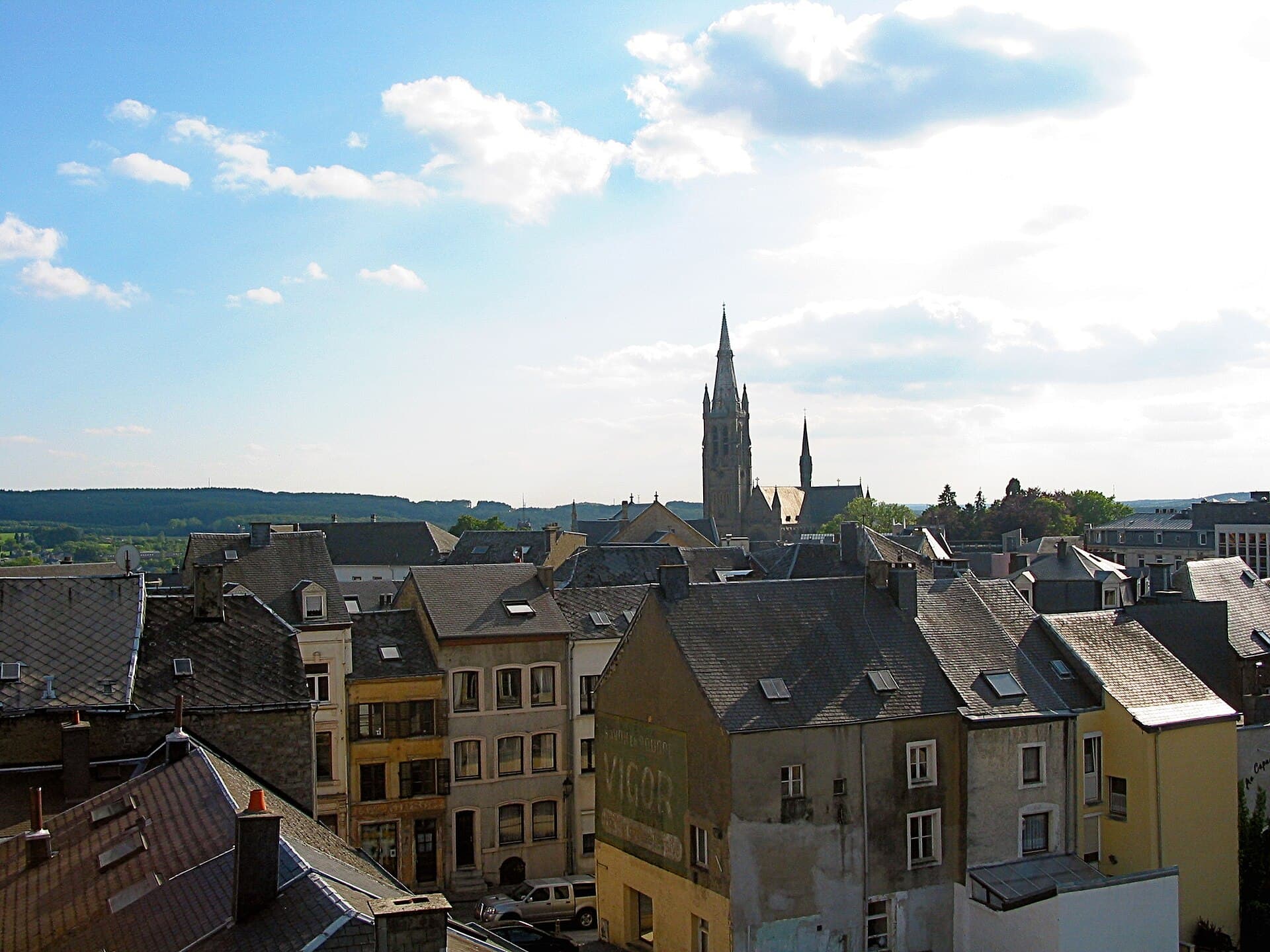
Le tracé urbain de la ville conserve un caractère distinctement médiéval, avec des ruelles étroites qui montent vers la colline qui ancre le cœur historique. Les promeneurs peuvent découvrir des vestiges romains disséminés dans la ville, explorer des musées captivants et admirer les vues depuis des églises atmosphériques. Arlon sert également de porte d'entrée aux Ardennes belges, offrant de nombreuses possibilités d'activités de plein air telles que la marche et le vélo.
Les origines d'Arlon remontent à la période gallo-romaine, lorsqu'elle était connue sous le nom d'Orolaunum vicus. Elle était stratégiquement située à l'intersection de deux importantes voies romaines : Reims-Trèves et Metz-Tongres. Cet emplacement privilégié a favorisé la prospérité grâce au commerce avec les régions voisines et même jusqu'à la Méditerranée. La tribu celtique locale, les Trévires, s'est facilement adaptée à la culture romaine, et l'abondance de pierres sculptées et de monuments découverts dans la région témoigne de l'importance d'Orolaunum en tant que centre commercial et administratif romain.
Le IIIe siècle a vu la fortification d'Orolaunum avec des murs défensifs, comprenant 15 à 20 tours de guet, construites sur la colline du Knipchen pour protéger contre les invasions germaniques. Au Moyen Âge, des structures romaines antérieures, telles que les thermes, sont restées en usage. En 1060, Waléran Ier de Limbourg, comte d'Arlon, a construit un château sur la colline du Knipchen. Arlon est devenue une partie du comté de Luxembourg au XIIIe siècle.
Le XVIe siècle a apporté une période de troubles, avec près de la moitié de la ville, y compris son château, détruite par les troupes françaises en 1588. Au XVIIe siècle, les moines capucins ont construit un couvent sur les ruines du château, et les Français, selon les plans de Vauban, ont renforcé les murs défensifs de la ville. Un incendie majeur en 1785 a de nouveau dévasté une partie importante de la ville.
Après la défaite de Napoléon en 1815, Arlon est revenue sous le gouvernement du duché de Luxembourg. Le traité de Londres en 1839 a cédé la partie occidentale du Grand-Duché, y compris Arlon, au nouveau royaume indépendant de Belgique, formant l'actuelle province de Luxembourg. Historiquement, Arlon avait une population luxembourgeoise, qui s'est progressivement largement francisée. La ville fut parmi les premières à être envahies lors de la Première et de la Seconde Guerre mondiale.
Commencez votre exploration au Musée archéologique d'Arlon, considéré comme l'un des plus importants de Belgique, exposant des artefacts de la période romaine et au-delà. Sa collection lapidaire, avec 425 sculptures provenant de monuments funéraires et de bâtiments civils, offre un aperçu de la vie quotidienne antique. À proximité, le Parc archéologique révèle les vestiges d'un complexe gallo-romain, y compris une ancienne basilique et des thermes.
Montez la colline du Knipchen jusqu'à l'église Saint-Donat, une église du XVIIe siècle construite par les Capucins, qui se dresse là où se trouvait autrefois une forteresse. Depuis son belvédère, gravissez 144 marches pour des vues panoramiques qui, par temps clair, s'étendent jusqu'en France et au Luxembourg. Le carillon joue une chanson folklorique luxembourgeoise traditionnelle toutes les heures. Dans la ville basse, l'église Saint-Martin néo-gothique, avec sa tour de 97 mètres de haut, est un site classé au patrimoine, réputée pour ses vitraux. Ne manquez pas les tours romaines de Jupiter et Neptune, vestiges des murs défensifs du IIIe siècle, qui peuvent être visitées avec une carte magnétique de l'Office du Tourisme. Le Musée Gaspar présente une collection d'art régional et des œuvres de Jean-Marie et Charles Gaspar. Pour un aperçu de la culture locale, visitez la Synagogue d'Arlon, la plus ancienne de Belgique, avec son style romano-byzantin.
Le moment le plus agréable pour visiter Arlon est au printemps (avril à juin) et en automne (septembre à octobre), lorsque le temps est doux et le nombre de visiteurs plus modeste. Pour les activités par temps chaud, de fin juin à fin août offre des températures confortables, juillet étant le mois le plus chaud, avec des maximales moyennes de 22 °C (71 °F). Arlon connaît des précipitations modérées tout au long de l'année, décembre étant généralement le mois le plus humide et avril le plus sec.
Arlon est accessible en train depuis les grandes villes belges comme Bruxelles (environ 2 heures 45 minutes) et Namur (1 heure 40 minutes), et se trouve à seulement 20 minutes de la ville de Luxembourg. La gare d'Arlon est à environ 300 mètres au sud du centre historique. En voiture, Arlon est reliée par l'autoroute E411 depuis Bruxelles et l'autoroute E25 depuis Liège. L'aéroport de Luxembourg-Findel est à environ 40 kilomètres.
Le centre historique d'Arlon est compact et facilement explorable à pied. Pour les sites plus éloignés, envisagez de louer une voiture ou un vélo ; le centre touristique propose la location de vélos électriques et de vélos classiques. La langue principale parlée est le français, bien que l'anglais soit souvent compris dans les zones touristiques. Les options d'hébergement vont des hôtels aux chambres d'hôtes en passant par les appartements de vacances, s'adaptant à différents budgets.
Arlon en coréen, en chinois ou en hébreu — et dans 29 autres langues, chaque étape narrée par une voix native. La plus large gamme de langues de tous les audioguides autoguidés.
Disponible en :