Grand-Place
En la fachada del Ayuntamiento de Mons, un pequeño mono de hierro es una celebridad local.
La historia completa se desbloquea en el tour
 Jean-Pol GRANDMONT / CC BY 3.0, via Wikimedia Commons
Tour de audio autoguiado de Mons — ruta GPS a pie, reproducción offline, narración en 32 idiomas.
“Donde el folclore ancestral se encuentra con sueños digitales olvidados.”
No las postales. Las historias que ni los locales conocen — al oído, justo donde ocurrieron.
En la fachada del Ayuntamiento de Mons, un pequeño mono de hierro es una celebridad local.
Este campanario barroco, Patrimonio de la Humanidad por la UNESCO, guarda un secreto entre sus melodiosos carillones.
Antes de Google, dos visionarios belgas intentaron indexar todo el conocimiento del mundo, aquí mismo en Mons.
Descubre todos los secretos de Mons
Cada dirección, cada revelación al completo — a tu oído, justo donde ocurrió.
Eliges tus paradas. Caminas. La voz te revela lo que los demás ignoran.


Tu tour de audioguía por Mons te espera — elige tus lugares, tu idioma y empieza al llegar.
ComprarLume incluye una guía de realidad aumentada. Levanta el móvil y su cámara muestra la calle que tienes delante, con una flecha luminosa sobre la imagen real que siempre apunta a tu próxima parada — sin mapas que descifrar, sin giros equivocados. Como todo en Lume, funciona completamente sin conexión.
Mons, la capital de la provincia belga de Henao, es una ciudad donde siglos de historia se entrelazan con un presente cultural dinámico. Situada en una colina, su nombre, que significa "montaña" en latín, alude a su posición elevada. El centro compacto de la ciudad se explora fácilmente a pie, revelando una mezcla de arquitectura medieval, animados espacios culturales y acogedoras calles adoquinadas.
Designada Capital Europea de la Cultura en 2015, Mons ha revitalizado su escena cultural, ofreciendo una diversa gama de museos, instalaciones de arte y tesoros arquitectónicos. Es un destino que atrae a entusiastas de la historia, buscadores de cultura y aquellos que buscan aventurarse más allá de las ciudades más visitadas de Bélgica.
Más allá de sus ofertas históricas y culturales, Mons también es conocida por su cálida hospitalidad valona y su papel como puerta de entrada a la región de Borinage, una zona que alguna vez fue central para la minería del carbón y famosa por ser el hogar temporal de Vincent van Gogh durante sus inicios artísticos.
Los orígenes de Mons se remontan a un campamento romano, Castrilocus, en el siglo III. La ciudad realmente comenzó a tomar forma alrededor de un asentamiento monástico fundado por Santa Valdetrudis, o Waltrudis, hija del Conde de Henao, en el siglo VII. En el siglo IX, murallas torreadas rodeaban la creciente ciudad, y en 804, Carlomagno reconoció a Mons como la capital de Henao.
Durante el siglo XII, el Conde Balduino IV de Henao fortificó Mons, lo que llevó a un rápido crecimiento demográfico y a un floreciente comercio. La Grand-Place vio la construcción de numerosos edificios comerciales, y a finales del siglo XIII, Mons tenía una población de 4.700 habitantes. Sucedió a Valenciennes como capital del condado de Henao en 1295, creciendo a 8.900 habitantes a finales del siglo XV. La ciudad prosperó como centro de tejido de telas entre los siglos XIV y XVI.
Como bastión estratégico y ciudad fronteriza, Mons fue fuertemente fortificada, con extensas defensas construidas por el renombrado ingeniero militar francés Sébastien Le Prestre de Vauban. A lo largo de los siglos XVI al XVIII, fue repetidamente atacada y ocupada por fuerzas holandesas, españolas, francesas e inglesas, experimentando períodos bajo dominio francés, español, holandés y austriaco antes de que Bélgica obtuviera la independencia en 1830. Tras la independencia, las fortificaciones de la ciudad fueron desmanteladas, allanando el camino para amplios bulevares y otros proyectos de desarrollo urbano.
En el siglo XIX, la Revolución Industrial y la minería del carbón transformaron Mons en un centro de industria pesada. La ciudad también desempeñó un papel importante en la Primera Guerra Mundial, siendo testigo de la muerte de los primeros y últimos soldados británicos en Europa, quienes están enterrados uno al lado del otro en un cementerio local. La Batalla de Mons en agosto de 1914 marcó el primer enfrentamiento del ejército británico en el Frente Occidental, resultando en una retirada británica. La ciudad permaneció bajo ocupación alemana hasta su liberación por el Cuerpo Canadiense en los últimos días de la guerra.
Hoy, Mons es una ciudad universitaria y un centro comercial. Su historia es evidente en sus sitios declarados Patrimonio de la Humanidad por la UNESCO, incluido su campanario barroco y el festival anual Ducasse de Mons.
La Grand-Place sirve como el corazón de Mons, una espaciosa plaza enmarcada por edificios históricos, cafés y restaurantes. Aquí, encontrará el Ayuntamiento gótico del siglo XV y una fuente con San Jorge matando al dragón. Cerca, la Colegiata de Santa Valdetrudis, una obra maestra de la arquitectura gótica brabantina construida entre los siglos XV y XVII, alberga estatuas de alabastro del siglo XVI y una importante colección de orfebrería religiosa.
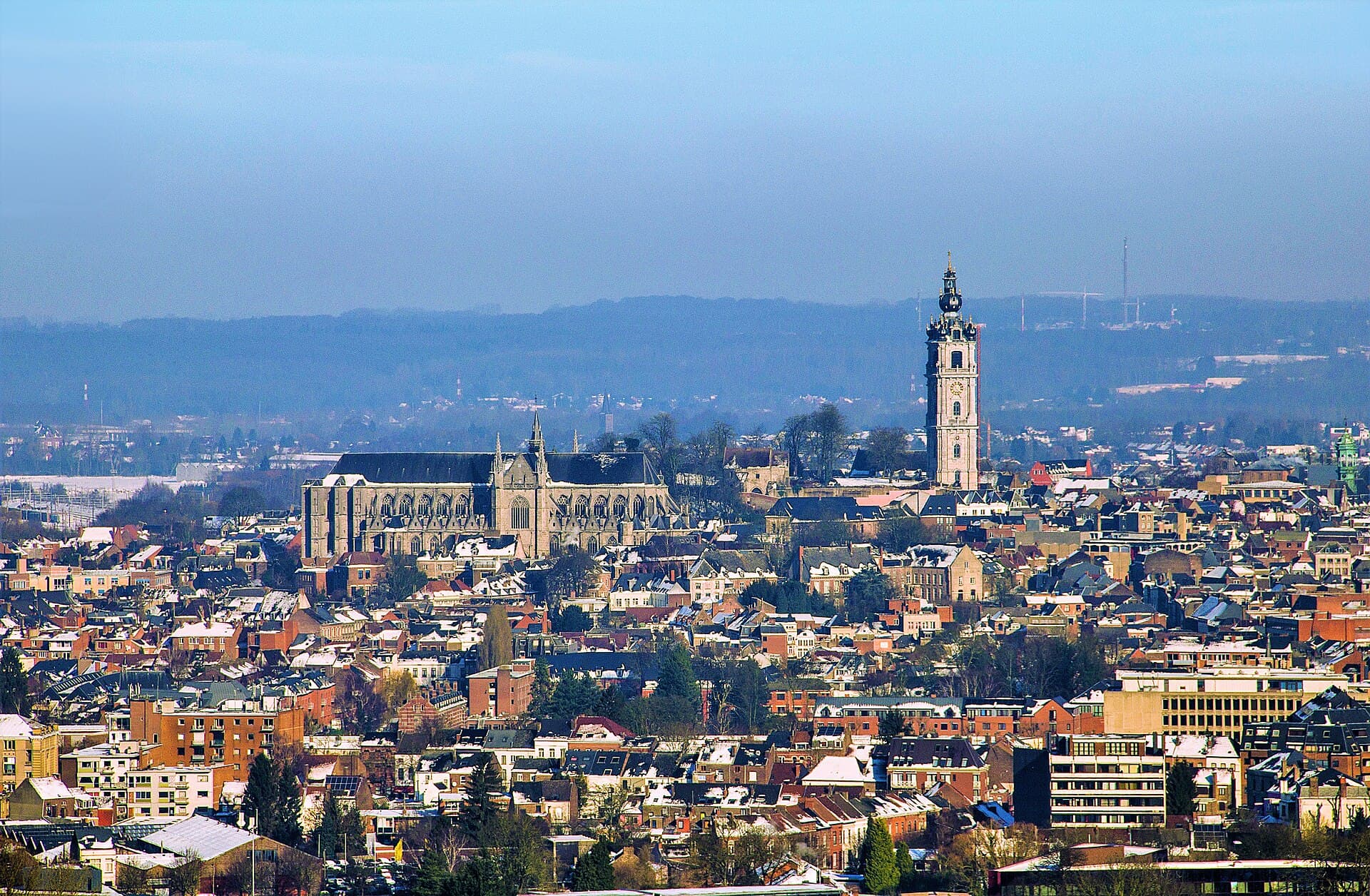
Dominando el horizonte se encuentra el Campanario de Mons, el único campanario de estilo barroco de Bélgica y Patrimonio de la Humanidad por la UNESCO. Con 87 metros de altura, ofrece vistas panorámicas de la ciudad y sus alrededores desde su mirador, accesible por un ascensor de cristal. El carillón de 49 campanas suena cada 15 minutos, tocando melodías tradicionales de Montois.
Para una experiencia cultural única, visite el Mundaneum, a menudo llamado el "Google de papel". Este centro de archivo, fundado por Paul Otlet y Henri La Fontaine, tenía como objetivo recopilar y clasificar todo el conocimiento global y se considera un precursor de internet. El Museo Doudou ofrece una visión del festival Ducasse de Mons, reconocido por la UNESCO, mostrando el legendario combate entre San Jorge y el dragón. Además, las Minas Neolíticas de Sílex de Spiennes, Patrimonio de la Humanidad por la UNESCO justo a las afueras de la ciudad, representan uno de los complejos mineros antiguos más grandes y antiguos de Europa, que data de hace más de 6.000 años.
Mons es acogedora todo el año, pero el período de finales de primavera a principios de otoño ofrece el clima más agradable para actividades al aire libre y disfrutar de los cafés de la ciudad. Las temperaturas durante el verano (junio a agosto) suelen oscilar entre 15°C y 25°C, siendo julio el mes más cálido. Aunque los veranos son generalmente más soleados, aún son posibles lluvias ocasionales. Las temporadas intermedias de abril-mayo y septiembre-octubre ofrecen temperaturas agradables, menos multitudes y potencialmente una mejor relación calidad-precio en el alojamiento. El evento principal de la ciudad, el festival Ducasse de Mons (Doudou), tiene lugar a finales de mayo o principios de junio, aunque atrae a un gran número de personas.
Mons se encuentra aproximadamente a 65 km al suroeste de Bruselas. Los servicios de tren directos desde Bruselas suelen tardar entre 40 y 50 minutos, lo que la convierte en una excursión de un día o un destino de fin de semana accesible. Las autopistas E19 y E42 proporcionan un acceso directo para quienes viajan en coche.
Aunque el centro de la ciudad es compacto y peatonal, es aconsejable llevar un chubasquero o paraguas independientemente de la temporada, ya que Mons experimenta precipitaciones constantes durante todo el año. Incluso en los meses de verano más secos, suele haber unos 10 días de lluvia, aumentando a 14-16 días en invierno. Se recomienda reservar alojamiento con antelación, especialmente durante el verano o festivales importantes como el Doudou.
Mons en coreano, en chino o en hebreo — y 29 idiomas más, cada parada narrada por una voz nativa. La mayor variedad de idiomas de cualquier audioguía autoguiada.
Disponible en: