Piazza Umberto I
Cette place accueillante n'a pas toujours été un lieu de rassemblement animé.
L'histoire complète se débloque dans le tour
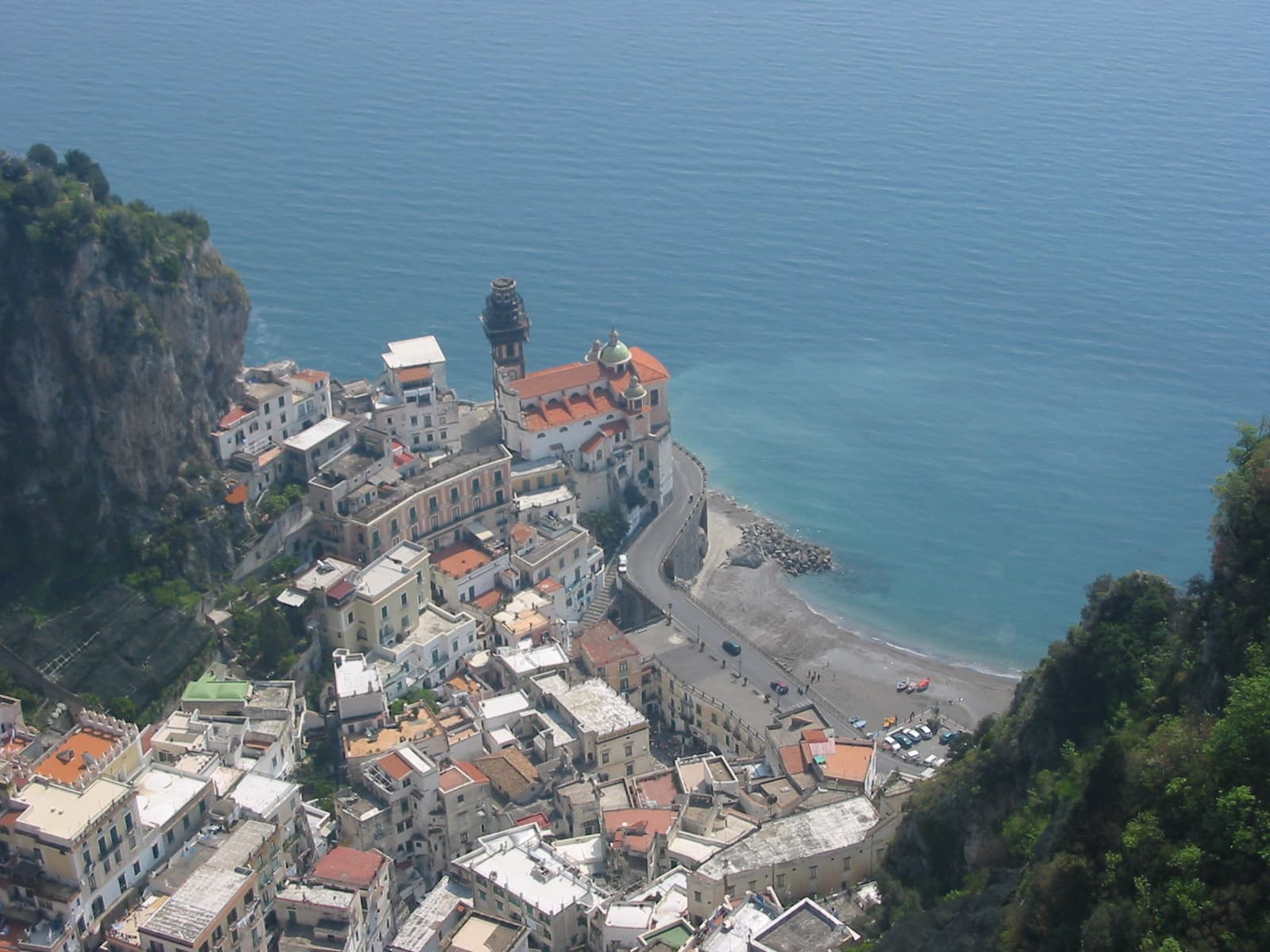 Donar Reiskoffer / cc by 3.0, via Wikimedia Commons
Visite audio autoguidée de Atrani — parcours GPS à pied, lecture hors ligne, narration en 32 langues.
“Une merveille miniature de la côte amalfitaine, où les ruelles anciennes parlent de ducs et de rebelles.”
Pas les cartes postales. Les histoires que même les habitants ignorent — soufflées à l'oreille, là où elles se sont passées.
Cette place accueillante n'a pas toujours été un lieu de rassemblement animé.
Le nom de cette église recèle un indice sur le passé puissant d'Atrani.
Les rues labyrinthiques d'Atrani ont captivé un artiste célèbre.
Découvrez tous les secrets de Atrani
Chaque adresse, chaque révélation en entier — dans ton oreille, là où elle s'est passée.
Tu choisis tes lieux. Tu marches. La voix te révèle ce que les autres ignorent.


Votre visite audioguidée de Atrani vous attend — choisissez vos lieux, votre langue, et lancez-vous dès votre arrivée.
AcheterLume intègre un guide en réalité augmentée. Levez votre téléphone : sa caméra montre la rue devant vous, avec une flèche lumineuse posée sur l'image réelle qui pointe toujours vers votre prochain arrêt — aucune carte à déchiffrer, aucun mauvais virage. Comme tout dans Lume, ça fonctionne entièrement hors-ligne.
Entre deux collines et embrassant une petite baie pittoresque, Atrani se dresse comme la plus petite commune d'Italie par sa superficie, une merveille miniature sur la célèbre côte amalfitaine. Contrairement à ses voisins animés, Atrani a remarquablement conservé son ancienne structure médiévale, une cascade de maisons entrecoupées de marches raides, de passages couverts et de petits jardins qui évoquent une crèche intemporelle. Ce caractère authentique, combiné à son atmosphère tranquille, offre un répit bienvenu par rapport aux villes plus fréquentées, ce qui en fait un lieu de prédilection pour ceux qui recherchent une expérience italienne authentique.
La ville se déploie autour de sa place principale, la Piazza Umberto I, qui fait office de salon en plein air, menant directement à la plage. Le cadre unique d'Atrani, à l'embouchure de la Valle del Dragone (Vallée du Dragon), est imprégné de légendes locales, dont une sur un dragon cracheur de feu qui se cachait autrefois dans la vallée. Sa taille compacte encourage l'exploration à pied, invitant les visiteurs à flâner dans ses ruelles enchantées et à découvrir ses nombreux recoins tranquilles.
Les origines d'Atrani sont empreintes de mystère, bien que des découvertes archéologiques révèlent des ruines romaines du 1er siècle après J.-C., avec des villas romaines le long de la côte ensevelies par l'éruption du Vésuve en 79 après J.-C. Au 5e siècle après J.-C., alors que les attaques barbares ravageaient la région, les Romains cherchèrent refuge dans les Monti Lattari, établissant des colonies stables, contribuant probablement au développement précoce d'Atrani. Ce fut un poste de traite étrusque ou grec vers le 6e siècle avant J.-C. avant de faire partie de la République d'Amalfi.
L'histoire d'Atrani est inextricablement liée à celle de sa puissante voisine, Amalfi. À l'époque du Duché d'Amalfi, Atrani revêtait une importance considérable en tant que résidence de familles nobles et, surtout, en tant que site cérémoniel pour le couronnement des Doges d'Amalfi. L'église San Salvatore de' Birecto servait de chapelle palatine où ces dirigeants recevaient leur chapeau symbolique, le 'birecto'. Cette période vit Atrani prospérer économiquement avec des usines de pâtes et de tissus, et ses marchands commerçaient largement dans tout le sud de l'Italie.
Cependant, la prospérité d'Atrani en fit également une cible. La ville subit de nombreux raids de la République de Pise au 12e siècle, entraînant des destructions importantes en 1135 et 1137. Plus tard, le roi Manfredi punit Atrani pour son allégeance au Pape en envoyant une armée de marins alexandrins, une période durant laquelle, selon la tradition, l'intercession de Sainte Marie-Madeleine sauva la ville. Le 17e siècle apporta de nouvelles difficultés avec une terrible peste en 1643, transformant l'église San Michele Arcangelo en lieu de sépulture. Malgré ces défis, Atrani a constamment maintenu son caractère unique, un témoignage de son esprit durable.
Commencez votre exploration sur la Piazza Umberto I, le cœur d'Atrani, où la vie quotidienne se déroule avec la mer en toile de fond. De là, visitez l'église San Salvatore de' Birecto, une église du Xe siècle remarquable pour sa façade néoclassique, son élégante loggia et ses portes de bronze historiques de Constantinople. Montez les ruelles sinueuses jusqu'à la collégiale Santa Maria Maddalena, patronne d'Atrani, qui présente une façade rococo saisissante et un dôme en tuiles de majolique, offrant de larges vues sur la ville et la côte. À proximité, explorez la Grotta di Masaniello, une grotte imprégnée de légendes locales. Continuez votre ascension jusqu'à l'église Santa Maria del Bando, une église du XIe siècle située sous la Torre dello Ziro, offrant des vues imprenables. Ne manquez pas l'occasion de vous perdre merveilleusement dans les rues labyrinthiques et les arcades d'Atrani, un élément clé de son caractère médiéval. Pour un après-midi de détente, profitez de la Spiaggia di Atrani, la plage de la ville, relativement plus calme, encadrée par des falaises spectaculaires.
Les périodes idéales pour visiter Atrani sont la fin du printemps (avril à juin) ou le début de l'automne (septembre à octobre). Pendant ces mois, le temps est agréablement doux et la mer est suffisamment chaude pour la baignade, tout en évitant les foules estivales et la chaleur intense de juillet et août. La saison touristique commence généralement autour de Pâques. Visiter en dehors du mois d'août peut également contribuer à un tourisme plus durable sur la côte amalfitaine.
Atrani est une ville compacte qui se découvre mieux à pied, des chaussures confortables sont donc essentielles pour naviguer dans ses nombreux escaliers et ruelles. Bien qu'Atrani elle-même offre des options d'hébergement limitées, elle se trouve à seulement 10-15 minutes à pied de la ville plus animée d'Amalfi, qui offre plus de choix. Vous pouvez rejoindre Atrani par l'autoroute A3 depuis Naples-Salerne, en sortant à Vietri sul Mare et en continuant sur la route côtière SS163. Les bus publics SITA relient également Atrani à Salerne et Sorrente, avec un arrêt directement sur l'artère principale. L'aéroport le plus proche est Capodichino à Naples. La plage d'Atrani propose des sections gratuites et payantes, avec des chaises longues et des parasols disponibles à la location.
Atrani en coréen, en chinois ou en hébreu — et dans 29 autres langues, chaque étape narrée par une voix native. La plus large gamme de langues de tous les audioguides autoguidés.
Disponible en :