The amber liquid known as 'Colatura di Alici' is Cetara's most renowned culinary secret, a descendant of ancient Roman garum. Yet, did its origins truly begin with medieval monks, and was its production once a closely guarded family ritual?
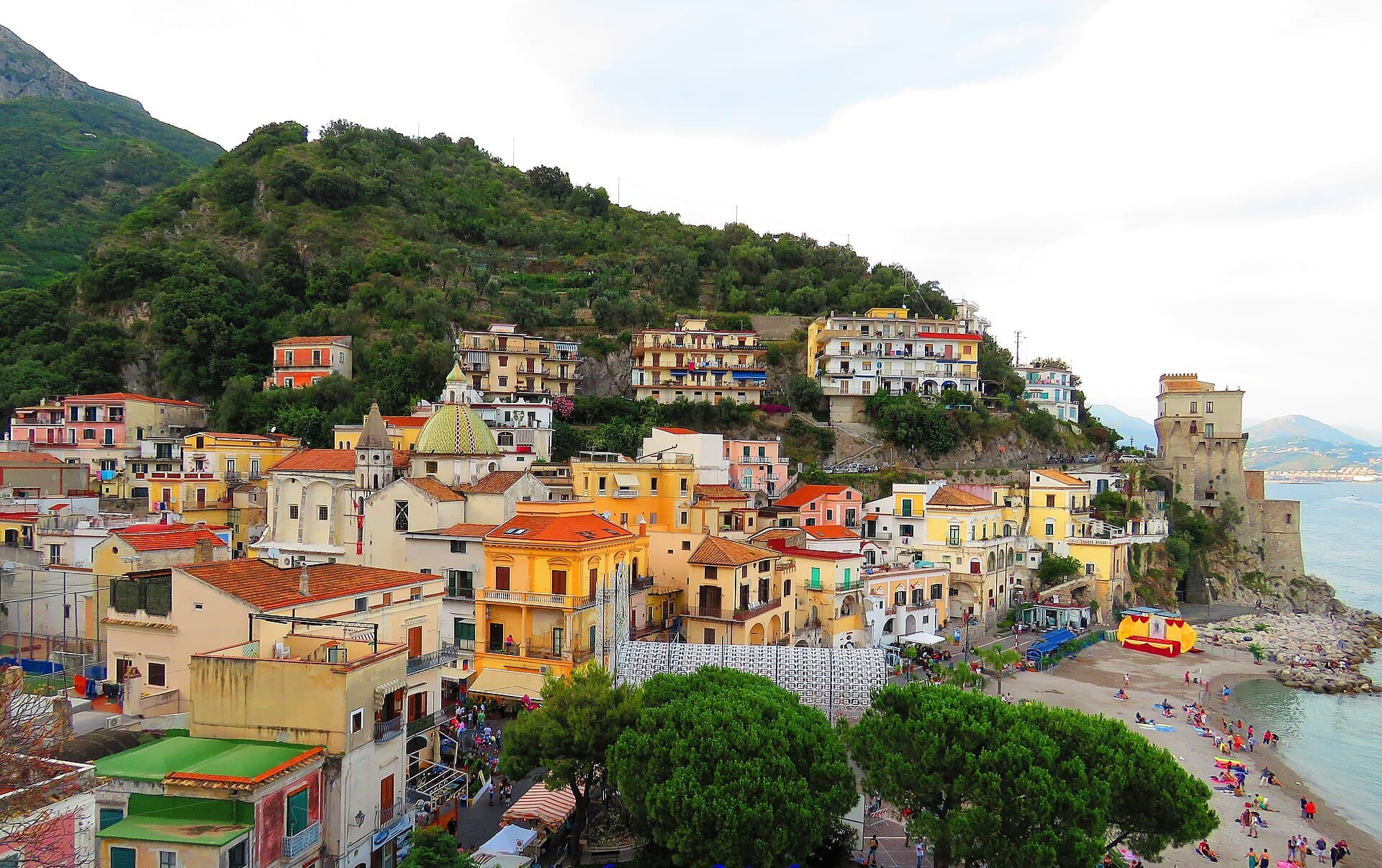
Gianfranco Vitolo / CC BY 2.0, via Wikimedia CommonsCetara
Self-guided audio walking tour of Cetara — GPS route, offline playback, story-driven narration in 32 languages.
“Cetara: Where the sea's breath tells ancient tales, and every dish holds a quiet revelation.”
Cetara, as no one tells it.
Not the postcards. The stories even locals don't know — whispered in your ear, right where they happened.
Cetara's distinctive 16th-century watchtower stands sentinel over the harbor, a silent witness to a turbulent past. What grim event spurred its construction, and what unexpected purpose does it serve today?
The name Cetara clearly evokes its deep connection to the sea. Does it refer to the fish itself, or to the people who pursued them?
Discover every secret of Cetara
Every address, every reveal in full — in your ear, right where it happened.
You pick your stops. You walk. The voice reveals what the others miss.
How long do you have in Cetara?
Your self-guided audio tour of Cetara is ready — pick your landmarks, choose your language, and start the moment you arrive.
BuyThe story of Cetara
Cetara, a fishing village on Italy's famed Amalfi Coast, offers an authentic experience away from the more crowded tourist centers. Its pastel-colored houses cling to the slopes of Mount Falerio, descending towards a small harbor filled with traditional fishing boats. This timeless hamlet feels like a living postcard, where the rhythm of life is still dictated by the sea.
Known as the 'World Tuna Capital,' Cetara is a haven for seafood lovers, particularly celebrated for its red tuna and the distinctive 'colatura di alici,' a savory anchovy sauce. Beyond its culinary offerings, Cetara invites visitors to wander its narrow alleys, discover historic churches, and relax on its unpretentious beaches, all while absorbing the genuine maritime culture that defines this special corner of Campania.
From Saracen Settlement to Fishing Powerhouse
The origins of Cetara trace back to the early Middle Ages, with its territory initially belonging to the Etruscan city of Marcina, likely modern-day Vietri sul Mare. A significant turning point arrived in the second half of the 9th century when a colony of Saracen pirates established themselves in the area, using it as a base for their coastal raids before being driven out towards the end of the century. This early seafaring settlement laid the groundwork for Cetara's enduring connection to the sea.
By the year 1000, Cetara's fishermen were already paying a tithe of their catch to the bishop of Amalfi, indicating their established role in the region's economy. The village later fell under the jurisdiction of the Benedictine Abbey of Cava de' Tirreni for several centuries, providing the abbey with crucial access to the sea and a strong source of income. During the era of the Maritime Republic of Amalfi, Cetarese sailors were highly regarded, contributing significantly to the Republic's triangular trade network that spanned Southern Italy, North Africa, and the Byzantine Empire.
Cetara's coastal location also rendered it vulnerable. In 1534, the village endured a devastating attack by Turkish forces, leading to the enslavement of three hundred inhabitants and the temporary abandonment of the settlement. This tragic event spurred the construction of the Torre di Cetara, a 16th-century watchtower built to defend against future pirate incursions. After centuries of being part of the municipality of Vietri sul Mare, Cetara finally achieved administrative independence in 1833, solidifying its identity as a distinct fishing village on the Amalfi Coast.
Cetara's allure resides in its authentic fishing village atmosphere and its deep connection to the sea. Begin your exploration at the Torre di Cetara, a 16th-century watchtower that once guarded the village from pirate attacks. Today, it offers sweeping views and houses a small museum showcasing local art and history.
Just a minute from the waterfront, you will find the Church of St. Peter the Apostle (Chiesa Di S. Pietro Apostolo), the town's most prominent church, with a history dating back to at least 988 AD. Its striking green and yellow majolica-tiled dome is a visual highlight, and inside, admire the bronze doors by artist Battista Marello, depicting the saint casting a fishing net. The Church of Saint Francis of Assisi (Chiesa di Francesco d'Assisi), with its beautiful frescoes, and the small Church of Our Lady of Constantinople are also worth visiting.
Stroll along Corso Garibaldi, the main street that gently ascends from the beach, where you will find most of Cetara's restaurants, shops, and sights. Explore the tiny narrow passageways and staircases branching off, and do not miss the charming Piazza di San Francesco, a popular gathering spot for local residents. Of course, no visit to Cetara is complete without experiencing its beaches. The Spiaggia della Marina is directly in the village, protected by the Torre Vicereale, offering both sandy and pebbly sections. For a more secluded spot, follow the path from the tower to Lannio Beach, accessible on foot via a short path and stairs.
Cetara is best enjoyed in the spring (April to June) and fall (September to October), when the weather is pleasant and the crowds are smaller. During these shoulder seasons, you will find less traffic, easier parking, and more authentic local experiences. The sea temperatures remain comfortable for swimming in early fall, offering memorable days with fewer vacationers. While summer (mid-June to early September) offers the hottest weather and warmest water, the beaches can be quite crowded. July also brings the 'Night of the Lampare' festival, a unique cultural event.
Cetara is easily accessible, located just a few kilometers from Salerno. If traveling by car, take the A3 motorway and exit at Vietri sul Mare, then follow the SS163 for a short distance. Public transport options include Sita buses from Naples or Salerno, and daily Travelmar ferries connect Salerno with Cetara and other Amalfi Coast towns from April to early November. The nearest train station is Salerno.
While Cetara is a one-street town, navigating the main road, Corso Garibaldi (which becomes Corso Federici uphill), is straightforward. Parking can be challenging, even in winter, so consider using public transport or parking in the upper part of town. English is not widely spoken, adding to the authentic local experience. For dining, Cetara offers excellent seafood restaurants, with 'Il Convento,' 'Il San Pietro,' and 'L'Acqua Pazza' being recommended choices. Remember to try the local specialty, colatura di alici, often served with spaghetti.
- What is Cetara most known for?
- Cetara is most known for its strong fishing traditions, particularly for tuna and anchovies, and its distinct culinary specialty, 'colatura di alici' (anchovy sauce).
- How do I reach Cetara?
- Cetara is accessible by car (A3 motorway to Vietri sul Mare exit, then SS163), bus (Sita buses from Naples or Salerno), or ferry (Travelmar lines from Salerno from April to November).
- What is 'Colatura di Alici'?
- Colatura di Alici is a transparent, amber-colored fish sauce made from fermented salted anchovies, a traditional condiment from Cetara with ancient Roman origins. It received Protected Designation of Origin (PDO) status in 2020.
- Are there beaches in Cetara?
- Yes, Cetara has several beaches, including the main Spiaggia della Marina right in the village and the more secluded Lannio Beach, both offering a mix of sand and pebbles.
- What cultural events or festivals take place in Cetara?
- Cetara hosts several important events, including the Feast of St. Peter, its patron saint, on June 29th, and the 'Night of the Lampare' in July, which reenacts traditional anchovy fishing. The Tuna Festival (Sagra del Tonno) is usually held in the second half of July or early August.
- Is Cetara a good alternative to more crowded Amalfi Coast towns?
- Yes, Cetara is often considered one of the most authentic and traditional towns on the Amalfi Coast, less reliant on mass tourism, making it a good choice for those seeking a quieter and more genuine experience.