La Colegiata de Santa María
Una batalla del siglo XIII, un paño oculto y un evento profundo que marcó el destino de Daroca.
La historia completa se desbloquea en el tour
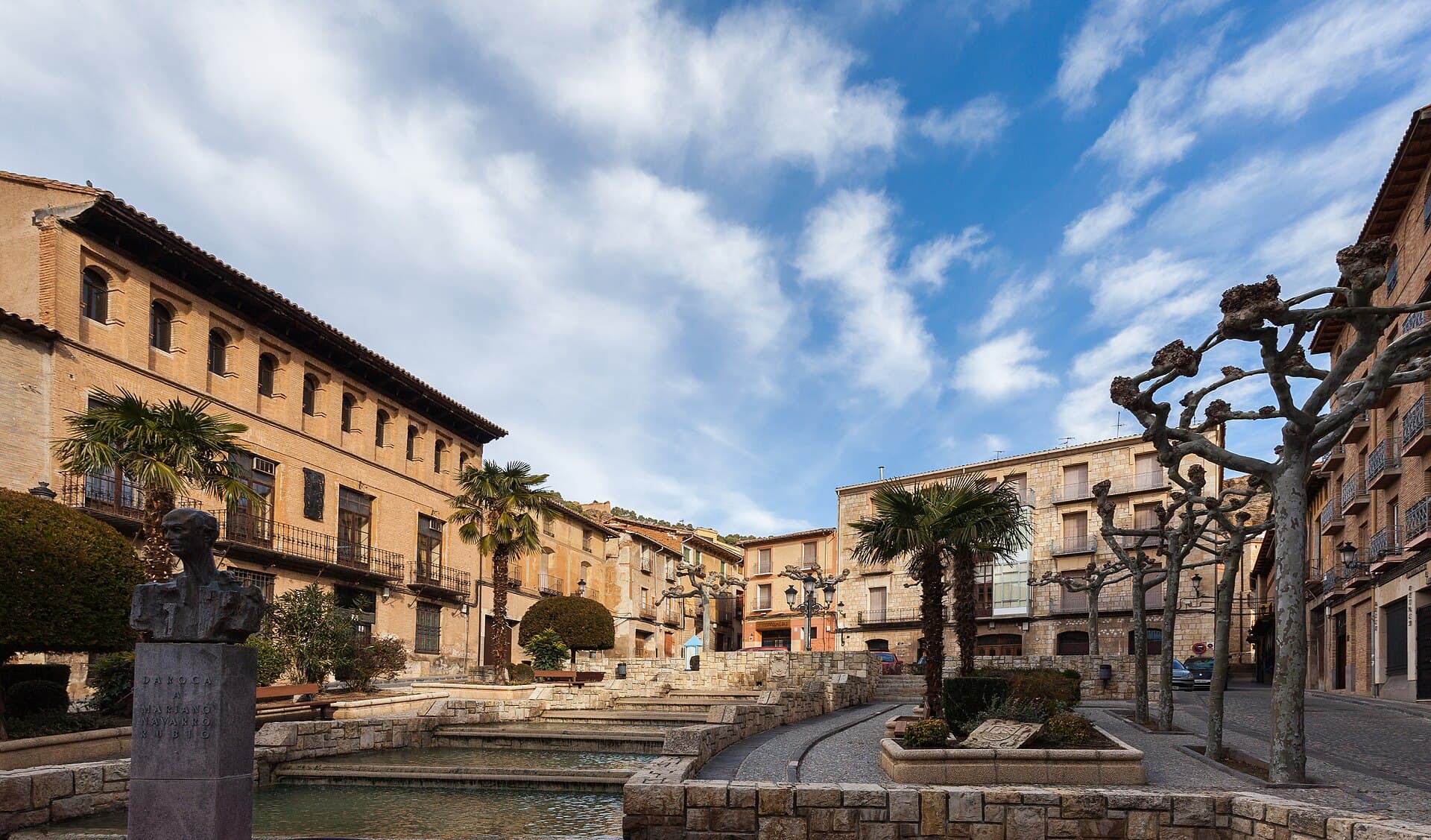 Diego Delso / cc by-sa 3.0, via Wikimedia Commons
Tour de audio autoguiado de Daroca — ruta GPS a pie, reproducción offline, narración en 32 idiomas.
“Donde las piedras ancestrales susurran historias eternas.”
No las postales. Las historias que ni los locales conocen — al oído, justo donde ocurrieron.
Una batalla del siglo XIII, un paño oculto y un evento profundo que marcó el destino de Daroca.
Más de cuatro kilómetros de piedra medieval, con una sección particular que guarda una conmovedora historia de afecto.
Una maravilla de la ingeniería del siglo XVI, construida no por riquezas, sino para dominar una poderosa fuerza natural.
Descubre todos los secretos de Daroca
Cada dirección, cada revelación al completo — a tu oído, justo donde ocurrió.
Eliges tus paradas. Caminas. La voz te revela lo que los demás ignoran.

Tu tour de audioguía por Daroca te espera — elige tus lugares, tu idioma y empieza al llegar.
ComprarLume incluye una guía de realidad aumentada. Levanta el móvil y su cámara muestra la calle que tienes delante, con una flecha luminosa sobre la imagen real que siempre apunta a tu próxima parada — sin mapas que descifrar, sin giros equivocados. Como todo en Lume, funciona completamente sin conexión.
Daroca, una ciudad histórica en Aragón, España, ofrece una conexión tangible con el pasado. Situada en el valle del Jiloca, al sur de Zaragoza, su núcleo medieval está abrazado por formidables murallas de los siglos XIII y XIV. A menudo llamada 'la ciudad de los siete sietes' por sus extensas estructuras patrimoniales, Daroca presenta una fusión convincente de estilos arquitectónicos musulmanes y cristianos.
Atravesar una de sus puertas monumentales, como la Puerta Baja, transporta a los visitantes a una época anterior. Las calles empedradas, las venerables iglesias y las grandiosas mansiones relatan una historia larga y a menudo turbulenta. Declarada Bien de Interés Cultural, Daroca se erige como un museo viviente de la Edad Media, invitando a la exploración y al descubrimiento de sus muchas capas.
La posición estratégica de la ciudad como antiguo asentamiento fronterizo requirió robustas fortificaciones, con un recinto defensivo que una vez se extendió por más de cuatro kilómetros y contaba con más de cien torres. Este extenso perímetro, junto con las ruinas de su castillo, ofrece amplias vistas y un vínculo directo con el pasado legendario de Daroca.
Se cree que los orígenes de Daroca se remontan a un antiguo pueblo celtíbero llamado Darek. Los romanos establecieron posteriormente una presencia, llamándola Agiria y construyendo un formidable castillo para proteger una carretera vital que conectaba Zaragoza y Valencia.
Alrededor del año 862, los árabes tomaron el control, renombrando la ciudad como Calat-Darawca, y mantuvieron su dominio durante aproximadamente 400 años. En 1120, el rey cristiano Alfonso I el Batallador reconquistó Daroca, y en 1141, concedió a la ciudad su primer conjunto de leyes. Este período marcó a Daroca como una importante ciudad fronteriza, impulsando la expansión de sus murallas defensivas.
Durante el siglo XII, Daroca entró en un período de prosperidad cuando Ramón Berenguer IV otorgó leyes y derechos especiales a la ciudad, estableciéndola como la capital de la influyente 'Comunidad de Daroca'. Daroca desempeñó un papel importante en reuniones regionales y acogió varias reuniones reales. Su resistencia durante un asedio en una guerra contra Pedro de Castilla le valió el título oficial de 'ciudad' el 26 de abril de 1366. Durante casi seis siglos, Daroca disfrutó de autonomía municipal, gobernada por un consejo con funcionarios elegidos anualmente.
Daroca sirvió como parada frecuente para la realeza española, con figuras como los Reyes Católicos, Carlos I y Felipe II visitando la ciudad. Sin embargo, este período también trajo desafíos. Durante la Guerra de Sucesión Española, el apoyo de Daroca al pretendiente austriaco llevó a su ocupación y saqueo, poniendo fin a su larga autogobernanza. Magistrados reales reemplazaron el sistema de justicia local.
La Guerra de la Independencia vio a las tropas francesas ocupar Daroca en 1808, causando destrucción y estableciendo una guarnición hasta la liberación de la ciudad en 1813. En el siglo XIX, Daroca enfrentó breves ocupaciones durante las Guerras Carlistas, pero se mantuvo leal a la monarquía española. A mediados del siglo XIX, la recuperación económica llegó a través de una agricultura exitosa, fomentando el comercio y los pequeños negocios. La construcción de un ferrocarril a principios del siglo XX impulsó aún más su posición comercial, aunque la ciudad experimentó un declive posterior al luchar por adaptarse a nuevos mercados.
El núcleo histórico de Daroca es un repositorio de arquitectura y narrativas medievales. Comience explorando el extenso Recinto Amurallado y Castillo, que una vez se extendió por más de cuatro kilómetros con más de cien torres. Caminar a lo largo de estas antiguas murallas, particularmente desde la Puerta Alta hasta las ruinas del castillo, ofrece vistas panorámicas de la ciudad y su paisaje circundante.
La Colegiata de Santa María de los Sagrados Corporales se erige como un hito central, conteniendo la Capilla de los Corporales y su extraordinario relicario de metalistería, conectado con el célebre milagro eucarístico de la ciudad. Esta basílica exhibe un mosaico de estilos arquitectónicos, incluyendo elementos góticos, renacentistas y barrocos.
Otros sitios religiosos significativos incluyen las iglesias románico-mudéjares de Santo Domingo de Silos y San Juan de la Cuesta, ambas datadas en los siglos XII y XIII. La Iglesia de San Miguel románica es notable por sus pinturas murales góticas.
Más allá de las estructuras religiosas, pasee por las estrechas calles escalonadas para descubrir edificios seculares como el Palacio de los Luna y otras grandes mansiones. Asegúrese de visitar el Barrio de la Morería, el antiguo barrio musulmán con edificios renacentistas y barrocos de los siglos XVI y XVII, o la antigua judería cerca de la Puerta Alta. Para una hazaña de ingeniería única, explore La Mina, un túnel hidráulico del siglo XVI diseñado para prevenir inundaciones.
Daroca experimenta un clima semiárido frío, caracterizado por veranos cálidos y soleados e inviernos frescos y ventosos. La temperatura media en julio y agosto es de alrededor de 23.2°C (73.8°F), mientras que enero, el mes más frío, promedia 4.8°C (40.6°F). Las precipitaciones son generalmente bajas, siendo mayo típicamente el mes más húmedo.
La mejor época para actividades al aire libre en general se extiende desde mediados de junio hasta mediados de septiembre, con un pico en la tercera semana de julio debido a días claros, sin lluvia y temperaturas agradables. Para aquellos que prefieren un clima más suave y menos multitudes, la primavera (mayo) y el otoño (mediados de septiembre a mediados de octubre) son ideales.
Daroca se encuentra a 83 kilómetros al sur de Zaragoza, en la región de Aragón, España. La carretera N-234 atraviesa la ciudad. Al explorar las calles empedradas, es esencial llevar calzado cómodo. Es aconsejable llevar un mapa de la ciudad para navegar por el centro histórico y localizar los puntos de interés clave. Mantenerse hidratado, especialmente durante los meses más cálidos, también se recomienda ya que las opciones de refrescos pueden ser limitadas en las zonas más antiguas.
La población local es de aproximadamente 1,900 residentes. Daroca acoge varios eventos a lo largo del año, incluyendo una Feria Medieval a finales de julio, con recreaciones históricas y mercados, y un Festival Internacional de Música Antigua. La ciudad también mantiene una fuerte tradición culinaria, con una feria de dulces y pasteles que se celebra cada mayo.
Daroca en coreano, en chino o en hebreo — y 29 idiomas más, cada parada narrada por una voz nativa. La mayor variedad de idiomas de cualquier audioguía autoguiada.
Disponible en: