Durbuy Castle
The imposing castle that watches over Durbuy holds a secret about its inhabitants.
Full story unlocks in the tour
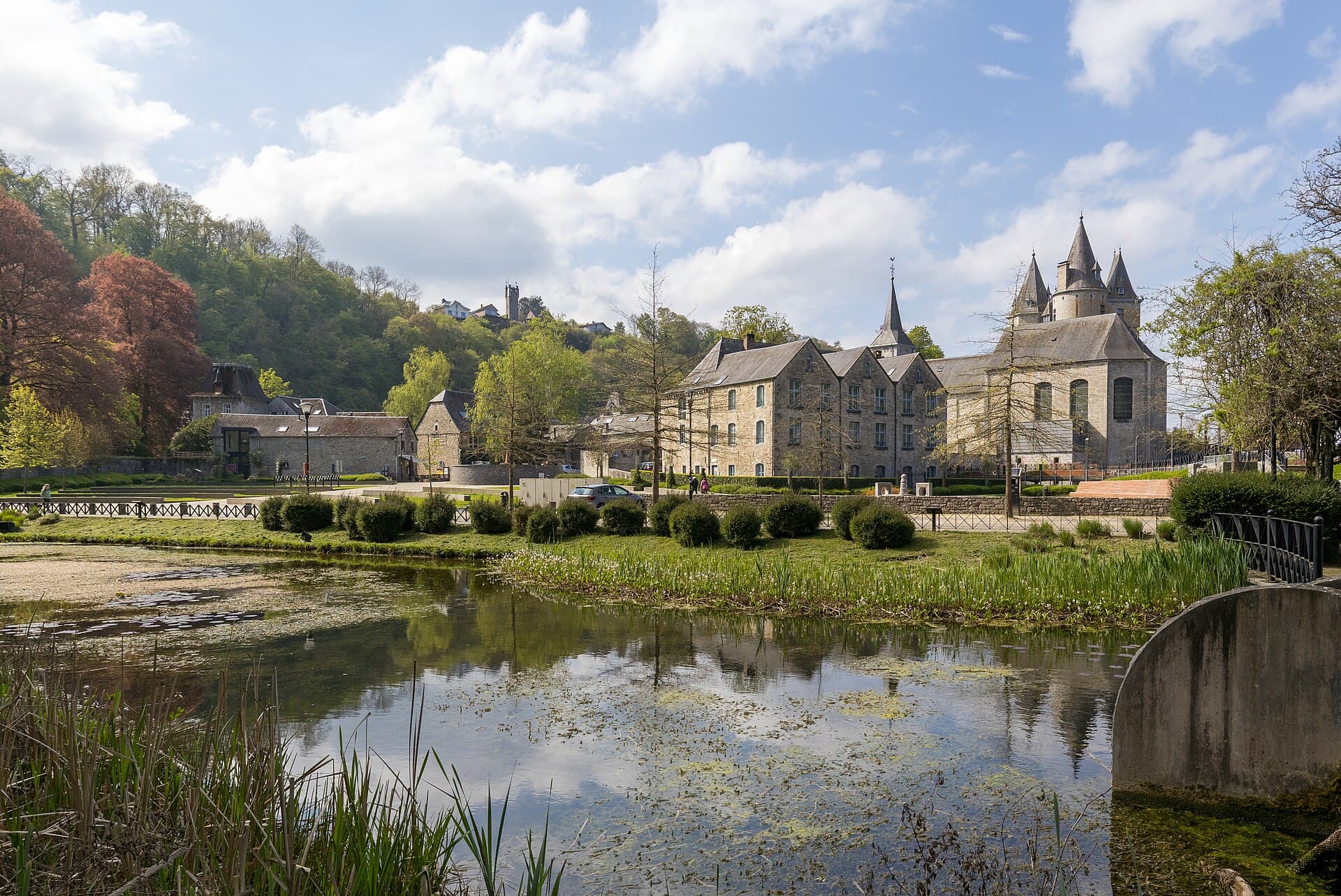 JackyM59 / CC BY-SA 4.0, via Wikimedia Commons
Self-guided audio walking tour of Durbuy — GPS route, offline playback, story-driven narration in 32 languages.
“Where ancient stones meet sculpted greens, a small city with a grand spirit.”
Not the postcards. The stories even locals don't know — whispered in your ear, right where they happened.
The imposing castle that watches over Durbuy holds a secret about its inhabitants.
Among the hundreds of meticulously sculpted boxwood figures, one stands out not just for its size, but for how it arrived.
This geological marvel, a folded rock formation, has a surprising connection to the very foundations of geology as a science.
Discover every secret of Durbuy
Every address, every reveal in full — in your ear, right where it happened.
You pick your stops. You walk. The voice reveals what the others miss.


Your self-guided audio tour of Durbuy is ready — pick your landmarks, choose your language, and start the moment you arrive.
BuyLume has a built-in augmented-reality guide. Hold your phone up and its camera shows the street ahead of you, with a glowing arrow laid over the real view that always points to your next stop — no map to puzzle over, no wrong turns. Like everything in Lume, it works fully offline.
Durbuy, often called the "smallest city in the world," is a captivating medieval town in the heart of the Belgian Ardennes. Its stone buildings, narrow lanes, and picturesque setting along the Ourthe River create a timeless, storybook atmosphere. Despite its diminutive scale, Durbuy offers a blend of historic character, natural beauty, and a surprising array of activities, making it a distinctive destination in Wallonia, Belgium's French-speaking southern region.
While its claim as the "smallest city in the world" is primarily a commercial designation, stemming from a 1331 charter, the historic core remains remarkably compact and pedestrian-friendly. Visitors can easily explore its authentic restaurants, artisan shops, and accommodation options on foot. Surrounded by the forested hills of the Ardennes, Durbuy serves as a gateway to outdoor adventures and a tranquil escape.
Durbuy's origins stretch back to ancient times, with archaeological evidence indicating Gallo-Roman and even prehistoric habitation. The settlement, first documented as 'Durboium' in 814, saw its earliest castle constructed around 889. Throughout the early Middle Ages, Durbuy's strategic location in a bend of the Ourthe River provided natural defense and made it an important outpost for the County of Luxembourg, guarding its borders.
The pivotal moment in Durbuy's history arrived in 1331 when John I, Count of Luxembourg and King of Bohemia, granted it city status and corresponding privileges. This designation allowed for the construction of city walls, a courthouse, and a police force, solidifying its urban identity despite its modest population. The town's medieval layout, with its narrow, winding lanes and stone houses, largely remains unchanged since the 14th century.
Over the centuries, Durbuy Castle, though rebuilt multiple times due to conflicts, continued to be a prominent feature. In 1628, the Seigneurie of Durbuy was acquired by Anthonie II Schetz, a military commander, whose descendants, the House of Ursel, still reside in the castle today. The current castle structure dates back to an 1880-1882 reconstruction. While Durbuy's commercial and industrial importance waned, its historical designation as a city endured. In 1977, administrative reforms expanded the municipality to include neighboring villages, increasing its formal territory and population, yet the core medieval center retains its unique historical character. Today, tourism and recreation are the primary activities, drawing visitors to experience its preserved past and natural surroundings.
Begin your exploration by wandering through Durbuy's medieval old town, where pedestrian-friendly lanes wind past 17th and 18th-century slate-roofed houses. The town center offers a collection of artisan shops, galleries, and inviting cafés. Overlooking the town and the Ourthe River is Durbuy Castle (Château de Durbuy), a private residence that, while not open for tours, provides a picturesque focal point and can be admired from various vantage points, including a tourist train ride.
A short walk from the old town leads to the Parc des Topiaires, Europe's largest public topiary garden. This unique park features over 250 sculpted boxwood plants, some more than a century old, trimmed into whimsical shapes like animals and figures. Another natural marvel is the Durbuy Anticline, also known as Le Rocher d'Omalius or Falize Rock, a 300-million-year-old geological formation of folded limestone visible from the Ourthe River, marking the highest point in Durbuy. For expansive views of the town and valley, seek out the viewpoints in the surrounding hills or take the tourist train to the Belvédère watchtower.
Beyond the town's core, the Adventure Valley Durbuy offers a wide range of outdoor activities, including kayaking on the Ourthe River, mountain biking, rock climbing, and zip-lining. The Halle aux Blés, a rare 16th-century half-timbered building, now houses a modern and contemporary art museum.
Durbuy offers distinct charms throughout the year. Spring (March-May) is ideal for hiking as the Ardennes forests turn green and temperatures are pleasant, with fewer crowds. Summer (June-August) is peak season, perfect for kayaking and other outdoor activities, though expect higher prices and more tourists. Autumn (September-November) is arguably the most picturesque, as the forests display brilliant colors, excellent for cycling and enjoying local gastronomy. Winter (December-February) transforms Durbuy into a festive wonderland, particularly known for its Christmas market and cozy atmosphere. Weekends and Belgian public holidays are generally busier; a weekday visit offers a more tranquil experience.
Durbuy is easily accessible, approximately 1.5 hours by car from Brussels via the E411 or E25 motorways. While Durbuy does not have its own train station, the nearest is Bomal-sur-Ourthe, about 5 km away, with connecting TEC bus services to the town center. The closest major international airport is Liège Airport (LGG), around 45 km distant.
Within Durbuy, the medieval streets are mostly pedestrian-only, so utilize the designated parking areas just outside the old town. Arriving early is advisable, especially during peak seasons, weekends, and festivals. The town is compact and best explored on foot. Accommodation options range from luxury hotels to rustic gîtes and charming bed & breakfasts. Durbuy is also recognized for its culinary offerings, with many restaurants serving local Ardennes specialties, craft beers, and fine dining.
Durbuy in Korean, in Chinese or in Hebrew — and 29 more languages, every stop narrated by a native voice. The widest language range of any self-guided audio tour.
Available in: