Le Franschhoek Wine Tram
Imaginez visiter des vignobles de renommée mondiale sans jamais toucher un volant.
L'histoire complète se débloque dans le tour
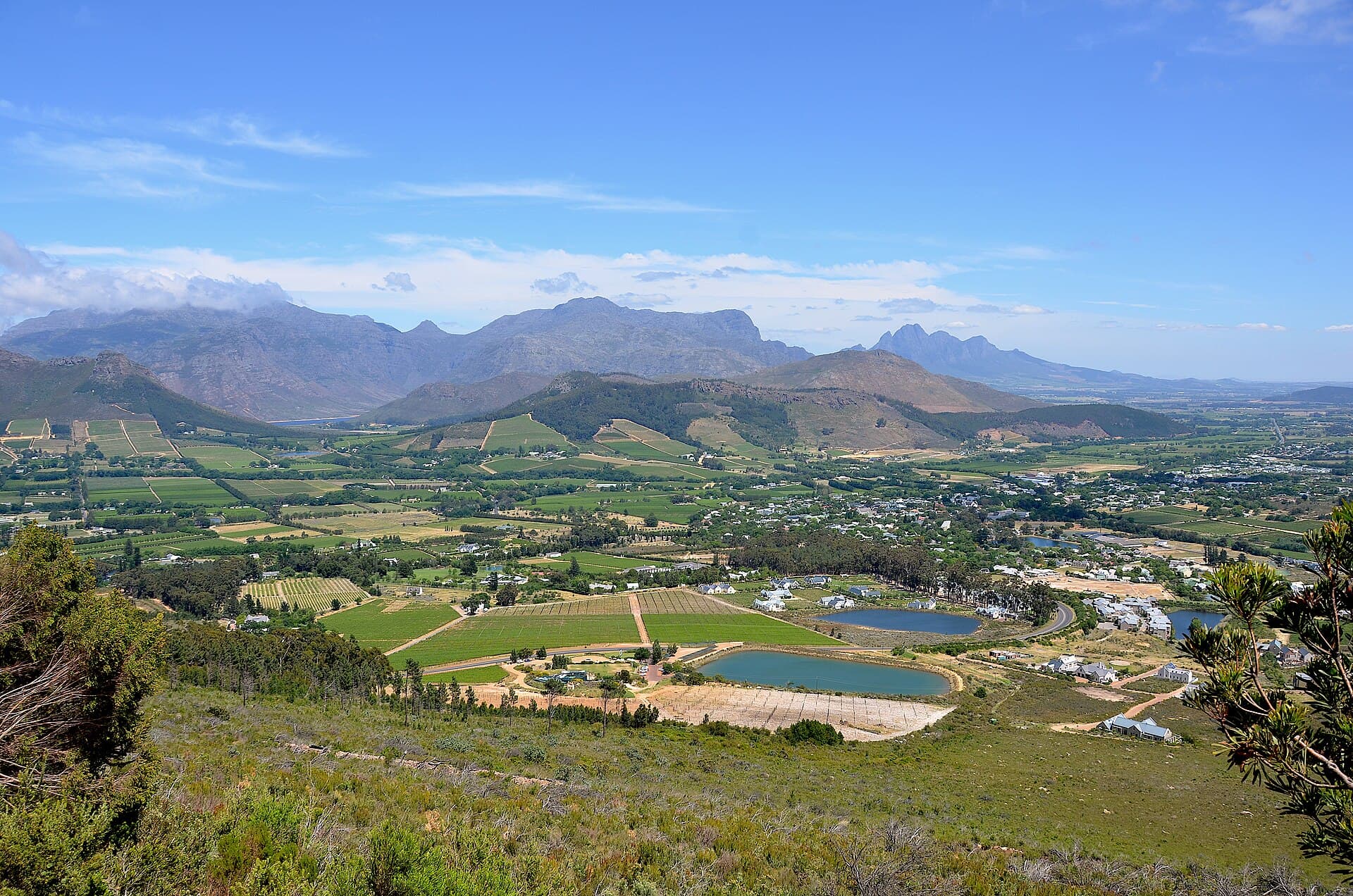 Olga Ernst / CC BY-SA 4.0, via Wikimedia Commons
Visite audio autoguidée de Franschhoek — parcours GPS à pied, lecture hors ligne, narration en 32 langues.
“Là où l'héritage français rencontre le terroir sud-africain, créant un havre de délices épicuriens.”
Pas les cartes postales. Les histoires que même les habitants ignorent — soufflées à l'oreille, là où elles se sont passées.
Imaginez visiter des vignobles de renommée mondiale sans jamais toucher un volant.
Franschhoek recèle un secret surprenant pour votre nez, pas seulement pour votre palais.
Certaines des expériences culinaires les plus acclamées de Franschhoek s'accompagnent d'une touche inattendue d'amis à plumes.
Découvrez tous les secrets de Franschhoek
Chaque adresse, chaque révélation en entier — dans ton oreille, là où elle s'est passée.
Tu choisis tes lieux. Tu marches. La voix te révèle ce que les autres ignorent.


Votre visite audioguidée de Franschhoek vous attend — choisissez vos lieux, votre langue, et lancez-vous dès votre arrivée.
AcheterLume intègre un guide en réalité augmentée. Levez votre téléphone : sa caméra montre la rue devant vous, avec une flèche lumineuse posée sur l'image réelle qui pointe toujours vers votre prochain arrêt — aucune carte à déchiffrer, aucun mauvais virage. Comme tout dans Lume, ça fonctionne entièrement hors-ligne.
Franschhoek, signifiant « Coin Français » en afrikaans, est une petite ville de la province du Cap-Occidental en Afrique du Sud, à environ 75 kilomètres (47 miles) du Cap. Elle est reconnue comme la capitale gastronomique du pays, mêlant son héritage huguenot français à une scène contemporaine de restaurants acclamés, de vignobles de classe mondiale et un charme campagnard décontracté. La ville est encadrée par des montagnes spectaculaires et des vignobles verdoyants, offrant des vues pittoresques qui captivent les visiteurs toute l'année.
Le village lui-même est facilement praticable à pied, avec Huguenot Street, l'artère principale, bordée de bâtiments de style Cape Dutch abritant des boutiques, des galeries d'art, des cafés et des épiceries fines. Au-delà de la dégustation de vins, Franschhoek offre un large éventail d'activités, de l'exploration de réserves naturelles et de musées à la découverte des marchés locaux et de l'artisanat. C'est une destination qui invite à s'attarder, de nombreux visiteurs trouvant qu'un séjour de deux nuits n'est tout simplement pas suffisant pour découvrir tout ce que la vallée a à offrir.
## Du Coin des Éléphants au Coin Français Les premiers habitants connus de Franschhoek étaient les Khoisan. La région était initialement connue sous le nom d'Oliphants hoek, ou « Coin des Éléphants », en raison des grands troupeaux d'éléphants qui parcouraient autrefois la vallée. L'histoire moderne de Franschhoek a commencé à la fin du XVIIe siècle avec l'arrivée des réfugiés huguenots français.
En 1685, le roi Louis XIV de France a interdit le protestantisme, forçant des centaines de huguenots à fuir leur patrie. En 1688, environ 300 de ces réfugiés sont arrivés au Cap de Bonne-Espérance. Les autorités coloniales néerlandaises, sous le gouverneur Simon Van Der Stel, leur ont accordé des terres dans cette vallée fertile. Les huguenots ont apporté avec eux une expertise agricole inestimable, en particulier en viticulture, qui a jeté les bases de l'industrie viticole renommée de Franschhoek.
Les colons ont nommé leurs nouvelles fermes d'après les régions qu'ils avaient quittées en France, avec des noms comme La Motte, Champagne, La Cotte, Cabrière, La Provence, Bourgogne, La Terra de Luc et La Dauphine encore prédominants aujourd'hui. Le nom de la région a finalement évolué du Coin Français à sa forme néerlandaise actuelle, Franschhoek. Malgré les efforts pour préserver leur langue, les huguenots ont été progressivement assimilés à la société locale par les colonialistes néerlandais et britanniques par le biais de l'éducation au fil des générations.
Aujourd'hui, cet héritage est mis en évidence au Monument Huguenot et au Musée du Mémorial Huguenot adjacent, qui retrace l'histoire et l'impact culturel des colons français. La ville célèbre annuellement ses racines françaises avec des événements comme le Festival de la Bastille, avec de la musique live, de la cuisine française et des activités traditionnelles.
Franschhoek offre une variété d'attractions qui s'étendent au-delà de ses célèbres vignobles. Le Franschhoek Wine Tram offre une expérience unique de type « hop-on, hop-off », permettant aux visiteurs d'explorer de nombreux domaines viticoles et de profiter de dégustations sans avoir besoin d'un chauffeur désigné. Pour ceux qui s'intéressent aux origines de la ville, le Monument Huguenot et le Musée du Mémorial offrent un aperçu des colons huguenots français qui ont façonné le caractère et les traditions viticoles de la vallée. Le complexe du musée abrite également le Premier Musée Sud-Africain du Parfum, qui retrace l'histoire de la fragrance.
La rue principale de la ville, Huguenot Street, est un endroit agréable pour une promenade, avec son architecture Cape Dutch, ses boutiques et ses galeries d'art. Franschhoek est un centre pour les amateurs d'art, avec des galeries comme Everard Read, EBONY/CURATED, Manz Art et la Pierneef Gallery à La Motte présentant l'art sud-africain contemporain et classique. Les amateurs de plein air peuvent explorer la Réserve Naturelle de Mont Rochelle pour la randonnée et des vues panoramiques sur la vallée. Le Franschhoek Motor Museum présente une collection de voitures et de motos anciennes, offrant un aperçu de l'histoire de l'automobile. Pour goûter aux produits locaux et à l'artisanat, le Franschhoek Village Market est un endroit populaire.
Franschhoek offre une expérience distincte à chaque saison. L'été (décembre à février) apporte de longues journées ensoleillées avec des températures entre 25°C et 30°C (77°F – 86°F), idéales pour les dégustations de vin en plein air et les repas en terrasse. L'automne (mars à mai) voit les vignobles se transformer avec des teintes dorées et rouges, offrant des températures plus douces (15°C – 28°C / 59°F – 82°F) parfaites pour la randonnée et les visites de vignobles sans la chaleur intense de l'été. Le printemps (septembre à novembre) revitalise la vallée avec une verdure luxuriante et des jardins en fleurs, avec des températures allant de 12°C à 26°C (54°F – 79°F). Cette période est également populaire pour des festivals comme le Franschhoek Literary Festival et le Cap Classique & Champagne Festival. L'hiver (mai à septembre), connue sous le nom de « Saison Secrète », offre un temps plus frais (10°C – 20°C / 50°F – 68°F), moins de foules et souvent des hébergements à prix réduits, avec de nombreux restaurants proposant des offres spéciales et des vignobles allumant leurs cheminées.
Franschhoek est à environ 45 minutes à une heure de route du Cap. Bien qu'une voiture offre une flexibilité pour explorer la région viticole du Cap, le Franschhoek Wine Tram est un excellent moyen de visiter les vignobles sans conduire. Il est fortement conseillé de réserver les billets du Wine Tram à l'avance, surtout pendant les hautes saisons. Les dégustations de vin dans les domaines individuels sont un coût supplémentaire et sont payées directement à chaque vignoble. De nombreuses fermes viticoles ont également des boutiques vendant des produits locaux, des fromages et des produits artisanaux.
Franschhoek est réputée pour sa scène culinaire, avec de nombreux restaurants de classe mondiale. Les réservations sont fortement recommandées pour les lieux de restauration populaires, en particulier en été et au printemps. Pour les familles, certains domaines proposent des aires de jeux ou des dégustations sans alcool, et le Wine Tram est généralement adapté aux enfants, les enfants de moins de trois ans voyageant gratuitement. Lors de votre visite, n'oubliez pas d'emporter de la crème solaire, un chapeau et des vêtements légers pendant les mois les plus chauds, et une veste légère pour les soirées plus fraîches en automne.
Franschhoek en coréen, en chinois ou en hébreu — et dans 29 autres langues, chaque étape narrée par une voix native. La plus large gamme de langues de tous les audioguides autoguidés.
Disponible en :