Cango Caves
The Cango Caves hold a secret about their earliest visitors that challenges common belief.
Full story unlocks in the tour
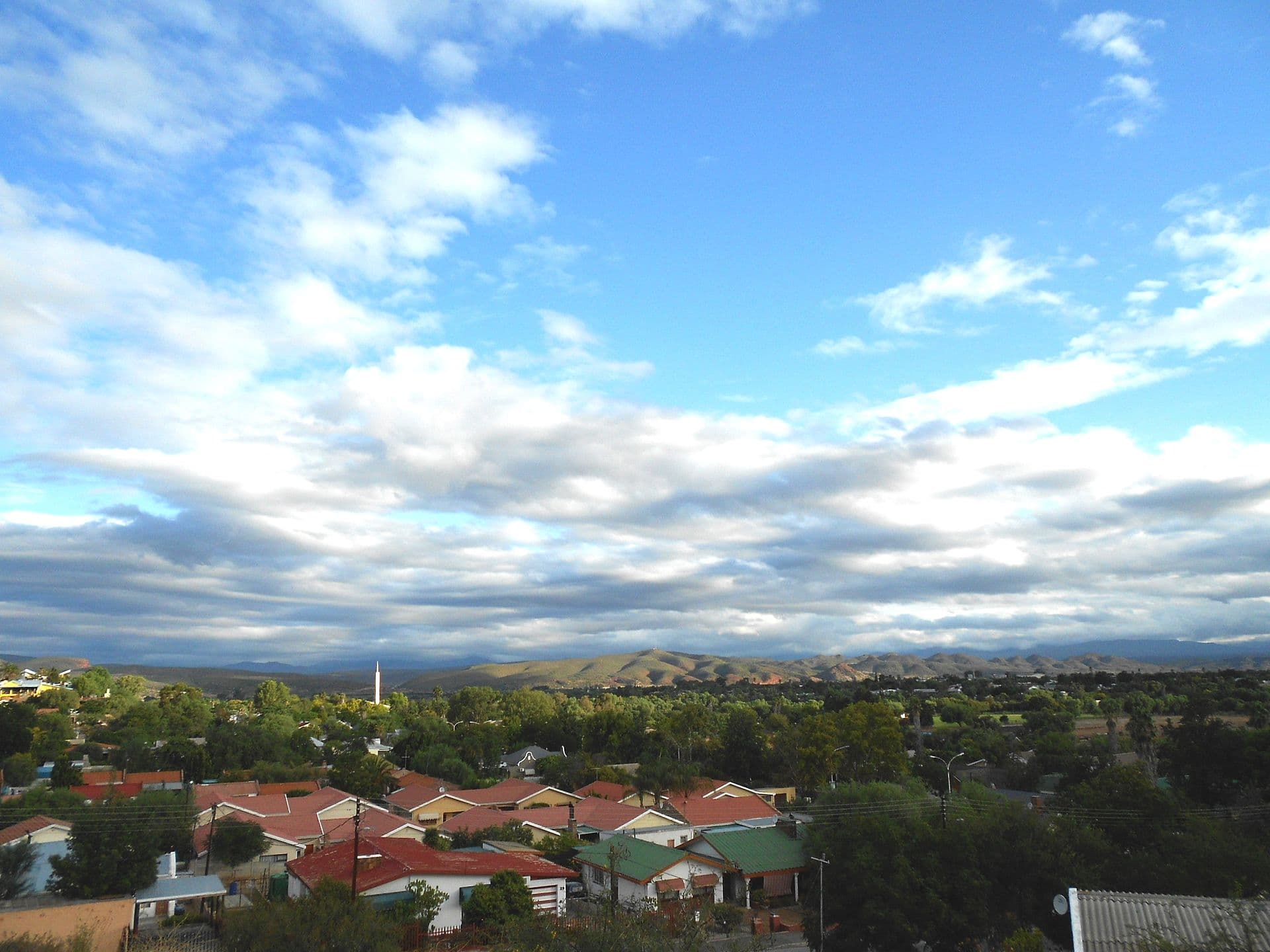 thomas / CC BY-SA 2.0, via Wikimedia Commons
Self-guided audio walking tour of Oudtshoorn — GPS route, offline playback, story-driven narration in 32 languages.
“Where dramatic landscapes meet feathered fortunes and ancient secrets.”
Not the postcards. The stories even locals don't know — whispered in your ear, right where they happened.
The Cango Caves hold a secret about their earliest visitors that challenges common belief.
The extravagant sandstone mansions of Oudtshoorn reveal a peculiar architectural detail reflecting the town's unique prosperity.
Beyond feathers and meat, Oudtshoorn's ostriches offer a surprising, albeit unconventional, wellness experience.
Discover every secret of Oudtshoorn
Every address, every reveal in full — in your ear, right where it happened.
You pick your stops. You walk. The voice reveals what the others miss.


Your self-guided audio tour of Oudtshoorn is ready — pick your landmarks, choose your language, and start the moment you arrive.
BuyLume has a built-in augmented-reality guide. Hold your phone up and its camera shows the street ahead of you, with a glowing arrow laid over the real view that always points to your next stop — no map to puzzle over, no wrong turns. Like everything in Lume, it works fully offline.
Oudtshoorn, often called the 'Ostrich Capital of the World,' is a distinctive town in South Africa's Klein Karoo region. It rests in a fertile valley, bordered by the imposing Swartberg and Outeniqua mountain ranges. This semi-arid landscape, characterized by dramatic scenery and a unique ecosystem, offers a blend of natural wonders, deep history, and quirky attractions.
The town's identity is profoundly intertwined with the ostrich farming industry, which brought immense wealth and shaped its architectural character, particularly during the late 19th and early 20th centuries. Beyond the famed ostriches, Oudtshoorn serves as a gateway to ancient caves, scenic mountain passes, and diverse wildlife experiences, making it a compelling stop for those exploring the Western Cape.
The history of Oudtshoorn stretches back centuries, with the area originally inhabited by the Khoisan people, who adapted their hunter-gatherer lifestyle to the diverse environment. Evidence suggests human presence in the region for at least 80,000 years, particularly around the Cango Caves.
European settlers began arriving in the 1700s, primarily from the Cape Colony. The town of Oudtshoorn was formally established in 1847, centered around a Dutch Reformed church built on the Hartebeesrivier farm. It was named after Baron Pieter van Rheede van Oudtshoorn, who was appointed Governor of the Cape in 1772.
The mid-19th century marked a pivotal shift with the pioneering of ostrich domestication in the Oudtshoorn district around the 1850s. The invention of the ostrich egg incubator in 1869 by Arthur Douglass significantly boosted production. The first 'feather boom' occurred between 1865 and 1870, driven by the high demand for ostrich feathers as fashion accessories in Europe. Farmers, recognizing the profitability, replaced other crops with lucerne to feed their growing ostrich flocks.
This prosperity led to a dramatic transformation of the town, with a second, even more significant, 'feather boom' between 1900 and 1914. During this 'Golden Age' of architecture, wealthy ostrich barons constructed opulent sandstone mansions, known as 'Feather Palaces,' many featuring elaborate Victorian, Edwardian, and Art Nouveau styles. The construction of the elegant single-span suspension bridge across the Grobbelaars River also dates from this period.
The collapse of the feather market with the onset of World War I forced the town to diversify its economy. After World War II, the ostrich trade slowly recovered, expanding to include ostrich skins for leather and meat. Despite challenges like bird flu outbreaks in the 2000s, Oudtshoorn has maintained its status as the world's leading producer of ostrich products and a significant tourist destination.
Oudtshoorn offers a range of unique attractions, blending natural wonders with its distinctive agricultural heritage. The Cango Caves, a 20-million-year-old system of limestone caverns, are a primary draw. Visitors can choose between a standard tour exploring vast halls or an adventure tour involving narrower passages. Booking in advance is recommended, especially during peak season.
A visit to Oudtshoorn would be incomplete without experiencing its ostrich farms. Cango Ostrich Farm and Highgate Ostrich Show Farm offer tours where you can learn about these birds, interact with them, and even stand on an ostrich egg. For wildlife enthusiasts, Cango Wildlife Ranch provides opportunities to observe cheetahs, white tigers, and crocodiles, with a focus on conservation and education.
The town's architectural legacy, particularly the 'Feather Palaces' built during the ostrich booms, can be explored on foot, with many examples found along Baron van Rheede Street. The C.P. Nel Museum, housed in a former boys' high school, offers insights into the ostrich feather industry and local history. For scenic drives and outdoor activities, the Swartberg Pass and Meiringspoort offer dramatic mountain views, hiking trails, and waterfalls.
Oudtshoorn experiences a semi-arid climate with hot summers and cool, dry winters. The best time to visit for milder temperatures and outdoor activities is from April to October. During this period, temperatures range from 15°C to 25°C, providing comfortable conditions for exploring. The shoulder months of March, April, May, and November offer a balance of pleasant weather, fewer crowds, and good value. Summers (December to February) can be very hot, with temperatures sometimes exceeding 30°C, while winters (June to August) have warm days but can be cold at night.
Oudtshoorn is approximately a four to five-hour drive from both Cape Town and Gqeberha (Port Elizabeth) and is served by several bus companies. Renting a car is advisable for exploring the region's scenic drives and attractions, as the town itself is quite spread out. Accommodation options range from backpacker hostels to luxury hotels, with booking in advance recommended during peak seasons like school holidays. English is widely spoken, and tours at the Cango Caves are offered in English, with other languages potentially available upon request. The town has a variety of restaurants offering local wines and cuisine. Be sure to carry sun protection, especially during summer, due to the dry and sunny conditions.
Oudtshoorn in Korean, in Chinese or in Hebrew — and 29 more languages, every stop narrated by a native voice. The widest language range of any self-guided audio tour.
Available in: