Drostdy Museum
The Drostdy Museum, once the seat of colonial power, is said to have permanent residents who never checked out.
Full story unlocks in the tour
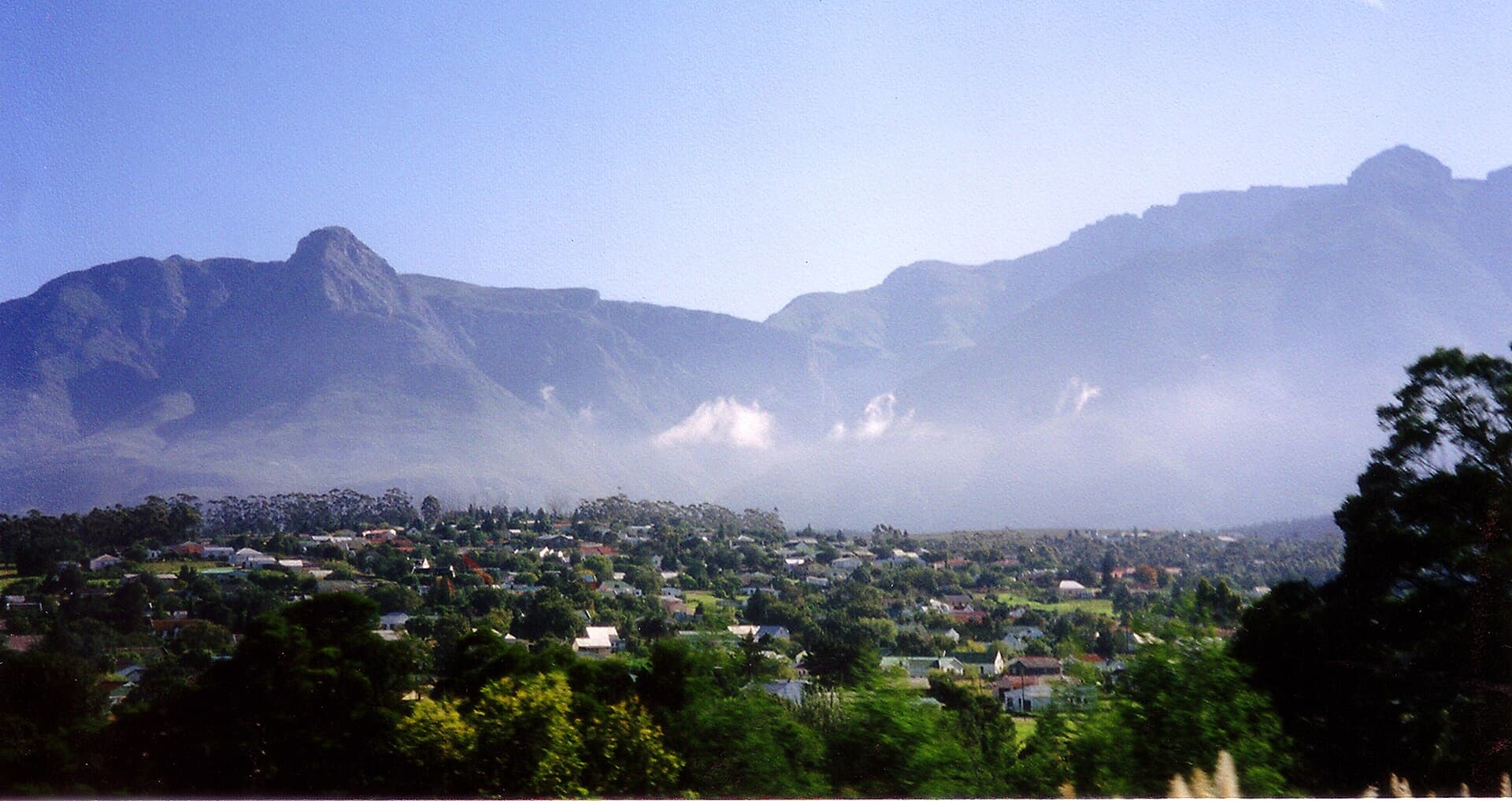 Andresdewet at English Wikipedia / CC BY-SA 3.0, via Wikimedia Commons
Self-guided audio walking tour of Swellendam — GPS route, offline playback, story-driven narration in 32 languages.
“Where Cape Dutch heritage meets mountain grandeur and quiet narratives.”
Not the postcards. The stories even locals don't know — whispered in your ear, right where they happened.
The Drostdy Museum, once the seat of colonial power, is said to have permanent residents who never checked out.
The town's official emblem holds a surprising botanical error, a case of mistaken identity that lasted for decades.
For a brief, tumultuous period, Swellendam wasn't just a town, but an independent nation.
Discover every secret of Swellendam
Every address, every reveal in full — in your ear, right where it happened.
You pick your stops. You walk. The voice reveals what the others miss.


Your self-guided audio tour of Swellendam is ready — pick your landmarks, choose your language, and start the moment you arrive.
BuyLume has a built-in augmented-reality guide. Hold your phone up and its camera shows the street ahead of you, with a glowing arrow laid over the real view that always points to your next stop — no map to puzzle over, no wrong turns. Like everything in Lume, it works fully offline.
Swellendam, the third oldest town in South Africa, is more than just a convenient stop on the N2 between Cape Town and the Garden Route; it's a living museum at the foot of the Langeberg Mountains. Established in 1745, this agreeable settlement offers a captivating blend of meticulously preserved Cape Dutch architecture, a compelling and sometimes rebellious past, and a tranquil, slow-paced atmosphere. The town's oak-lined avenues invite leisurely exploration, revealing layers of stories etched into its historic buildings and natural surroundings.
Beyond its architectural beauty, Swellendam serves as a gateway to the natural splendor of the Overberg region. With the Breede River flowing nearby and several nature reserves within easy reach, it's a haven for outdoor enthusiasts and those seeking a respite from the urban rush. From spotting rare bontebok in their natural habitat to hiking to secluded waterfalls, Swellendam provides a diverse range of experiences that connect visitors with both its cultural heritage and its expansive landscapes.
Whether you're drawn to its compelling past, its serene natural beauty, or simply the allure of a slower rhythm of life, Swellendam promises a unique and enriching South African journey. It's a place where history isn't just displayed in museums, but is woven into the very fabric of daily life, inviting you to uncover its secrets at your own pace.
Swellendam's story begins in 1743 when the Dutch East India Company (VOC) declared it a magisterial district, making it the third oldest European settlement in South Africa after Cape Town and Stellenbosch. Named after Governor Hendrik Swellengrebel, the first South African-born Governor, and his wife, Helena Ten Damme, the town quickly became a crucial administrative center and a pathway to the interior for explorers and traders.
Life on the frontier, however, was not without its challenges. By 1795, widespread dissatisfaction with the VOC's governance reached a boiling point. In a dramatic turn of events, the local burghers revolted, declaring Swellendam an independent republic on June 17, 1795. This short-lived 'Republic of Swellendam,' with Hermanus Steyn as its President, mirrored the revolutionary spirit of the French Revolution, with its citizens calling themselves 'national burghers.' The republic's independence was brief, however, lasting only six months before the British occupied the Cape later that year.
With the arrival of British settlers in the early 19th century, Swellendam experienced a period of rapid growth, becoming the heart of a mercantile empire established by Joseph Barry. The town flourished as a commercial hub, attracting artisans and contributing to the burgeoning South African wool industry. However, this 'Golden Age' was tragically curtailed by a combination of drought and a devastating fire in 1865 that destroyed 40 thatched dwellings.
Despite these setbacks, Swellendam persevered, its profound history evident in over 50 provincial heritage sites, predominantly showcasing iconic Cape Dutch architecture. The Drostdy Museum complex, originally built in 1747 as the Landdrost's residence and administrative offices, stands as a testament to this layered past, its buildings telling tales of colonial rule, rebellion, and the everyday lives of its early inhabitants.
Begin your exploration at the Drostdy Museum complex, a collection of beautifully preserved Cape Dutch buildings that offer a deep dive into Swellendam's past. The main Drostdy building, once the magistrate's residence, anchors the site, which also includes the Old Gaol and the Ambagswerf (trades yard), showcasing traditional crafts.
Walk along Voortrek Street to admire the town's distinctive architecture, particularly the Dutch Reformed Church (Moederkerk), an architectural marvel with its unique blend of Cape Dutch, Gothic, Eastern, Renaissance, and Baroque styles. For a touch of whimsy, discover the Fairy Sanctuary on Buitenkant Street, a charming garden filled with fairy and angel sculptures.
Nature lovers will find plenty to explore. Just 6 km from town, Bontebok National Park offers opportunities to spot the rare bontebok antelope, along with zebras and over 100 bird species, with options for hiking, biking, and picnicking. The Marloth Nature Reserve, adjacent to the town, provides numerous hiking trails, including the popular Duiwelsbos Waterfall hike. For a unique local flavor, visit a berry farm in the Hermitage Valley, especially from November to January, and pick your own youngberries, a crop Swellendam is known for globally.
Swellendam is pleasant to visit year-round, but the most comfortable conditions for warm-weather activities are from early November to mid-April. Spring (September to November) and autumn (March to May) offer mild temperatures and appealing scenery. While summers (November to February) are warm, winters (June to August) can be chilly, and some establishments may take a break during this period.
Swellendam is approximately a 2.5 to 3-hour drive from Cape Town along the N2. A car is essential for exploring the surrounding areas, including wine farms and nature reserves. Within the town, you can comfortably get around on foot or utilize the local 'Swellencab' service. Accommodation options range from guesthouses in heritage buildings to country lodges and self-catering cottages. It's advisable to make dinner arrangements in advance, especially during holiday seasons or if visiting on a Monday, as some restaurants may be closed or busy. Most restaurant kitchens close around 9 PM, so plan accordingly for evening meals.
Swellendam in Korean, in Chinese or in Hebrew — and 29 more languages, every stop narrated by a native voice. The widest language range of any self-guided audio tour.
Available in: