The Old Rectory
Cet hôtel accueillant recèle un passé qui précède sa façade paisible actuelle.
L'histoire complète se débloque dans le tour
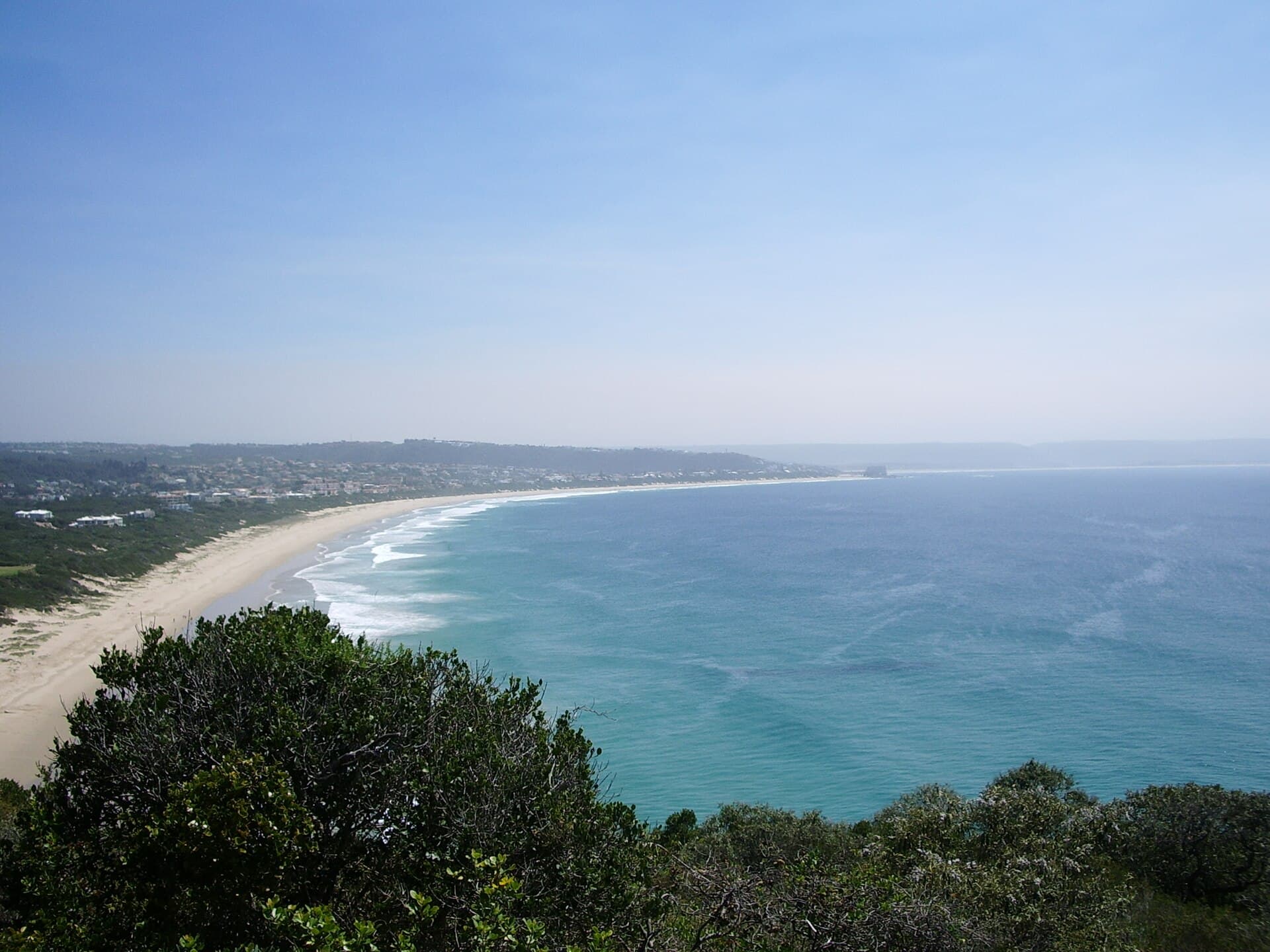 Hurkummer at English Wikipedia / CC BY-SA 3.0, via Wikimedia Commons
Visite audio autoguidée de Plettenberg Bay — parcours GPS à pied, lecture hors ligne, narration en 32 langues.
“Là où l'océan Indien murmure des histoires anciennes et où les géants de la mer jouent.”
Pas les cartes postales. Les histoires que même les habitants ignorent — soufflées à l'oreille, là où elles se sont passées.
Cet hôtel accueillant recèle un passé qui précède sa façade paisible actuelle.
Le célèbre Beacon Island Resort occupe un site à l'histoire bien plus industrielle.
Sous les falaises spectaculaires de la réserve naturelle de Robberg se trouve une grotte qui abrite le passé lointain de l'humanité.
Découvrez tous les secrets de Plettenberg Bay
Chaque adresse, chaque révélation en entier — dans ton oreille, là où elle s'est passée.
Tu choisis tes lieux. Tu marches. La voix te révèle ce que les autres ignorent.


Votre visite audioguidée de Plettenberg Bay vous attend — choisissez vos lieux, votre langue, et lancez-vous dès votre arrivée.
AcheterLume intègre un guide en réalité augmentée. Levez votre téléphone : sa caméra montre la rue devant vous, avec une flèche lumineuse posée sur l'image réelle qui pointe toujours vers votre prochain arrêt — aucune carte à déchiffrer, aucun mauvais virage. Comme tout dans Lume, ça fonctionne entièrement hors-ligne.
Plettenberg Bay, affectueusement appelée 'Plett', est une ville côtière située sur la célèbre Garden Route d'Afrique du Sud, à environ 600 km du Cap et 210 km de Gqeberha (Port Elizabeth). Cette destination captivante est réputée pour ses vastes plages dorées, sa péninsule rocheuse spectaculaire, ses lagons calmes et ses forêts indigènes luxuriantes. Le climat de la ville est remarquablement doux et tempéré, offrant plus de 300 jours d'ensoleillement par an, avec des températures marines chaudes et moins de vent que de nombreuses autres stations balnéaires.
L'attrait de Plett s'étend au-delà de sa splendeur naturelle, attirant les visiteurs par son mélange d'aventures en plein air, d'histoire profonde et de vie marine animée. De l'exploration de grottes anciennes et de la marche sur des sentiers pittoresques à la rencontre de baleines et de dauphins dans leur habitat naturel, Plettenberg Bay offre un large éventail d'expériences. C'est un endroit où la grandeur de la nature rencontre une atmosphère détendue mais engageante, ce qui en fait une étape privilégiée pour les voyageurs locaux et internationaux.
Souvent appelée la 'Riviera de l'Afrique du Sud', Plettenberg Bay a évolué depuis ses débuts en tant que 'Bahia Formosa' (Belle Baie), nom donné par les explorateurs portugais, pour devenir un centre cosmopolite. La ville est flanquée par les majestueuses montagnes de Tsitsikamma et l'océan Indien, avec la péninsule de Robberg agissant comme une barrière naturelle contre les vents dominants. Ce cadre géographique unique contribue à son climat exceptionnel et à ses paysages saisissants.
L'histoire de Plettenberg Bay remonte à plus de 100 000 ans, avec des preuves d'habitation humaine du Paléolithique moyen et supérieur trouvées dans des grottes côtières comme la grotte de Nelson Bay sur Robberg et la grotte de Matjies River à Keurboomstrand. Ces sites continuent de livrer des outils, des ornements et des débris alimentaires des premiers habitants, y compris des ancêtres du peuple Khoisan.
L'interaction européenne avec la baie a commencé aux XVe et XVIe siècles avec les explorateurs portugais. Bartolomeu Dias a cartographié la baie pour la première fois en 1487, et quatre-vingt-dix ans plus tard, Manuel de Perestrello l'a nommée à juste titre 'Bahia Formosa', ce qui signifie 'Belle Baie'. Une présence européenne précoce significative a eu lieu en 1630 lorsque 100 marins portugais ont été abandonnés pendant neuf mois après que leur navire, le São Gonçalo, ait coulé dans la baie. Ils ont construit deux plus petits bateaux pour finalement rentrer chez eux.
Les premiers colons européens permanents, principalement des bergers, des pionniers et des éleveurs du Cap-Occidental, sont arrivés en 1763. En 1776, la Compagnie néerlandaise des Indes orientales a établi des casernes dans la baie. La ville a reçu son nom actuel en 1778 lorsque le gouverneur de la colonie du Cap, le baron Joachim van Plettenberg, a visité et érigé une pierre de possession, revendiquant le territoire pour la Compagnie néerlandaise des Indes orientales. Un hangar à bois, commandé par la Compagnie néerlandaise des Indes orientales pour l'exportation de bois, a été érigé en 1787/88 par Johann Jerling, et ses vestiges sont aujourd'hui préservés en tant que site du patrimoine provincial.
Aux XIXe et début du XXe siècles, l'industrie de la chasse à la baleine a joué un rôle dans l'économie de Plettenberg Bay, avec une station de chasse à la baleine opérant sur Beacon Island jusqu'à sa fermeture en 1916. Le site de la station de chasse à la baleine a ensuite été remplacé par le Beacon Isle Southern Sun Resort, qui a ouvert ses portes en 1972. Entre 1960 et 1990, Plettenberg Bay s'est considérablement développée en tant que station de vacances. Pendant l'apartheid, les propriétés de la ville étaient désignées pour les résidents blancs, ce qui a conduit au développement de zones ségréguées comme New Horizons pour les personnes de couleur et KwaNokuthula pour les communautés Xhosa. Aujourd'hui, Plettenberg Bay est une ville animée et cosmopolite, reconnue comme une destination majeure d'observation des baleines et une partie importante de l'économie côtière de l'Afrique du Sud.
Plettenberg Bay offre un éventail varié d'attractions, mêlant merveilles naturelles et expériences culturelles. La réserve naturelle de Robberg est un point fort, un site du patrimoine mondial et monument national connu pour ses roches vieilles de 120 millions d'années et ses artefacts de l'âge de pierre. Les visiteurs peuvent explorer trois sentiers de randonnée, allant de 30 minutes à quatre heures, offrant des vues sur le littoral, les oiseaux et d'éventuelles observations de dauphins et de baleines. La réserve abrite également une colonie florissante d'otaries à fourrure du Cap.
Pour les passionnés de faune, Plett abrite Birds of Eden, la plus grande volière en vol libre du monde, et Monkeyland Primate Sanctuary, offrant des rencontres animales uniques. Les safaris océaniques et les excursions d'observation des baleines sont populaires, surtout de juillet à novembre, lorsque les baleines franches australes et les baleines à bosse visitent la baie pour s'accoupler et mettre bas. Les baleines de Bryde et trois espèces de dauphins sont présentes toute l'année.
Les magnifiques plages de la ville, telles que Lookout Beach et Keurboomstrand, sont idéales pour la baignade, le surf et la détente. Pour ceux qui s'intéressent aux saveurs locales, les Plett Winelands proposent des dégustations de vins et de mousseux, ce qui en fait la plus petite et la plus orientale région viticole d'Afrique du Sud. D'autres sites notables incluent l'historique Timber Shed et The Old Rectory.
Plettenberg Bay bénéficie d'un climat maritime tempéré doux avec des étés chauds et des hivers très doux, ce qui en fait une destination attrayante toute l'année. La saison chaude, de décembre à mars, voit des températures maximales quotidiennes moyennes supérieures à 24°C (75°F), février étant le mois le plus chaud. Cette période est idéale pour les activités de plage, le surf et les activités générales par temps chaud, bien que ce soit aussi la haute saison touristique, ce qui signifie plus de monde.
Pour l'observation des baleines, la saison principale s'étend de juin à novembre, lorsque les baleines franches australes et les baleines à bosse sont fréquemment aperçues. Les mois d'hiver (juin à août) offrent des températures diurnes douces autour de 17-18°C (63-64°F) et moins de monde, ce que les habitants appellent parfois la 'saison secrète'. Le printemps (septembre à novembre) et l'automne (mars à mai) offrent des conditions confortables pour le tourisme actif, avec des températures agréables et une atmosphère animée.
Plettenberg Bay est située sur l'autoroute N2, à environ 600 km à l'est du Cap et 240 km à l'ouest de Gqeberha (Port Elizabeth). On peut y accéder en voiture, avec des routes panoramiques le long de la Garden Route, ou par des vols réguliers vers les aéroports voisins comme l'aéroport de George (à environ une heure) ou l'aéroport de Port Elizabeth (à environ deux heures).
Les options d'hébergement à Plettenberg Bay sont variées, allant des hôtels et maisons d'hôtes luxueux aux logements indépendants, répondant à différents budgets et préférences. La ville possède une rue principale avec de nombreux restaurants, cafés et boutiques. Pour des activités comme la pêche dans la réserve naturelle de Robberg, des permis doivent être obtenus auprès des fournisseurs de permis de gestion marine et côtière, tels que les bureaux de poste. Lors de la planification d'excursions d'observation des baleines en bateau, il est conseillé de réserver auprès d'opérateurs locaux et de savoir que les excursions dépendent des conditions météorologiques.
Plettenberg Bay en coréen, en chinois ou en hébreu — et dans 29 autres langues, chaque étape narrée par une voix native. La plus large gamme de langues de tous les audioguides autoguidés.
Disponible en :