Gare de Hermanus
Hermanus possède une gare, pourtant aucun train n'arrive ou ne part jamais de ses quais.
L'histoire complète se débloque dans le tour
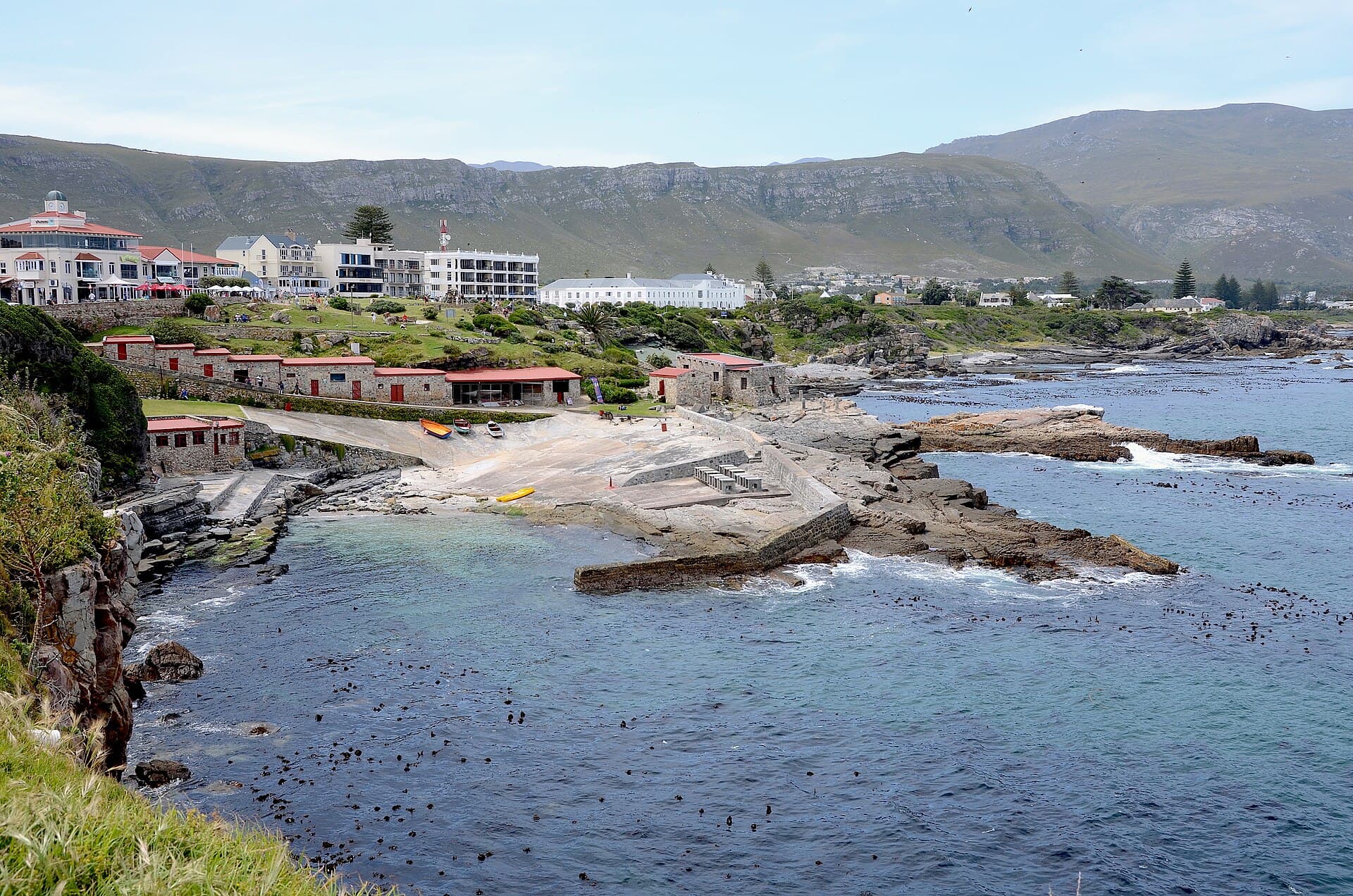 Olga Ernst / CC BY-SA 4.0, via Wikimedia Commons
Visite audio autoguidée de Hermanus — parcours GPS à pied, lecture hors ligne, narration en 32 langues.
“Là où les montagnes embrassent la mer et les baleines glissent dans la baie.”
Pas les cartes postales. Les histoires que même les habitants ignorent — soufflées à l'oreille, là où elles se sont passées.
Hermanus possède une gare, pourtant aucun train n'arrive ou ne part jamais de ses quais.
Ce musée préserve un secret sur la prospérité précoce de la ville, bien avant que l'observation des baleines ne devienne son principal attrait.
Le long de cette pittoresque promenade côtière, un individu distinctif sert d'annonceur officiel de la ville, mais pas pour les nouvelles ou les événements locaux.
Découvrez tous les secrets de Hermanus
Chaque adresse, chaque révélation en entier — dans ton oreille, là où elle s'est passée.
Tu choisis tes lieux. Tu marches. La voix te révèle ce que les autres ignorent.


Votre visite audioguidée de Hermanus vous attend — choisissez vos lieux, votre langue, et lancez-vous dès votre arrivée.
AcheterLume intègre un guide en réalité augmentée. Levez votre téléphone : sa caméra montre la rue devant vous, avec une flèche lumineuse posée sur l'image réelle qui pointe toujours vers votre prochain arrêt — aucune carte à déchiffrer, aucun mauvais virage. Comme tout dans Lume, ça fonctionne entièrement hors-ligne.
Hermanus, une ville côtière de la province du Cap-Occidental en Afrique du Sud, est mondialement reconnue comme un lieu privilégié pour l'observation des baleines depuis le rivage. Située le long de la baie de Walker, à environ 115 km au sud-est du Cap, elle présente un paysage spectaculaire où les montagnes rencontrent un littoral accidenté, ponctué de plages de sable pâle comme Grotto, Voëlklip et Onrus. La ville est passée d'un paisible village de pêcheurs à un centre animé, attirant les visiteurs par sa splendeur naturelle, ses activités variées et son ambiance décontractée.
Au-delà de ses célèbres visiteurs marins, Hermanus offre un mélange d'excursions en plein air, de rencontres culturelles et de délices culinaires. De l'exploration des réserves naturelles riches en fynbos à la dégustation des vins réputés de la vallée de Hemel-en-Aarde, la ville répond à un éventail d'intérêts. Son climat doux en fait une destination accueillante presque toute l'année, encourageant les voyageurs à découvrir son charme, qu'ils recherchent une relaxation paisible au bord de la mer ou une exploration passionnante.
Les débuts d'Hermanus remontent au début des années 1800, lorsque Hermanus Pieters, un enseignant et berger de Caledon, a suivi une piste d'éléphants jusqu'à la côte à la recherche de pâturages plus verts et d'une source fraîche. La région, initialement nommée Hermanuspietersfontein, a commencé à attirer des éleveurs estivaux, puis des pêcheurs, attirés par l'abondance de poissons dans la baie de Walker.
Au milieu du XIXe siècle, les pêcheurs avaient établi des colonies permanentes, jetant les bases de la ville. L'excellente pêche, la beauté des paysages et l'air marin réputé « guérisseur » ont commencé à attirer des vacanciers du monde entier au début des années 1900. Les médecins recommandaient même des séjours à Hermanus pour son « air de champagne ». La ville a officiellement raccourci son nom en Hermanus lorsqu'un bureau de poste est devenu nécessaire et a obtenu le statut municipal en 1904.
Un moment significatif dans le développement d'Hermanus, étonnamment, a impliqué l'absence d'une ligne de chemin de fer. Sir William Hoy, directeur général des chemins de fer sud-africains, aimait tellement la tranquillité de la ville qu'il s'est assuré que les voies ferrées ne l'atteignent jamais, une décision qui a contribué à préserver son caractère distinct. Le Vieux Port, désigné monument national en 1970, témoigne de son héritage de pêche, exposant les outils et les navires des premiers pêcheurs. À la fin des années 1980, Hermanus a commencé à reconnaître l'importance écologique des baleines franches australes, passant d'un passé de chasse à la baleine à une destination d'observation des baleines de renommée mondiale, une transformation célébrée chaque année avec le Festival des Baleines de Hermanus.
Hermanus présente une variété d'attractions, principalement axées sur son cadre côtier et sa beauté naturelle.
Le Sentier Côtier (Cliff Path) s'étend sur près de 12 kilomètres du Nouveau Port à Grotto Beach, offrant des opportunités exceptionnelles d'observer les baleines depuis la terre pendant la saison et des vues imprenables sur l'océan tout au long de l'année. Le long de ce sentier, vous pourriez rencontrer le seul Crieur de Baleines au monde, qui signale les observations de baleines avec un cor en varech.
Le Musée du Vieux Port, un site du patrimoine provincial, offre un aperçu du passé de pêche de la ville avec des expositions de bateaux historiques et d'artefacts marins.
Pour ceux qui apprécient la nature, la Réserve Naturelle de Fernkloof s'étend sur 18 kilomètres carrés dans les montagnes de Kleinrivier, présentant plus de 1 250 espèces de fynbos et 60 km de sentiers de randonnée avec des vues sur la baie de Walker et la vallée de Hemel-en-Aarde. La réserve comprend également un jardin accessible aux fauteuils roulants et une pépinière.
Au-delà de cela, explorez la vallée de Hemel-en-Aarde pour des domaines viticoles réputés offrant des dégustations et une cuisine raffinée. Hermanus possède également plusieurs plages Pavillon Bleu, dont Grotto Beach, idéale pour la baignade et les promenades décontractées.
La période optimale pour visiter Hermanus pour l'observation des baleines s'étend de juin à novembre, lorsque les baleines franches australes migrent vers la baie de Walker pour se reproduire et mettre bas. La saison atteint son apogée en septembre et octobre, coïncidant avec le Festival des Baleines de Hermanus. Pour les activités par temps chaud comme les excursions à la plage et les sports nautiques, les mois d'été de décembre à février sont idéaux, avec des températures allant de 16°C à 28°C. L'automne (de mars à mai) offre des températures agréables pour les activités de plein air, tandis que le printemps (de septembre à novembre) révèle la floraison du fynbos dans des zones comme la Réserve Naturelle de Fernkloof.
Hermanus se trouve à environ 105 à 120 kilomètres de l'aéroport international du Cap, un trajet d'environ 1,5 à 2 heures. Vous pouvez rejoindre Hermanus par l'autoroute N2 puis la R43, ou emprunter la route côtière panoramique R44. Bien qu'un service de navette quotidien depuis Le Cap ne soit pas disponible, des agences de location de voitures et des services de navette privés peuvent être organisés. La monnaie locale est le Rand sud-africain (ZAR), et une TVA de 14% est incluse dans la plupart des achats. Hermanus est généralement considérée comme une destination touristique sûre, bien qu'il soit toujours prudent de prendre des précautions de base contre la petite délinquance, en particulier dans les zones bondées ou lorsque vous marchez seul la nuit. La ville offre une gamme d'hébergements, des hôtels et maisons d'hôtes aux chalets indépendants.
Hermanus en coréen, en chinois ou en hébreu — et dans 29 autres langues, chaque étape narrée par une voix native. La plus large gamme de langues de tous les audioguides autoguidés.
Disponible en :