L'Arbre des Esclaves sur York Street
Un grand chêne au centre de George porte une tristesse silencieuse, son tronc imposant est un marqueur muet et profond.
L'histoire complète se débloque dans le tour
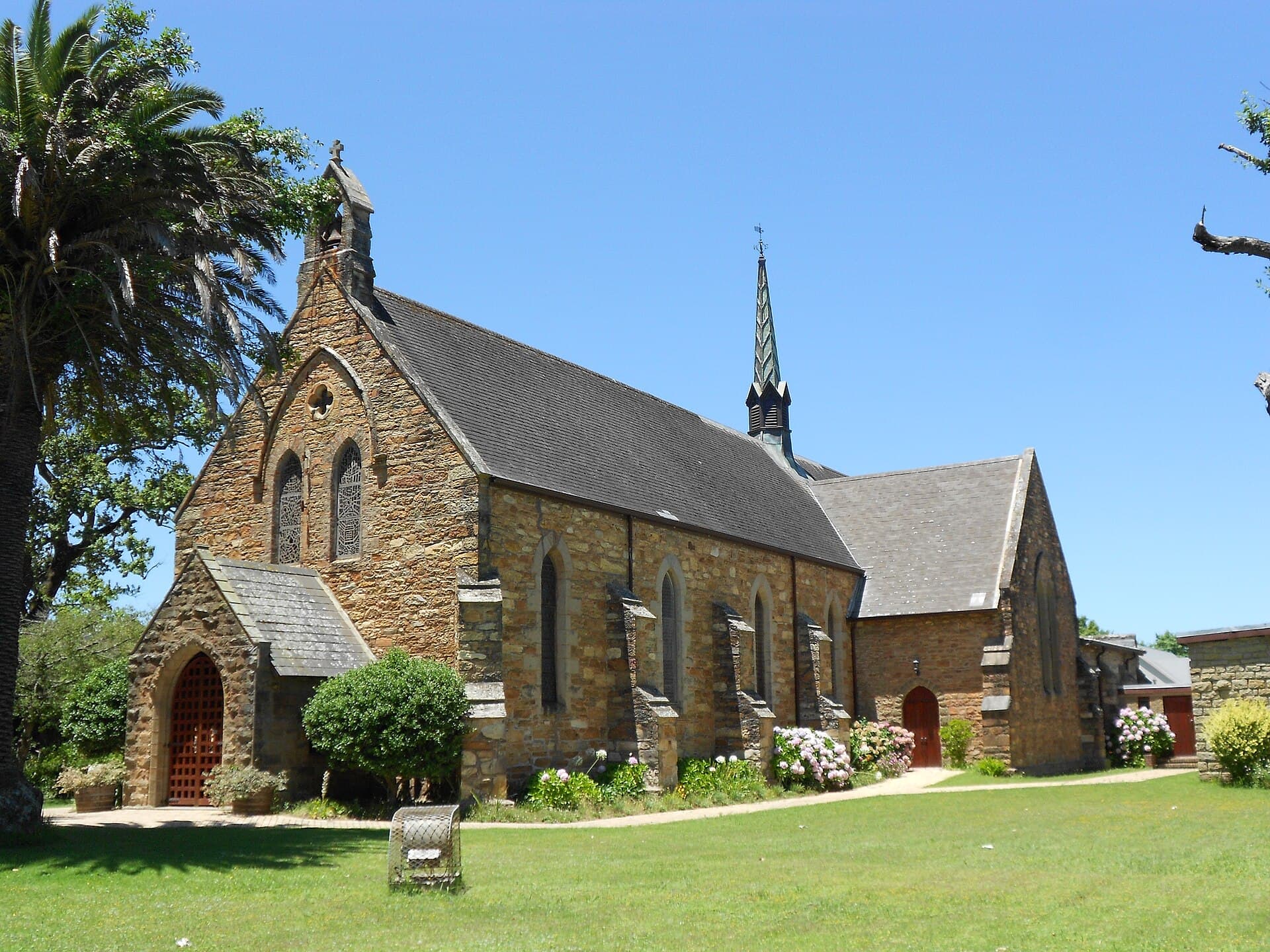 Lugerda / CC BY-SA 4.0, via Wikimedia Commons
Visite audio autoguidée de George — parcours GPS à pied, lecture hors ligne, narration en 32 langues.
“Là où les montagnes enlacent la mer et où l'histoire résonne à travers des avenues de chênes.”
Pas les cartes postales. Les histoires que même les habitants ignorent — soufflées à l'oreille, là où elles se sont passées.
Un grand chêne au centre de George porte une tristesse silencieuse, son tronc imposant est un marqueur muet et profond.
En traversant cette ancienne route de montagne, on peut ressentir l'émerveillement d'un voyageur du XIXe siècle, un hommage à l'ingénierie précoce.
Le nom même des montagnes qui bercent George porte une signification douce et ancienne des habitants originels de la terre.
Découvrez tous les secrets de George
Chaque adresse, chaque révélation en entier — dans ton oreille, là où elle s'est passée.
Tu choisis tes lieux. Tu marches. La voix te révèle ce que les autres ignorent.


Votre visite audioguidée de George vous attend — choisissez vos lieux, votre langue, et lancez-vous dès votre arrivée.
AcheterLume intègre un guide en réalité augmentée. Levez votre téléphone : sa caméra montre la rue devant vous, avec une flèche lumineuse posée sur l'image réelle qui pointe toujours vers votre prochain arrêt — aucune carte à déchiffrer, aucun mauvais virage. Comme tout dans Lume, ça fonctionne entièrement hors-ligne.
George, le cœur administratif et commercial de la Garden Route en Afrique du Sud, est une ville où la splendeur de la nature et la profondeur du passé convergent. Positionnée sur un plateau de 10 kilomètres, elle est encadrée par les montagnes Outeniqua au nord et l'océan Indien au sud. Cette situation avantageuse en fait une destination prisée et un point d'entrée principal pour explorer la Garden Route plus largement.
La genèse de la ville remonte à la fin des années 1700 en tant que poste forestier pour la Compagnie néerlandaise des Indes orientales. Elle est officiellement devenue une ville en 1811, nommée en l'honneur du monarque britannique régnant, le roi George III, ce qui en fait la première colonie britannique de la Colonie du Cap. Aujourd'hui, George présente un mélange d'activités de plein air, de sites historiques et de terrains de golf renommés, attirant les visiteurs en quête d'aventure et de tranquillité.
L'histoire de George commence par son abondance de bois. Dès 1711, les vastes forêts du Cap méridional furent découvertes, et en 1776, la Compagnie néerlandaise des Indes orientales établit un poste forestier là où se trouve aujourd'hui George pour approvisionner la Colonie du Cap en bois. Cela mena à l'établissement d'une petite communauté de bûcherons, d'un gérant, d'un forgeron et d'un charron dans la région.
Suite à l'occupation britannique permanente de la Colonie du Cap, George fut officiellement déclarée district séparé le jour de la Saint-Georges, le 23 avril 1811, et nommée en l'honneur du roi George III. Adrian van Kervel fut nommé son premier Landrost (magistrat). L'artère principale de la ville, York Street, fut nommée d'après le deuxième fils du roi George, le prince Frederick, duc d'York. L'économie précoce était centrée sur l'industrie du bois et la menuiserie, faisant de George un fournisseur principal de matériaux de construction pour la colonie. L'urbanisme initial comprenait de larges rues et la plantation d'avenues de chênes, ce qui valut à George le surnom de « Ville-Jardin ».
Des développements significatifs au XIXe siècle ont façonné George. La construction de l'historique col de Montagu dans les années 1840, conçu par Thomas Bain, relia George à l'intérieur du pays et marqua une avancée économique pour la ville. L'Église réformée néerlandaise (Moederkerk), un symbole architectural clé mêlant le style du Cap à une construction en dôme, fut consacrée en 1842. La cathédrale Saint-Marc, un exemple frappant d'architecture néo-gothique construite en pierre locale, fut érigée en 1850 et obtint le statut de cathédrale en 1911. La construction de la pittoresque ligne de chemin de fer sur les montagnes Outeniqua, qui commença en 1908 et fut achevée en 1913, améliora encore la connectivité. Le XXe siècle vit la création du musée de George en 1961, dédié à l'industrie du bois et à la vie des premiers colons, et l'ouverture d'un aéroport moderne en 1977, aujourd'hui la principale porte d'entrée aérienne de la Garden Route. En 2003, le complexe Fancourt a accueilli la Presidents Cup, attirant l'attention mondiale sur les opportunités de golf de la ville. George a célébré son 200e anniversaire en 2011, affirmant son statut de sixième plus ancienne ville d'Afrique du Sud.
George présente une gamme d'attractions qui entremêlent son cadre naturel avec son vaste passé. Le Musée des Transports Outeniqua expose le patrimoine ferroviaire de l'Afrique du Sud, avec des locomotives à vapeur, des automobiles anciennes et d'autres véhicules. De là, vous pouvez découvrir le Powervan, une éco-aventure qui grimpe les montagnes Outeniqua, offrant des vues sur les forêts, les cascades et les tunnels.
Pour une exploration plus approfondie de l'histoire locale, le Musée de George expose des artefacts liés aux peuples indigènes KhoiSan et aux premiers colons européens, et plonge dans les origines de l'industrie du bois de la ville. Les jalons architecturaux comprennent l'Église réformée néerlandaise (Moederkerk), consacrée en 1842, et la Cathédrale Saint-Marc, construite en 1850. Ne manquez pas de visiter l'Arbre des Esclaves sur York Street, un chêne ancien au passé émouvant.
Ceux qui apprécient le plein air peuvent explorer le Jardin botanique de la Garden Route, un espace serein avec des sentiers pour la marche, la randonnée et le VTT. George est également reconnue comme la capitale du golf du Cap-Occidental, avec des parcours acclamés à Fancourt, Kingswood Golf Estate et Oubaai Golf Club. Pour des promenades panoramiques, la route des Sept Cols offre un voyage à travers des cols de montagne, y compris l'historique col de Montagu. La baie de Victoria voisine est une plage de surf prisée, idéale pour une promenade le long de la jetée ou la construction de châteaux de sable.
George connaît un climat océanique doux, ce qui la rend agréable toute l'année. La période la plus agréable pour les activités par temps chaud s'étend de début décembre à fin mars, février étant le mois le plus chaud, avec une moyenne maximale de 24°C. Le printemps (septembre à novembre) et l'automne (mars à mai) offrent un temps confortable et sont idéaux pour les activités de plein air et les visites touristiques, avec moins de visiteurs que la haute saison estivale. L'hiver (juin à août) est doux, avec des températures moyennes allant de 8°C à 18°C, et est une bonne période pour observer les baleines le long de la côte. Les précipitations se produisent tout au long de l'année, mais sont souvent moins fréquentes de mai à août.
George est facilement accessible, l'aéroport de George proposant des vols directs depuis les principales villes sud-africaines. Si vous voyagez en voiture, la ville est située à peu près à mi-chemin entre Le Cap et Gqeberha (Port Elizabeth) sur l'autoroute N2. Les options d'hébergement vont des hôtels de luxe comme Fancourt aux diverses maisons d'hôtes et unités indépendantes. La monnaie officielle est le Rand sud-africain. Bien que l'Afrique du Sud compte 12 langues officielles, l'anglais est largement parlé, et l'afrikaans et l'isiXhosa sont répandus à George. Le fuseau horaire local est UTC+2 (SAST). Il est judicieux d'emporter des vêtements superposés, car les températures peuvent fluctuer, et des vêtements plus chauds sont suggérés pour les soirées plus fraîches, car le chauffage central n'est pas courant.
George en coréen, en chinois ou en hébreu — et dans 29 autres langues, chaque étape narrée par une voix native. La plus large gamme de langues de tous les audioguides autoguidés.
Disponible en :