Retzer Erlebniskeller (Cave Aventure)
Imaginez une ville où le réseau souterrain de tunnels est plus étendu que les rues en surface.
L'histoire complète se débloque dans le tour
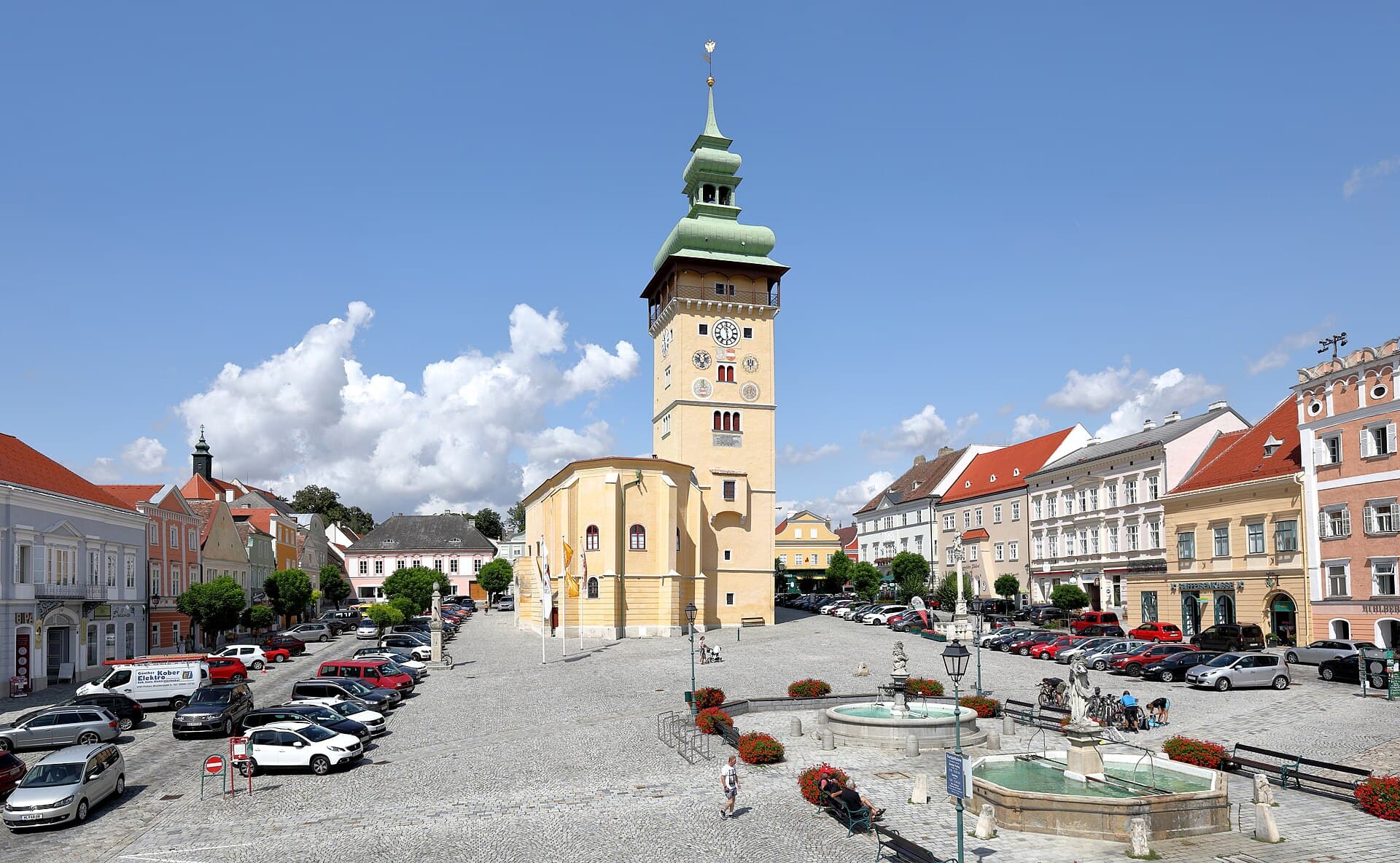 C.Stadler/Bwag / CC BY-SA 4.0, via Wikimedia Commons
Visite audio autoguidée de Retz — parcours GPS à pied, lecture hors ligne, narration en 32 langues.
“Sous la surface, une ville bâtie sur le vin et la résilience.”
Pas les cartes postales. Les histoires que même les habitants ignorent — soufflées à l'oreille, là où elles se sont passées.
Imaginez une ville où le réseau souterrain de tunnels est plus étendu que les rues en surface.
L'un des monuments les plus distinctifs d'Autriche n'est pas un grand palais ou une église historique, mais un moulin à vent en activité.
Le cœur de Retz recèle un secret sous ses grandes façades Renaissance.
Découvrez tous les secrets de Retz
Chaque adresse, chaque révélation en entier — dans ton oreille, là où elle s'est passée.
Tu choisis tes lieux. Tu marches. La voix te révèle ce que les autres ignorent.


Votre visite audioguidée de Retz vous attend — choisissez vos lieux, votre langue, et lancez-vous dès votre arrivée.
AcheterLume intègre un guide en réalité augmentée. Levez votre téléphone : sa caméra montre la rue devant vous, avec une flèche lumineuse posée sur l'image réelle qui pointe toujours vers votre prochain arrêt — aucune carte à déchiffrer, aucun mauvais virage. Comme tout dans Lume, ça fonctionne entièrement hors-ligne.
Retz, une ville viticole historique de la région du Weinviertel en Basse-Autriche, offre un mélange captivant de caractère médiéval et de patrimoine viticole. Proche de la frontière tchèque, cette destination tranquille est connue pour ses vastes caves à vin souterraines, son moulin à vent unique en activité et sa pittoresque place principale. L'identité de la ville est profondément liée à la viticulture, une tradition qui remonte à des siècles et qui est célébrée à travers ses nombreuses tavernes, festivals et le Grüner Veltliner, vin emblématique de la région.
Au-delà de son attrait vinicole, Retz offre une atmosphère détendue avec des fortifications médiévales bien préservées et d'impressionnantes maisons bourgeoises Renaissance. Les visiteurs peuvent explorer un mélange animé de culture, de vin et de sérénité rurale, que ce soit en se promenant dans le centre historique, en faisant du vélo à travers les vignobles ou en découvrant les profondeurs de la ville.
La première mention d'une colonie dans la région de Retz remonte à 1180. La ville de Retz elle-même a été établie vers 1300 par le comte Berthold von Rabenswalde, qui a également fondé le monastère dominicain à la fin du XIIIe siècle. Le début du XVe siècle s'est avéré difficile pour Retz, car les Hussites ont conquis et détruit la ville en 1425, avec un second raid en 1431. Les chroniques rapportent d'importantes pertes et des captifs emmenés à Prague lors de ces conflits.
Retz a commencé son ascension en tant que capitale du vin après avoir été conquise par Matthias Corvin en 1486. Il a régné jusqu'en 1492 et a accordé à la ville des privilèges cruciaux liés au commerce du vin. Ces privilèges ont été essentiels à la construction du vaste système de caves à vin à plusieurs étages de Retz, qui est devenu central pour sa prospérité future. Le XVIe siècle a vu d'importants développements architecturaux, y compris la transformation d'une ancienne église sur la place principale en hôtel de ville entre 1568 et 1569. La remarquable Sgraffitohaus a été construite en 1576, son œuvre d'art repeinte étant redécouverte et mise à jour en 1928, et la frappante Verderberhaus a suivi en 1583.
Au début du XVIIIe siècle, l'église paroissiale principale a subi des rénovations et des extensions baroques. Le premier moulin à vent en bois de la ville a été construit en 1772, remplacé plus tard par le moulin à vent en pierre qui se dresse aujourd'hui, un monument qui a été largement restauré et remis en service en 2010. Retz a été reliée au réseau ferroviaire autrichien en 1871, l'intégrant davantage dans la région. Aujourd'hui, Retz est reconnue comme le premier Slow Food Village de Basse-Autriche, mettant l'accent sur l'artisanat et la régionalité dans ses offres culinaires.
Commencez votre exploration sur la Hauptplatz, la vaste place principale de Retz, encadrée par des bâtiments historiques comme la Sgraffitohaus et la Verderberhaus, présentant une architecture Renaissance. Depuis la Tour de l'Hôtel de Ville, accessible par 128 marches, vous pouvez profiter d'une vue imprenable sur la ville, les vignobles et le moulin à vent emblématique.
Un voyage dans le Retzer Erlebniskeller (Cave Aventure) est essentiel. Ce labyrinthe de 20 kilomètres de caves à vin, creusées profondément dans le sable marin, est l'une des plus grandes caves à vin historiques d'Europe centrale. Des visites guidées d'environ 90 minutes offrent un aperçu de l'histoire de la viticulture et se terminent par une dégustation de vin. N'oubliez pas de vous habiller chaudement car la cave maintient une température constante de 10-12°C (48-54°F).
Juste à l'extérieur de la ville, le Moulin à vent de Retz est le seul moulin à vent opérationnel d'Autriche, proposant des visites et la vente de farine. Les ruelles de caves (Kellergassen) environnantes, autrefois des lieux de production et de stockage du vin, sont idéales pour des promenades tranquilles et offrent un aperçu de la culture viticole de la région. Pour ceux qui s'intéressent à l'histoire et à l'art locaux, le Musée de Retz abrite la Galerie de Moravie du Sud, et le Fahrradmuseum (Musée du vélo) au Schloss Gatterburg présente une collection unique. Des points de vue étendus peuvent également être trouvés à l'Altenberg et sur la colline du moulin à vent.
Retz est une destination toute l'année, bien que les meilleurs moments pour les activités par temps chaud soient de mi-juin à début septembre, lorsque les températures moyennes sont comprises entre 25°F et 77°F (25°C). Le printemps (mars à mai) et l'automne (septembre à octobre) offrent un temps agréable avec moins de monde, idéal pour explorer la ville et les vignobles. Les amateurs de vin pourraient préférer le Printemps du Vin du Weinviertel (premier week-end après Pâques) ou l'Automne du Vin, lorsque de nombreuses tavernes à vin sont ouvertes et que les fêtes des vendanges ont lieu. La Fête des Vendanges, qui se tient le dernier week-end de septembre, est un événement notable célébrant la saison.
Retz est facilement accessible en transports en commun depuis Vienne via le S-Bahn, avec des trains circulant presque toutes les heures et le trajet durant environ 1 heure à 1 heure 15 minutes. La gare est à 8 minutes à pied de la place principale. Pour ceux qui voyagent depuis l'aéroport de Vienne, le trajet en train dure environ 2,5 à 3 heures avec deux changements. Le centre-ville et de nombreuses attractions sont accessibles à pied, et la région offre un vaste réseau de pistes cyclables pour explorer la campagne environnante. Des locations de vélos sont disponibles. La monnaie locale est l'Euro. L'allemand est la langue officielle, mais des audioguides en anglais sont disponibles pour la visite du Retzer Erlebniskeller. Des vêtements chauds sont recommandés pour les visites de caves en raison des températures fraîches constantes.
Retz en coréen, en chinois ou en hébreu — et dans 29 autres langues, chaque étape narrée par une voix native. La plus large gamme de langues de tous les audioguides autoguidés.
Disponible en :