Alanovaplatz, Cemetery, and Brewery Grounds
Long before planes took to the skies, a powerful force occupied the land where Schwechat now stands. What ancient military presence left its mark beneath these modern sites?
Full story unlocks in the tour
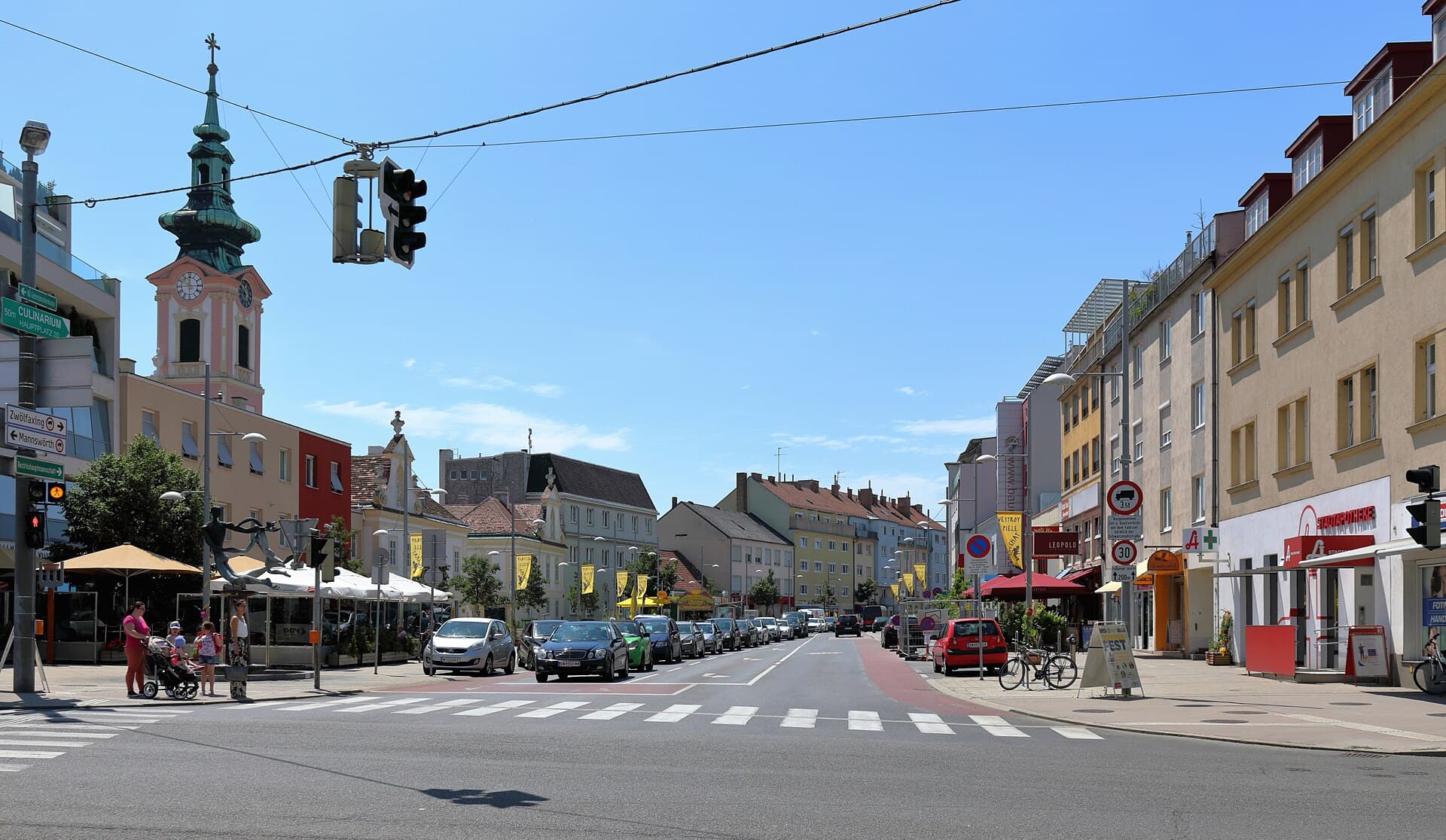 C.Stadler/Bwag / CC BY-SA 4.0, via Wikimedia Commons
Self-guided audio walking tour of Schwechat — GPS route, offline playback, story-driven narration in 32 languages.
“Beyond the airport: where Roman legions marched, industry thrived, and a legendary beer was born.”
Not the postcards. The stories even locals don't know — whispered in your ear, right where they happened.
Long before planes took to the skies, a powerful force occupied the land where Schwechat now stands. What ancient military presence left its mark beneath these modern sites?
This sprawling industrial complex, a pillar of Austria's energy industry, possesses a past deeply intertwined with one of the 20th century's most devastating conflicts.
Austria's largest airport, a bustling hub for millions, began its life with a profoundly different, more ominous purpose.
Discover every secret of Schwechat
Every address, every reveal in full — in your ear, right where it happened.
You pick your stops. You walk. The voice reveals what the others miss.


Your self-guided audio tour of Schwechat is ready — pick your landmarks, choose your language, and start the moment you arrive.
BuyLume has a built-in augmented-reality guide. Hold your phone up and its camera shows the street ahead of you, with a glowing arrow laid over the real view that always points to your next stop — no map to puzzle over, no wrong turns. Like everything in Lume, it works fully offline.
Schwechat, a town in northeastern Austria, frequently serves as the initial gateway for many travelers due to its role as home to Vienna International Airport. Yet, to perceive it merely as a transit point is to overlook a profound narrative of history, industry, and local character that extends far beyond its modern aviation hub. Situated on the west bank of the Danube River, near the confluence of the Schwechat River, the town offers a blend of urban convenience and natural surroundings.
While its proximity to Vienna makes it an excellent base for exploring the Austrian capital, Schwechat itself presents a distinct atmosphere. From its ancient Roman past to its substantial industrial contributions and the crafting of a renowned local beer, the town invites a closer look. Visitors can uncover appealing architecture, tranquil parks, and a glimpse into Austrian traditions, making it a compelling stop for those who appreciate a multifaceted destination.
The history of Schwechat extends back to Roman times, when it was the site of a Roman cavalry fort known as Ala Nova. This fort, designed for 500 horsemen, held strategic importance for securing the expansive plain between the Roman settlements of Vindobona (modern-day Vienna) and Carnuntum. Traces of Roman walls were still visible in the 19th century, and excavations continue to reveal details of this ancient past beneath contemporary Schwechat.
The town received its first mention in official documents in the 11th century and was granted market rights in 1624. A pivotal moment occurred in 1683 when Emperor Leopold I and Jan Sobieski convened in Schwechat after the liberation of Vienna from a siege, an event commemorated by an obelisk.
The 18th century marked the commencement of Schwechat's industrial ascent with the establishment of a textile factory in 1724. The 19th century brought a wave of industrialization that profoundly shaped the town. Many companies founded during this period continue to operate today, including the acclaimed Dreher Brewery, established in 1796, which produces Schwechater beer. Schwechat officially became a city in 1924.
However, its journey included significant challenges. From 1938 to 1954, Schwechat was incorporated as a district of Vienna. During World War II, its strategic importance made it a target: the city's oil refinery and the Heinkel aircraft factory endured bombings by Allied forces. Post-war, the refinery resumed production under Soviet command before becoming an integral part of the Austrian economy with the founding of OMV. In 1954, Schwechat reclaimed its independent city status.
Today, Schwechat continues its industrial legacy with the OMV oil refinery and serves as a major logistical hub, primarily due to Vienna International Airport, which itself began as a military airfield in 1938.
While many visitors pass through Schwechat en route to Vienna, the town offers several points of interest worth exploring. The Rococo parish Church of St. Jakob, constructed in 1764, features notable interior decorations. The historic Schwechat Brewery provides tours and tastings, offering insight into the production of its renowned lager. For those interested in the town's industrial side, the OMV Schwechat Refinery stands as a significant landmark, though public tours may not be readily available.
The Vienna International Airport (VIE) itself is a modern marvel, and its 109-meter-tall control tower, operational since 2006, presents a unique night laser show for arriving passengers. For a more relaxed experience, Stadtpark provides a serene green space with walking paths. The surrounding areas offer opportunities for outdoor activities like hiking and cycling along the Danube River, and the nearby Donau-Auen National Park is a sanctuary for nature lovers. While many grand attractions like Schönbrunn Palace and St. Stephen's Cathedral are found in nearby Vienna, Schwechat offers a more intimate glimpse into Austrian life.
The most pleasant times to visit Schwechat are during the spring (April to June) and fall (September to October). During these periods, the weather is mild, with average high temperatures in the 60s Fahrenheit (15-20°C), and there are fewer tourists compared to the peak summer season. Summer (June to August) is also enjoyable, with warmer temperatures between 68°F and 86°F (20-30°C), suitable for outdoor activities and festivals, but anticipate larger crowds. December provides a magical experience with Christmas markets.
Schwechat is well-connected and easily accessible. Vienna International Airport (VIE) is located directly in Schwechat, serving as a major international hub. From the airport, you can reach Vienna city center via the City Airport Train (CAT) or other public transport options. The official language is German, but English is widely understood, especially in areas frequented by visitors. The local currency is the Euro (€). Schwechat is generally safe for tourists, though standard precautions are always advisable. Accommodation options are available, catering to various budgets, with many travelers also choosing to stay in nearby Vienna.
Schwechat in Korean, in Chinese or in Hebrew — and 29 more languages, every stop narrated by a native voice. The widest language range of any self-guided audio tour.
Available in: