Dürnstein Castle Ruins
The detention of King Richard the Lionheart within Dürnstein Castle is a familiar historical event, yet the story of his discovery is even more compelling.
Full story unlocks in the tour
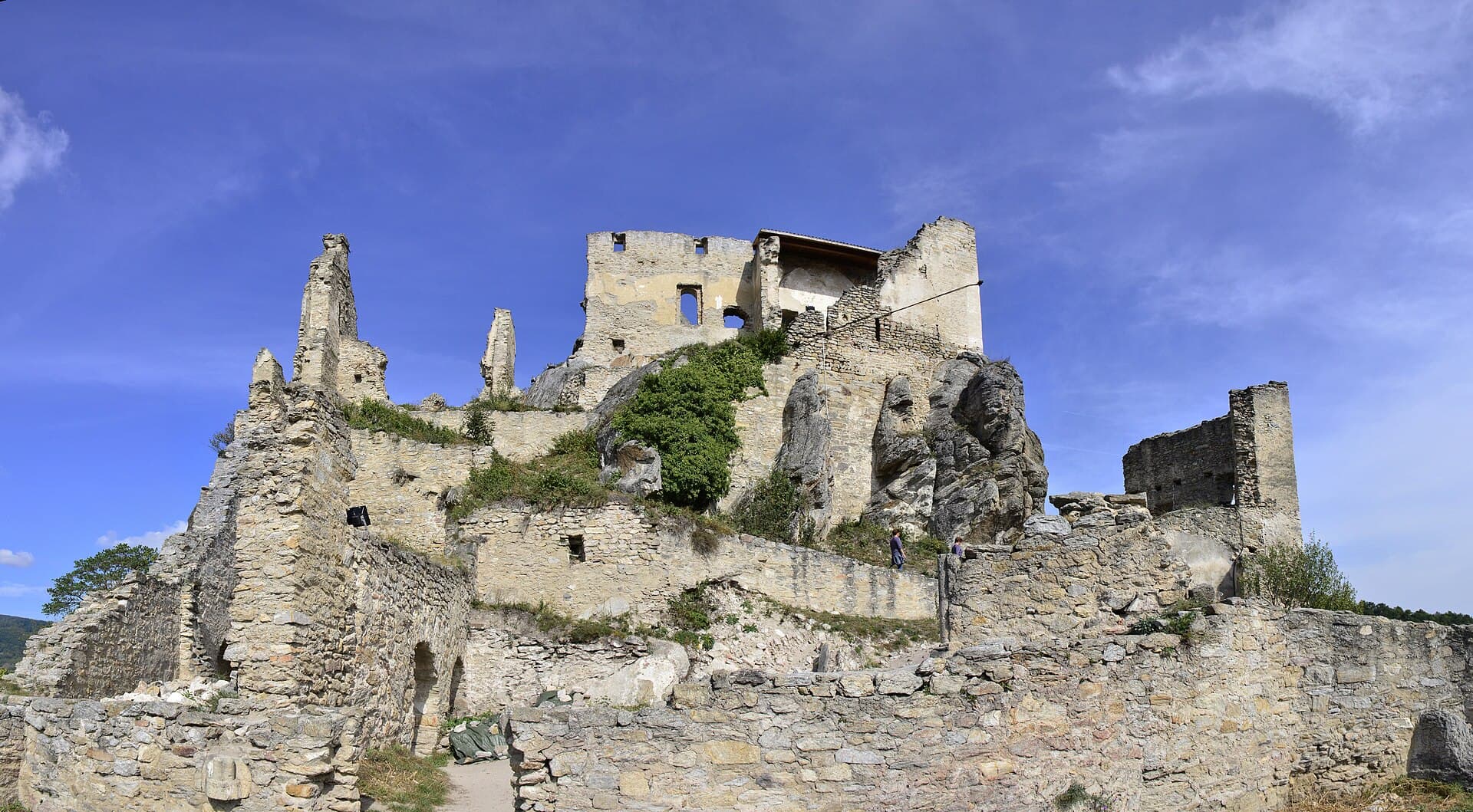 QEDquid / CC BY-SA 3.0, via Wikimedia Commons
Self-guided audio walking tour of Dürnstein — GPS route, offline playback, story-driven narration in 32 languages.
“Where medieval ramparts meet the sun-drenched vineyards of the Wachau Valley.”
Not the postcards. The stories even locals don't know — whispered in your ear, right where they happened.
The detention of King Richard the Lionheart within Dürnstein Castle is a familiar historical event, yet the story of his discovery is even more compelling.
The distinctive blue and white spire of Dürnstein Abbey serves as a prominent emblem of the Wachau Valley, but its striking color scheme possesses an unexpected origin.
Dürnstein is celebrated for its apricots, and these succulent fruits hold a particular, safeguarded designation.
Discover every secret of Dürnstein
Every address, every reveal in full — in your ear, right where it happened.
You pick your stops. You walk. The voice reveals what the others miss.
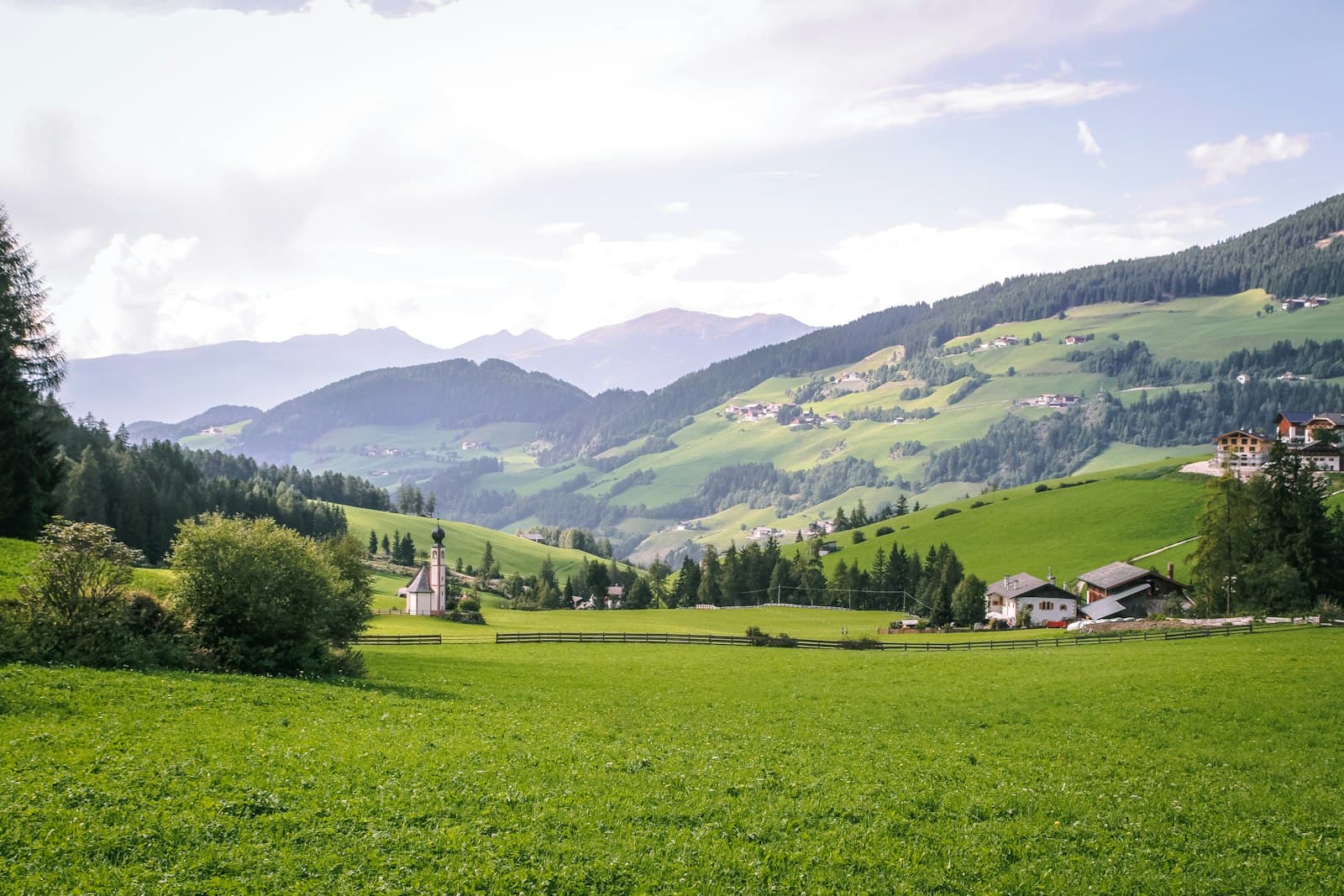
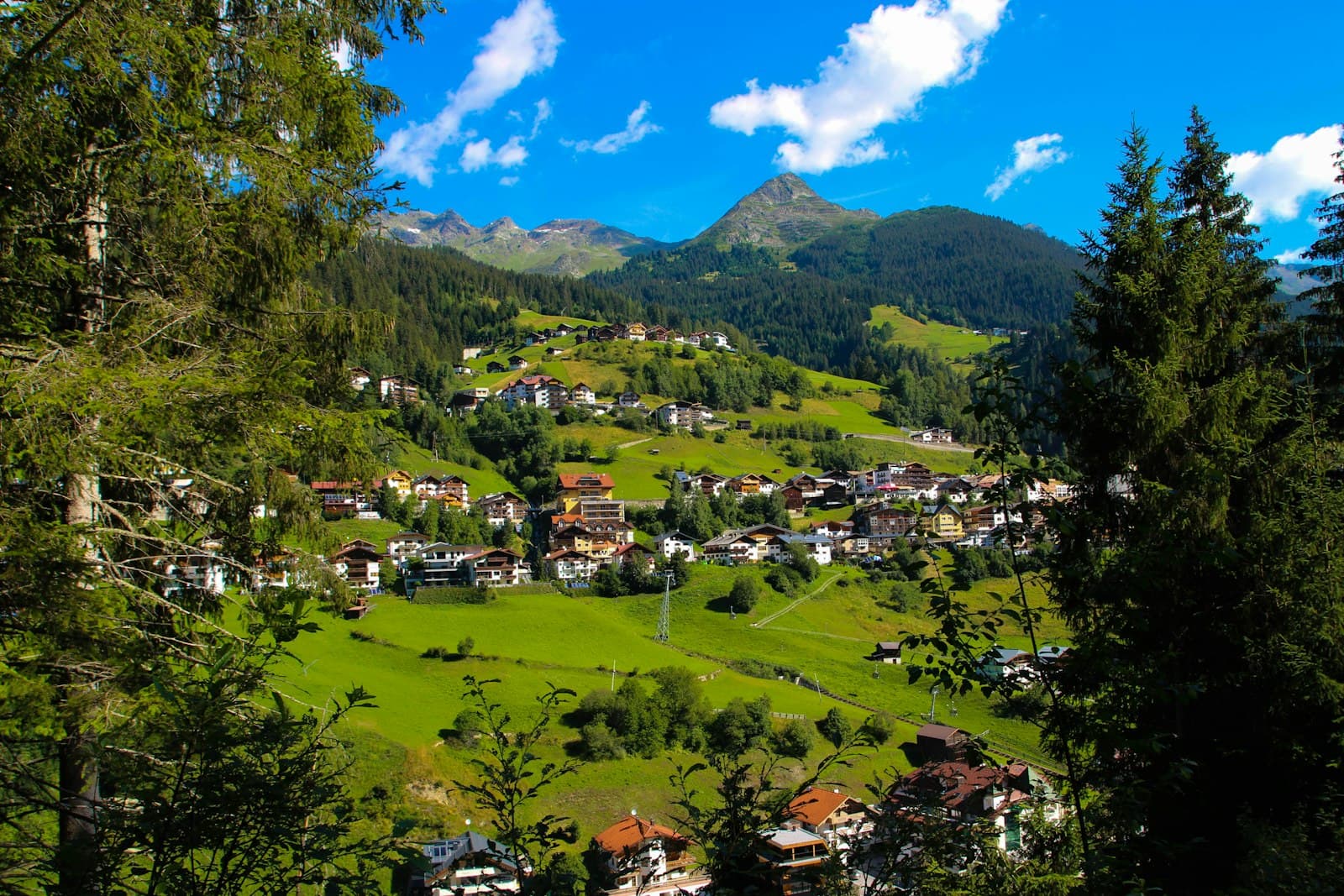
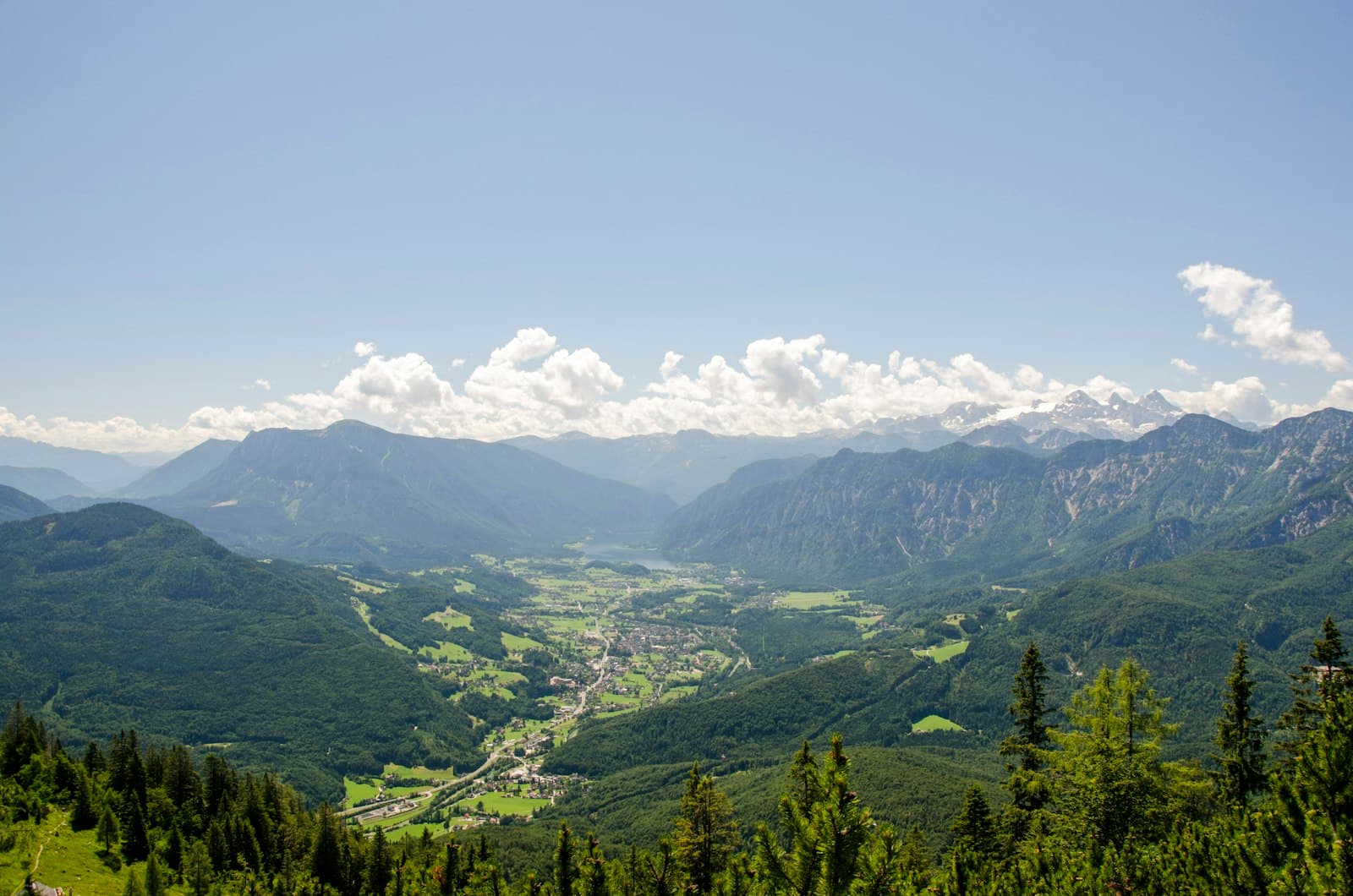
Your self-guided audio tour of Dürnstein is ready — pick your landmarks, choose your language, and start the moment you arrive.
BuyLume has a built-in augmented-reality guide. Hold your phone up and its camera shows the street ahead of you, with a glowing arrow laid over the real view that always points to your next stop — no map to puzzle over, no wrong turns. Like everything in Lume, it works fully offline.
Dürnstein, a small settlement along the Danube River in Austria's Wachau Valley, offers a convergence of history and viticulture. This scenic location features terraced vineyards, the winding Danube, and the dramatic remnants of a 12th-century castle surveying the town.
The town's well-preserved medieval core, with its narrow passages and ancient structures, invites thorough exploration. The most recognizable landmark is the Baroque Dürnstein Abbey, its distinctive blue and white church tower standing in clear relief against the green hills.
Dürnstein, alongside the nearby villages of Oberloiben and Unterloiben, serves as a significant wine-producing area, drawing nearly 1.7 million visitors annually. The entire Wachau Valley, including Dürnstein, was designated a UNESCO World Heritage Site in 2000, recognized for its singular blend of nature, culture, and enduring stories.
The story of Dürnstein begins in the 11th century when the powerful Kuenring family arrived in Austria from the Bavarian-Saxon region, acquiring extensive lands in Lower Austria. They were appointed as bailiffs by the Tegernsee Monastery in Bavaria to oversee its possessions in the Wachau. Hadmar I, a grandson of the Kuenring progenitor, constructed the fortress on the cliffs above the Danube between 1140 and 1145.
Dürnstein gained international recognition in 1192 when King Richard I of England, known as Richard the Lionheart, was detained in the Kuenring Castle by Duke Leopold V of Austria. Richard had caused offense to Leopold during the Third Crusade by removing the Austrian flag at the Battle of Acre and was suspected of ordering the murder of Conrad of Montferrat. Richard was held captive from December 1192 until March 1193, his release secured only after a substantial ransom of 150,000 silver marks was paid. A significant portion of this ransom, 100,000 silver marks, was allocated to construct the town of Wiener Neustadt. The Kuenring family utilized their share of the ransom to expand and renovate the castle and village during the 13th and 14th centuries.
Dürnstein was first referred to as a city in 1347. The castle, however, was almost entirely dismantled in 1645 by Swedish troops during the Thirty Years' War and was never rebuilt.
The Dürnstein Abbey, a prominent landmark, began as a chapel constructed in 1372, endowed by Elisabeth von Kuenring. In 1410, Augustinian Canons from Bohemia established a monastery around this chapel. The monastery underwent a significant Baroque renovation starting in 1710 under Provost Hieronymus Übelbacher, who oversaw the artistic vision and coordinated the program. Architects Joseph Munggenast, Jakob Prandtauer, and Matthias Steinl contributed to its current Baroque appearance. The abbey was dissolved in 1788 as part of Emperor Joseph II's reforms, with its buildings and parish transferred to the Augustinian Canons at Herzogenburg, who continue to administer them today.
Dürnstein presents a concise yet captivating array of sights. Begin with a walk along the town's main thoroughfare, Hauptstrasse, where elaborately adorned old residences, many dating from the 1500s, line the way. The medieval town walls, draped with ivy, still encircle the historic Old Town.
A challenging but rewarding ascent leads to the Dürnstein Castle ruins, approximately 20-30 minutes on foot from the town center. The winding path offers numerous vantage points overlooking the Danube and the surrounding vineyards. While the castle itself remains largely in ruins, the sweeping views of Dürnstein and the Wachau Valley are extraordinary.
The Dürnstein Abbey, with its iconic blue and white bell tower, merits a visit. The Abbey Church, dedicated to the Virgin Mary's Assumption, features an intricately decorated Baroque interior, including a ceiling fresco by Martin Johann Schmidt, also known as "Kremser Schmidt." A unique element inside is the fully rotatable tabernacle of the high altar, shaped like a globe and embellished with 44 scenes from the life of Jesus. The abbey also houses a South German Baroque organ from 1724 with over 800 pipes, still in its original condition.
Beyond the primary attractions, consider a wine tasting at one of Dürnstein's many wine taverns or nearby wineries, such as Domäne Wachau, recognized for its Grüner Veltliner and Riesling wines. For a refreshing interlude, the Kuenringer Swimming Bath offers an organic river beach with pools and sunbathing lawns, providing a cool retreat in summer.
The ideal time to experience Dürnstein is between March and September. Spring, from late March through April, offers particular beauty when the 100,000 apricot trees in the Wachau Valley unfurl their blossoms, painting the landscape in shades of pink and white. Temperatures during this period are mild and agreeable. July and August are the warmest and busiest months, with temperatures reaching around 28°C (82°F), providing long, sun-drenched days perfect for exploration. Autumn also brings pleasant weather and lovely scenery. For warm-weather pursuits, mid-June to late August is considered optimal.
Dürnstein is readily accessible, making it a favored day trip destination. From Vienna, one can reach Krems an der Donau by regional express (REX) train, then connect to Dürnstein via the Wachau Bahn or the WL1 VOR bus. Alternatively, many Danube river cruises include Dürnstein as a stop.
The town itself is compact and easily traversed on foot, though the ascent to the castle ruins involves a steep and uneven path. Comfortable walking shoes are advised, and layers of clothing are recommended due to potential temperature shifts. The castle ruins are freely accessible throughout the year and incur no admission charge. The Dürnstein Abbey can be toured for a fee, typically between April and October. Public parking is available outside the town center, as vehicular traffic is not permitted within Dürnstein.
Dürnstein in Korean, in Chinese or in Hebrew — and 29 more languages, every stop narrated by a native voice. The widest language range of any self-guided audio tour.
Available in: