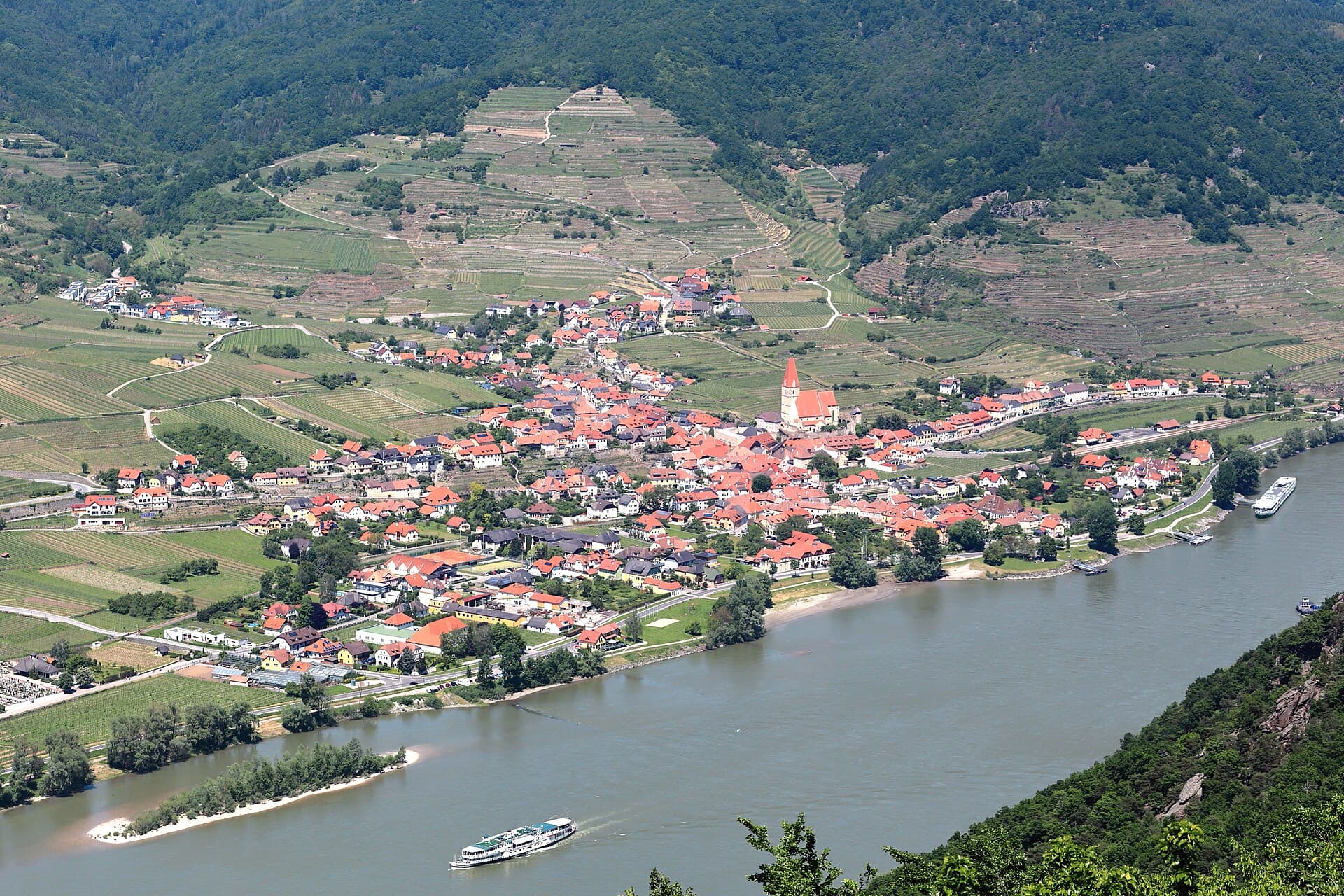
Tejado de la iglesia de San Miguel
Observe la línea del tejado de la iglesia fortificada de San Miguel, un pequeño pueblo dentro de Weißenkirchen. Podría notar algunos residentes peculiares.
La historia completa se desbloquea en el tour
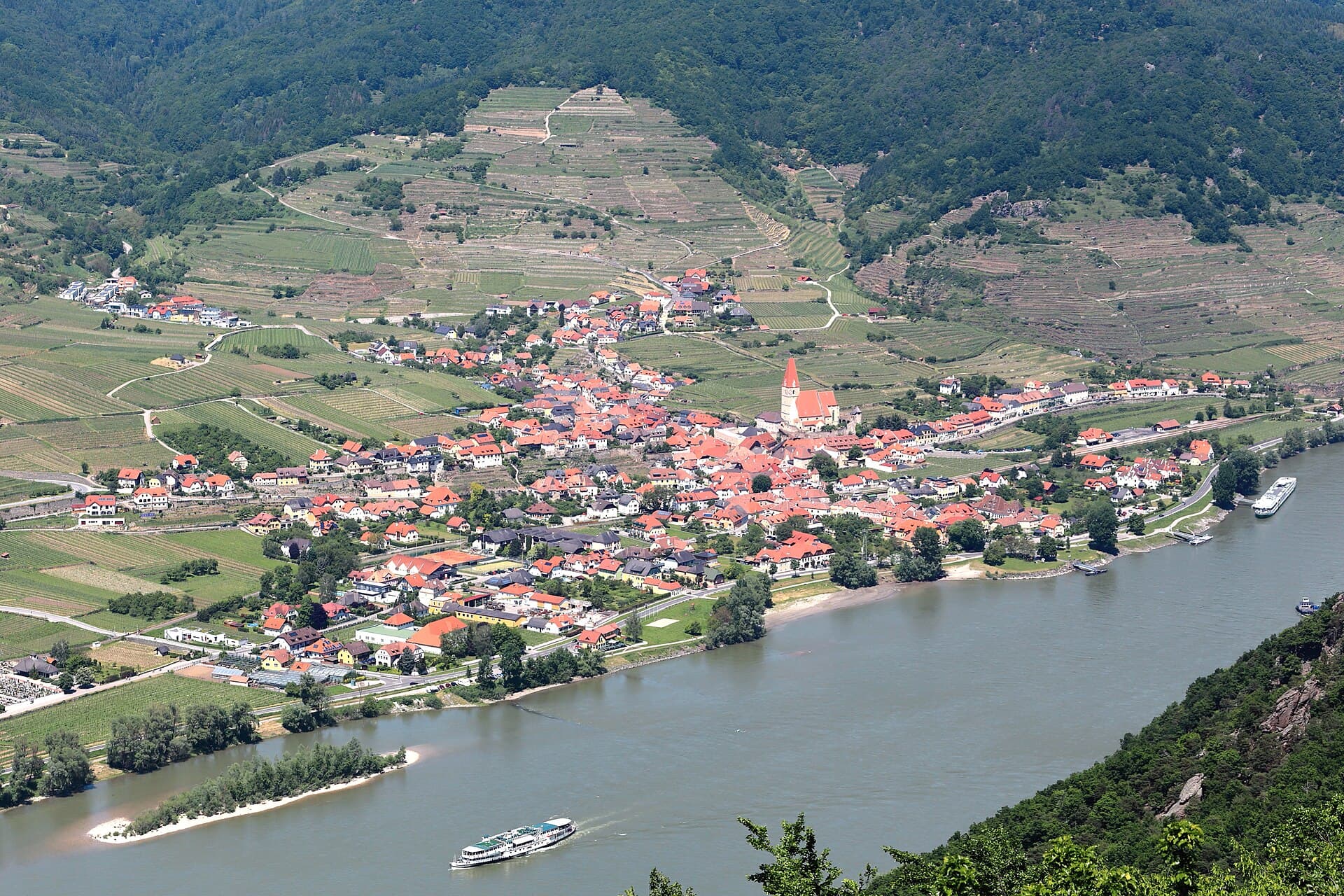 C.Stadler/Bwag / CC BY-SA 4.0, via Wikimedia Commons
Tour de audio autoguiado de Weißenkirchen in der Wachau — ruta GPS a pie, reproducción offline, narración en 32 idiomas.
“Donde las vides ancestrales se aferran a terrazas bañadas por el sol y el Danubio susurra historias de fortalezas y Riesling.”
No las postales. Las historias que ni los locales conocen — al oído, justo donde ocurrieron.
Observe la línea del tejado de la iglesia fortificada de San Miguel, un pequeño pueblo dentro de Weißenkirchen. Podría notar algunos residentes peculiares.
Cruzar el Danubio aquí ofrece una experiencia diferente a muchas otras, impulsado por una fuerza inesperada.
Entre los célebres viñedos de Weißenkirchen, uno lleva un nombre que podría incitar a la reflexión sobre los orígenes de una uva reconocida.
Descubre todos los secretos de Weißenkirchen in der Wachau
Cada dirección, cada revelación al completo — a tu oído, justo donde ocurrió.
Eliges tus paradas. Caminas. La voz te revela lo que los demás ignoran.
Tu tour de audioguía por Weißenkirchen in der Wachau te espera — elige tus lugares, tu idioma y empieza al llegar.
ComprarWeißenkirchen in der Wachau, un pintoresco pueblo vinícola en la orilla norte del Danubio, se encuentra en el corazón mismo del Valle de Wachau, declarado Patrimonio de la Humanidad por la UNESCO en Austria. Esta atractiva comunidad, que abarca los pueblos vinícolas más pequeños de Joching, Wösendorf y St. Michael, es un testimonio de siglos de viticultura y de importancia estratégica. Es un lugar donde los viñedos en terrazas ascienden drásticamente desde el río, la arquitectura histórica enmarca calles estrechas y el aire resuena con un ritmo austriaco tranquilo y auténtico.
Frecuentemente conocida como el 'corazón de la Wachau', Weißenkirchen es la comunidad vinícola más grande de la región, celebrada a nivel mundial por sus excepcionales vinos Grüner Veltliner y Riesling. Más allá de la vid, el pueblo ofrece un refugio de paz, invitando a los visitantes a pasear por patios antiguos, explorar una formidable iglesia fortificada y absorber amplias vistas del Danubio y las colinas circundantes. Es un destino que combina maravillosamente una cultura vinícola de clase mundial con una profunda narrativa histórica y una impresionante belleza natural.
Este es un lugar para viajar sin prisas, para saborear cada momento, ya sea que esté andando en bicicleta a lo largo del Danubio, caminando por viñedos bañados por el sol o disfrutando de una copa de vino local en un Heuriger tradicional. Weißenkirchen ofrece una experiencia quintaesencial de la Wachau, libre de la actividad de las grandes ciudades, pero profundamente conectada con el legado perdurable de la región.
## De viñedos monásticos a bastión fortificado La historia de Weißenkirchen comienza notablemente temprano, con su primera mención en el año 830 d.C., cuando los documentos se refieren a sus viñedos como propiedad de la Abadía de Niederaltaich. El pueblo mismo fue llamado Liechtenchyrchen en un documento de 1258 de Albero de Kuenring. Esta antigua conexión con la elaboración del vino estableció las bases de su identidad duradera.
El hito definitorio de Weißenkirchen, su homónima iglesia gótica fortificada, comenzó a construirse alrededor de 1335. Esta impresionante estructura, con sus imponentes muros blancos, sirvió para propósitos más allá del culto. A lo largo de los siglos, particularmente en los siglos XV y XVI, fue reforzada repetidamente con muros defensivos, almenas, aspilleras, fosos y torres de esquina para salvaguardar a los lugareños de los invasores, incluido el Imperio Otomano. Su torre más grande, una estructura defensiva, se añadió en 1531.
Junto a esta formidable iglesia se encuentra el Teisenhoferhof, otra maravilla arquitectónica. Originalmente una fortaleza gótica construida en 1335, fue significativamente ampliada y transformada en un hermoso patio renacentista por Heinrich Teisenhofer entre 1439 y 1465, con fortificaciones adicionales en 1542. Este edificio sirvió como lugar para reuniones y tribunales, y hoy funciona como centro cultural, albergando festivales y exposiciones.
La importancia histórica del pueblo se extiende a la educación, albergando la escuela primaria más antigua de Austria, mencionada por primera vez en 1385, que sigue en uso hasta el día de hoy. Weißenkirchen, junto con los pueblos vecinos de Joching, Wösendorf y St. Michael, forma el corazón de la Wachau, una región reconocida como Patrimonio de la Humanidad por la UNESCO en 2000 por su paisaje cultural de terrazas de viñedos, monasterios y castillos. La tradición vinícola de la zona, que se remonta a más de mil años, ha sido moldeada por su microclima único y los esfuerzos dedicados de generaciones de viticultores, lo que llevó al desarrollo del distintivo sistema de clasificación de vinos de la Wachau.
Comience su exploración en la icónica Iglesia Fortificada de Weißenkirchen, una maravilla gótica del siglo XIV cuyas paredes blancas y estructuras defensivas relatan historias de protección medieval contra invasores como las fuerzas otomanas. Ascienda a la torre de la iglesia para disfrutar de una vista panorámica del Danubio y los viñedos circundantes.
Justo al lado de la iglesia, descubra el Teisenhoferhof, un llamativo patio renacentista que una vez funcionó como una fortaleza gótica. Hoy en día, alberga el Wachaumuseum, que ofrece una visión de la historia local, la cultura del vino y el patrimonio tradicional de la Wachau. También sirve como centro cultural para diversos festivales y exposiciones.
Pasee por las estrechas calles empedradas, admirando las bodegas centenarias y los pintorescos patios, muchos de los cuales aún conservan arcadas renacentistas originales. No pierda la oportunidad de visitar un Heuriger local, una taberna de vinos tradicional de gestión familiar, para probar los célebres Grüner Veltliner y Riesling de la región directamente de los viticultores.
Para los amantes de la naturaleza, los viñedos en terrazas que rodean el pueblo ofrecen numerosos senderos para caminar, incluyendo tramos del Welterbesteig Wachau, que brindan vistas panorámicas del valle del Danubio. Andar en bicicleta por el carril bici de la Wachau a orillas del río es otra forma favorita de experimentar el paisaje escénico. Considere un viaje único en el ferry impulsado por la corriente a través del Danubio hasta St. Lorenz para una perspectiva diferente del valle.
Weißenkirchen in der Wachau presenta atractivos distintos durante todo el año, pero las temporadas intermedias suelen considerarse las más favorables. De principios a mediados de primavera (abril-mayo) es ideal para observar los cerezos en flor que adornan las laderas en rosa y blanco, y los viñedos despertando. Finales de verano y principios de otoño (agosto-octubre) traen la vendimia, transformando el pueblo en un animado centro con festivales del vino y un vibrante follaje otoñal, lo que lo convierte en un momento excelente para la degustación de vinos y las caminatas. La mayoría de las atracciones, incluidos el Wachaumuseum y los cruceros fluviales, funcionan desde mediados de abril hasta finales de octubre. Aunque más tranquilo, el invierno ofrece un ambiente acogedor con viñedos cubiertos de escarcha y cálidas tabernas. Julio es el mes más cálido, con máximas diurnas de alrededor de 25 °C (77 °F), mientras que enero es el más frío, con un promedio de 3 °C (37 °F).
Weißenkirchen es de fácil acceso, lo que lo convierte en una base conveniente para explorar el valle de Wachau. Si viaja desde Viena, tome un tren regional a Krems, luego un autobús local (Bus 715) durante aproximadamente 25 minutos directamente a Weißenkirchen. Alternativamente, considere un pintoresco crucero fluvial desde Krems o Melk, aunque el servicio es estacional. Para quienes conducen, Weißenkirchen se encuentra en la carretera B3 a lo largo de la orilla norte del Danubio.
El pueblo se explora mejor a pie, lo que le permite pasear por sus estrechas calles y patios. Las bicicletas también son una excelente manera de navegar por la región, con el carril bici del Danubio que atraviesa directamente Weißenkirchen. La oficina de información turística local (Wachaustraße 242) puede ayudarle con alojamiento, mapas, rutas de senderismo y horarios de Heuriger. Aunque muchos establecimientos son estacionales, especialmente fuera de los meses de temporada alta, generalmente encontrará restaurantes y bodegas abiertos durante la primavera, el verano y el otoño.
Weißenkirchen in der Wachau en coreano, en chino o en hebreo — y 29 idiomas más, cada parada narrada por una voz nativa. La mayor variedad de idiomas de cualquier audioguía autoguiada.
Disponible en: