Catedral de San Vicente
Esta catedral, aunque modesta en escala, esconde un detalle sobre su propia designación.
La historia completa se desbloquea en el tour
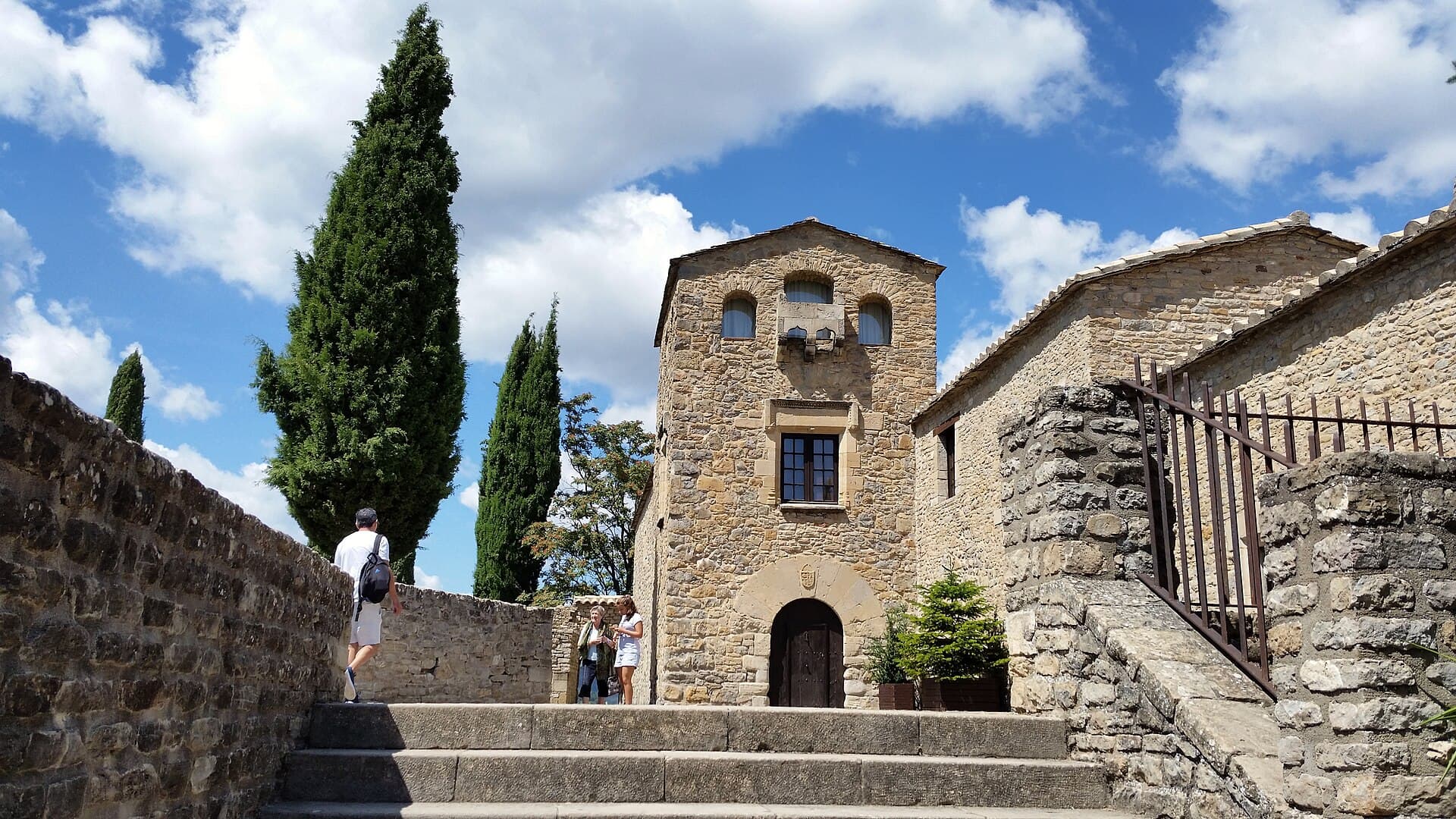 Mmorell / CC BY-SA 4.0, via Wikimedia Commons
Tour de audio autoguiado de Roda de Isábena — ruta GPS a pie, reproducción offline, narración en 32 idiomas.
“Donde las piedras antiguas narran eras de obispos, conflictos y una catedral singular.”
No las postales. Las historias que ni los locales conocen — al oído, justo donde ocurrieron.
Esta catedral, aunque modesta en escala, esconde un detalle sobre su propia designación.
Bajo el altar mayor, una cripta revela una desviación arquitectónica del diseño románico típico.
Una apreciada silla de madera del siglo XII dentro de la catedral guarda un dramático relato de su desaparición y eventual recuperación.
Descubre todos los secretos de Roda de Isábena
Cada dirección, cada revelación al completo — a tu oído, justo donde ocurrió.
Eliges tus paradas. Caminas. La voz te revela lo que los demás ignoran.


Tu tour de audioguía por Roda de Isábena te espera — elige tus lugares, tu idioma y empieza al llegar.
ComprarLume incluye una guía de realidad aumentada. Levanta el móvil y su cámara muestra la calle que tienes delante, con una flecha luminosa sobre la imagen real que siempre apunta a tu próxima parada — sin mapas que descifrar, sin giros equivocados. Como todo en Lume, funciona completamente sin conexión.
Situado en una elevación en la montañosa región de Huesca, España, Roda de Isábena es un pueblo cuyas modestas dimensiones desmienten una gran historia. Dominando el valle del Isábena, este antiguo asentamiento, hogar de aproximadamente 40 residentes, tiene la distinción de ser el pueblo más pequeño de España en albergar una antigua catedral. Su posición estratégica, accesible por una única carretera sinuosa o dos senderos, ofrecía defensas naturales y lo estableció como un punto significativo entre los primeros territorios cristianos y musulmanes.
Caminar por Roda de Isábena es retroceder en el tiempo. Los estrechos senderos del pueblo, muchos demasiado confinados para vehículos modernos, invitan a una exploración sin prisas. En un circuito de 10 minutos alrededor de su perímetro, los visitantes disfrutan de amplias vistas de los valles y montañas circundantes. El pueblo está declarado Bien de Interés Cultural, con su casco histórico, catedral románica y casas de mampostería bien conservadas que contribuyen a su carácter singular.
Los orígenes de Roda de Isábena se extienden a la época romana, cuando funcionó como una fortaleza defensiva. Su ubicación estratégica como una constricción natural en el valle del Isábena la convirtió en un punto de observación crucial durante el siglo X, delimitando la Taifa musulmana de Zaragoza del condado cristiano de Ribagorza. Esta era vio a Roda de Isábena desarrollarse como un pueblo fortificado y, alrededor de mediados del siglo X, ascendió a la prominencia como capital política y religiosa del condado de Ribagorza.
En el año 819, el obispo Sisebuto consagró la iglesia inicial, que más tarde se convertiría en el emplazamiento de la catedral. La primera catedral fue establecida en el siglo X bajo el conde Ramón II, con su hijo Odiseo sirviendo como su obispo inaugural. Sin embargo, este primer edificio fue demolido en agosto de 1006 por Abd-al-Malik, hijo de Almanzor. La catedral fue reconstruida y consagrada en 1030, con nuevas construcciones en estilo románico lombardo que tuvieron lugar en los siglos XI y XII. Esta iteración de la Catedral de San Vicente de Roda de Isábena, ahora Monumento Nacional, sufrió importantes renovaciones en el siglo XVIII, incluyendo la adición del pórtico sur y la prominente torre.
La importancia de Roda de Isábena comenzó a disminuir en el siglo XII. Después de que Ramón Berenguer IV, Conde de Barcelona y Príncipe de Aragón, recuperara Lérida del control musulmán, la sede episcopal fue trasladada a esa ciudad más grande en 1149. Este traslado despojó a la Catedral de San Vicente de su estatus oficial, aunque continuó siendo conocida como catedral. A lo largo de los siglos, la importancia del pueblo disminuyó aún más a medida que la presencia musulmana retrocedía y el condado de Ribagorza se integraba en el Reino de Aragón. La desamortización española (un proceso histórico de subasta pública de tierras propiedad de la iglesia) y las acciones de ladrones de arte del siglo XX, como René Alphonse van den Berghe (Erik 'el Belga'), despojaron aún más a la catedral de parte de su patrimonio cultural. A pesar de estos desafíos, Roda de Isábena ha mantenido su encanto medieval y su integridad histórica, ganándose un lugar entre 'Los Pueblos Más Bonitos de España' desde 2019.
El punto focal indiscutible de Roda de Isábena es la Catedral de San Vicente Mártir. Esta estructura románica, principalmente de los siglos XI y XII, es considerada la más antigua de Aragón y una de las catedrales más compactas de España. Los visitantes pueden explorar su claustro, el sarcófago de San Ramón y el Retablo Mayor. Se ofrecen visitas guiadas que proporcionan información sobre su historia, arquitectura y artefactos religiosos.
Más allá de la catedral, el pueblo mismo invita a la exploración. Pasee por la Plaza Mayor, donde se encuentra la catedral, y observe las casas de mampostería circundantes con arcos de medio punto. Descubra el Palacio del Prior, un edificio del siglo XVI construido en el sitio de la antigua abadía, ahora una vivienda privada. La cercana Torre Gorda, una torre del siglo XI, conserva su base circular y ofrece vistas del cementerio y los alrededores naturales.
Dé un paseo por el Paseo de los Canónigos, que sigue una sección parcialmente restaurada de la antigua Muralla de Roda, ofreciendo amplias vistas del valle. El Portal de Santa Ana, un pasaje cubierto, conduce a la Plaza del Portal, otro mirador para admirar las montañas circundantes. Para aquellos interesados en colecciones distintas, el Museo Naval en la Vicén Era exhibe más de 100 maquetas de barcos. El Puente Medieval que cruza el río Isábena cerca del pueblo también es un punto de interés.
El período más agradable para visitar Roda de Isábena se extiende de mayo a octubre. Durante estos meses, las temperaturas diurnas promedio oscilan entre unos agradables 18°C y 28°C (65°F a 82°F), creando condiciones ideales para hacer turismo y actividades al aire libre. La primavera (marzo a mayo) ofrece temperaturas suaves y paisajes verdes a medida que la naturaleza despierta, con menos visitantes que la temporada alta de verano. El verano (junio a agosto) es cálido y soleado, siendo julio el mes más brillante, con un promedio de 11.5 horas de luz diurna por día. El otoño (septiembre a noviembre) trae un clima tranquilo y follaje colorido, también con menos multitudes.
Roda de Isábena está situada en la provincia de Huesca, Aragón, España, a una altitud de 907 metros. El pueblo es accesible por carretera, con aparcamiento generalmente disponible en la base de la colina o a lo largo de la carretera de acceso, ya que los vehículos están en gran parte restringidos dentro del pueblo propiamente dicho. Desde Huesca, el trayecto es de aproximadamente 1 hora y 28 minutos (109 km) por la A-22, mientras que desde Zaragoza, se tarda unas 2 horas y 17 minutos (185 km) por la E-7/A-23. Madrid es un viaje más distante, aproximadamente 5 horas y 18 minutos (501 km) por la A-2.
El pueblo ofrece una modesta selección de restaurantes y alojamientos tipo apartamento, incluyendo un hotel integrado en la antigua hospedería episcopal dentro del complejo de la catedral. La moneda local es el Euro y el idioma oficial es el español. Como parte del Espacio Schengen, se aplican las regulaciones de visado estándar. La zona horaria es la Hora Central Europea (UTC +1), con horario de verano (UTC +2) observado en verano.
Roda de Isábena en coreano, en chino o en hebreo — y 29 idiomas más, cada parada narrada por una voz nativa. La mayor variedad de idiomas de cualquier audioguía autoguiada.
Disponible en: