Stavelot Abbey
Beyond its ancient stones and sacred past, the Abbey of Stavelot conceals a surprising secret for those drawn to speed.
Full story unlocks in the tour
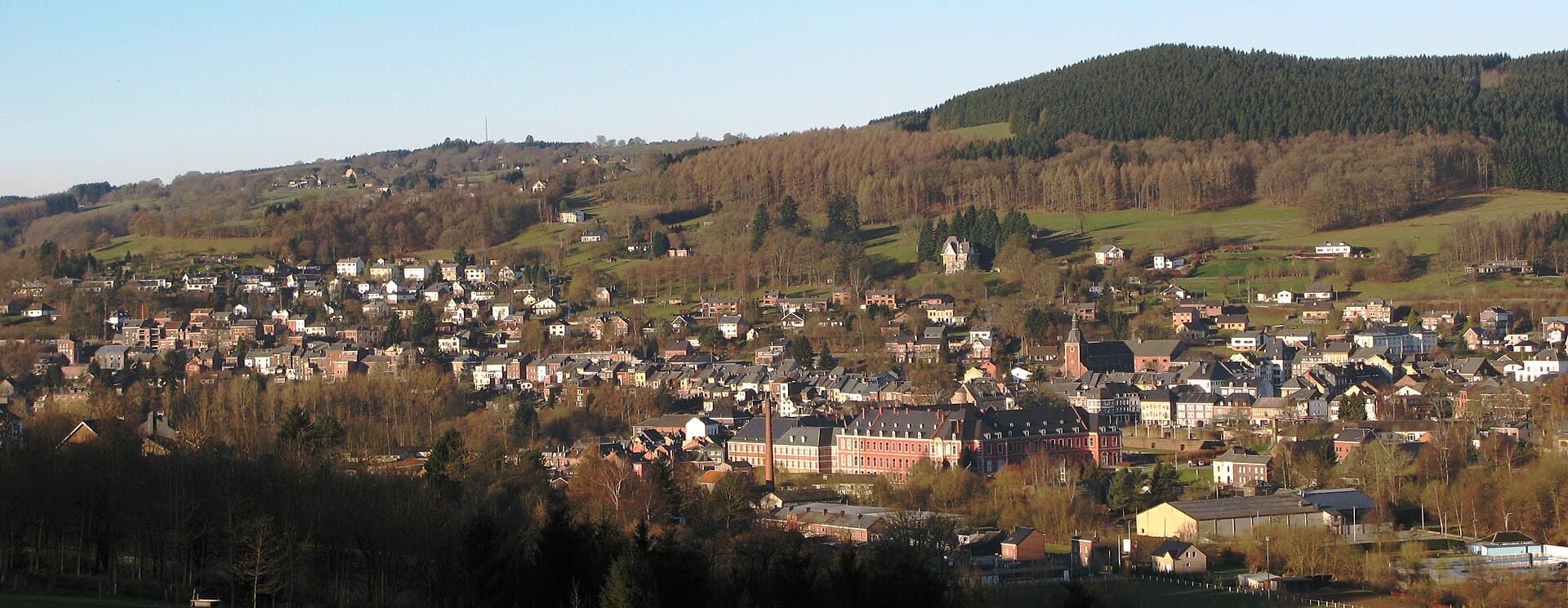 Les Meloures at Luxembourgish Wikipedia / CC BY-SA 3.0, via Wikimedia Commons
Self-guided audio walking tour of Stavelot — GPS route, offline playback, story-driven narration in 32 languages.
“Where ancient history and roaring engines converge in the Ardennes.”
Not the postcards. The stories even locals don't know — whispered in your ear, right where they happened.
Beyond its ancient stones and sacred past, the Abbey of Stavelot conceals a surprising secret for those drawn to speed.
The central square of Stavelot, with its engaging 18th-century facades, harbors a mischievous tradition that spans centuries.
The distinctive white-clad figures of Stavelot's carnival have a surprisingly rebellious genesis, rooted in defiance against authority.
Discover every secret of Stavelot
Every address, every reveal in full — in your ear, right where it happened.
You pick your stops. You walk. The voice reveals what the others miss.


Your self-guided audio tour of Stavelot is ready — pick your landmarks, choose your language, and start the moment you arrive.
BuyLume has a built-in augmented-reality guide. Hold your phone up and its camera shows the street ahead of you, with a glowing arrow laid over the real view that always points to your next stop — no map to puzzle over, no wrong turns. Like everything in Lume, it works fully offline.
Stavelot, a historic town in the Walloon Region of Belgium, is situated in the province of Liège, at the confluence of the Amblève and Eau Rouge rivers in the Ardennes. It is considered one of Belgium's oldest cities, its foundation dating back to the 7th century. The town is celebrated for its historic architecture, including 17th-century slate-roofed cottages, churches, and museums.
Stavelot offers a blend of cultural heritage and natural beauty, making it a destination for those interested in history, nature, and outdoor activities. The area provides opportunities for exploring significant landmarks, diverse natural features, and extensive hiking and cycling trails. With a population of around 7,145 as of 2018, Stavelot maintains a low population density, contributing to its tranquil atmosphere.
## From Abbey to Principality Stavelot's origins trace back to the 7th century, specifically around 648–650 AD, when Saint Remacle, a Limousin monk, founded a Benedictine abbey. This abbey was established on lands donated by King Sigebert III and quickly grew into a significant spiritual and cultural institution. The Abbey of Stavelot, along with its affiliated monastery in Malmedy, formed the core of the Princely Abbey of Stavelot-Malmedy. This ecclesiastical principality was a small, independent region within the Holy Roman Empire, where the abbot of Stavelot wielded both spiritual and temporal power for over a millennium.
## French Revolution and Shifting Borders The storied history of the principality concluded with the French Revolution in 1795, when it was dissolved, and its territory incorporated into the French département of Ourthe. Following the Congress of Vienna in 1815, Stavelot was attached to the Kingdom of the Netherlands, while Malmedy became part of Prussian Rhineland. Stavelot became part of the Kingdom of Belgium in 1830, but Malmedy remained Prussian until 1919, when it was ceded to Belgium as war reparation after World War I.
## World War II and Modern Identity During World War II, Stavelot was a scene of severe fighting, particularly during the Battle of the Bulge in December 1944. The town and surrounding area witnessed atrocities against civilians and American prisoners of war. In contemporary times, Stavelot has embraced its enduring past while also becoming known for the Circuit de Spa-Francorchamps, a renowned car racing track located within its municipality. The town's historical center, with its 18th and 19th-century architecture and medieval structures, is classified as exceptional heritage of Wallonia.
The Abbey of Stavelot is a central point of interest, revealing over thirteen centuries of history within its restored heritage setting. The abbey houses three museums: the Historical Museum of the Principality of Stavelot-Malmedy, the Spa-Francorchamps Circuit Museum, and the Guillaume Apollinaire Museum. Visitors can explore archaeological remains of the 11th-century abbey church and participate in guided tours or creative workshops.
Beyond the abbey, the Place Saint-Remacle is noteworthy for its 18th-century facades and traditional half-timbered and slate-clad houses. The Saint-Sébastien parish church, constructed in 1751, contains the shrine of Saint-Remacle and a collection of 13th-century Rhenish-Meuse goldsmith work.
For nature enthusiasts, the Coo Waterfalls are a prominent natural wonder with a 15-meter drop, offering activities like zip-lining and kayaking. The surrounding Ardennes forests provide over 500 km of walking and cycling trails, including the High Fens Natural Reserve with its wooden boardwalks and scenic beauty. Other natural attractions include the Trôs Marets Valley, a gorge offering an idyllic hiking experience, and the Bayehon Waterfall.
Stavelot is enjoyable year-round, but the most pleasant weather for exploring is during June, July, August, and September, with comfortable temperatures ranging from 18°C to 22°C (64°F to 72°F). These months offer a good balance of sunny and rainy days. For warm-weather activities, early July to late August is ideal. The town also has a festive atmosphere during the Christmas season with markets and hosts the renowned Laetare de Stavelot carnival on the fourth Sunday of Lent.
Stavelot is easily accessible by car, with exit 11 of the E421 (Verviers-Prüm) motorway nearby. For those preferring public transport, the nearest train station is in Trois-Ponts, with hourly bus connections to Stavelot taking approximately 10 minutes.
When visiting, comfortable walking shoes are recommended due to the town's paved streets and hilly terrain. It's advisable to check the opening hours of attractions in advance, as some may have limited schedules. Guided tours of the Abbey and other historical sites are available in French, Dutch, German, and English, typically lasting 1 hour and 30 minutes. Don't forget to sample the local specialty, Stavelot Tripes.
Stavelot in Korean, in Chinese or in Hebrew — and 29 more languages, every stop narrated by a native voice. The widest language range of any self-guided audio tour.
Available in: