Bala Qila (Alwar Fort)
This imposing fort, visible from almost anywhere in Alwar, holds a secret about its construction that speaks to the ingenuity of its builders.
Full story unlocks in the tour
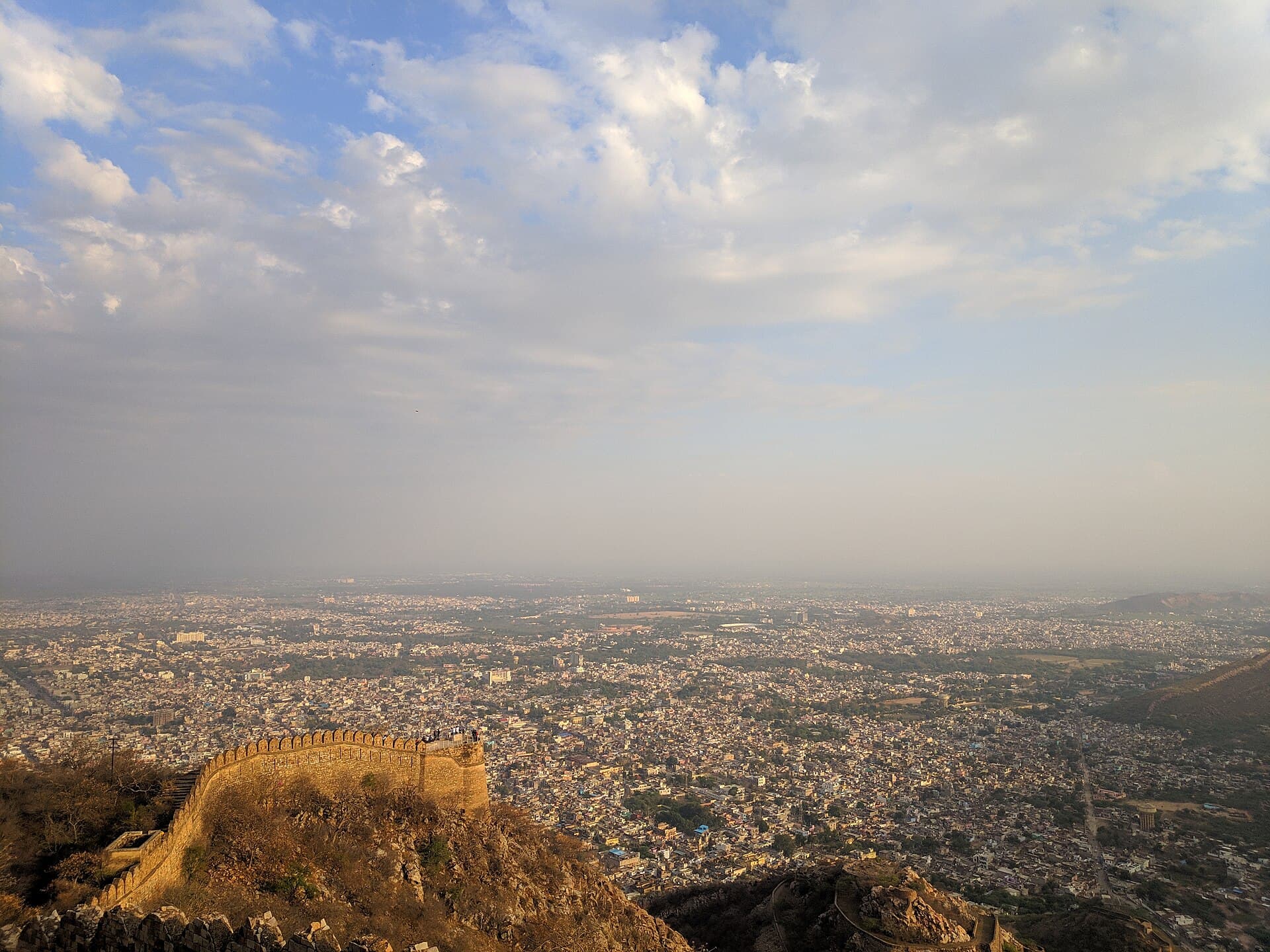 Suihimank / CC BY-SA 4.0, via Wikimedia Commons
Self-guided audio walking tour of Alwar — GPS route, offline playback, story-driven narration in 32 languages.
“Where ancient forts speak to desert winds.”
Not the postcards. The stories even locals don't know — whispered in your ear, right where they happened.
This imposing fort, visible from almost anywhere in Alwar, holds a secret about its construction that speaks to the ingenuity of its builders.
The cenotaph dedicated to Maharaja Bakhtawar Singh and his queen, Moosi Maharani, has a unique architectural feature that reflects the queen's ultimate act.
Beyond its grand facades, the City Palace conceals a fascinating detail about its water supply system, crucial for sustaining its lavish gardens and fountains in an arid region.
Discover every secret of Alwar
Every address, every reveal in full — in your ear, right where it happened.
You pick your stops. You walk. The voice reveals what the others miss.


Your self-guided audio tour of Alwar is ready — pick your landmarks, choose your language, and start the moment you arrive.
BuyLume has a built-in augmented-reality guide. Hold your phone up and its camera shows the street ahead of you, with a glowing arrow laid over the real view that always points to your next stop — no map to puzzle over, no wrong turns. Like everything in Lume, it works fully offline.
Alwar, a city in India's Rajasthan state, offers a captivating blend of history, nature, and folklore. Ringed by the ancient Aravalli Hills, it presents a landscape dotted with formidable forts, serene lakes, and wildlife sanctuaries. Often overlooked for its more famous Rajasthani counterparts, Alwar holds a distinct charm, revealing layers of Rajput valor, Mughal influence, and colonial echoes through its architecture and legends.
The city serves as a gateway to the Sariska Tiger Reserve, a crucial conservation effort for the Bengal tiger, and is home to the famously 'haunted' Bhangarh Fort. From the grandeur of the City Palace to the tranquil waters of Siliserh Lake, Alwar invites exploration beyond the usual tourist trails, promising a journey into a less-trodden, yet deeply resonant, corner of Rajasthan.
## From Ancient Roots to Princely State Alwar's history stretches back to antiquity, with mentions in ancient Hindu scriptures. The Matsya kingdom, a prominent state during the Vedic period, is believed to have had its capital at Viratnagar, near present-day Alwar. Evidence of early settlements and cultural practices suggests a continuous human presence in the region for millennia.
## The Rise of the Rajputs and Mughal Influence The city as we know it today was founded in 1775 by Rao Pratap Singh, a Rajput chieftain who established the Alwar State. Prior to this, the region saw the rise and fall of various dynasties, including the Gurjara-Pratiharas and the Tomars. During the medieval period, Alwar became a strategic point, often caught between the powerful Delhi Sultanate and the emerging Rajput kingdoms. The Mughal Empire, particularly under Akbar, exerted significant influence, leading to a fusion of architectural styles and administrative practices that are still visible in the city's heritage structures. The Bala Qila, for instance, bears the marks of both Rajput and Mughal construction techniques.
## British Era and Integration into India In the 19th century, Alwar entered into a treaty with the British East India Company, becoming a princely state under British paramountcy. This period brought about significant administrative reforms and infrastructural development, including the introduction of railways and modern educational institutions. The Maharajas of Alwar, while retaining considerable autonomy, navigated the complexities of colonial rule. Post-independence in 1947, Alwar State, like many other princely states, acceded to the Union of India, becoming part of the state of Rajasthan. The city transitioned from a royal capital to a district headquarters, preserving its historical legacy while embracing modern development.
Begin your exploration at the Bala Qila (Alwar Fort), a massive hill fort offering panoramic views of the city. Its sprawling ramparts and multiple gates tell tales of centuries of defense and dominion. Descend to the city to visit the City Palace (Vinay Vilas Mahal), a harmonious blend of Rajput and Mughal architecture, now housing government offices and a museum. Adjacent to it is the tranquil Sagar Lake and the exquisitely carved Moosi Maharani Ki Chhatri, a cenotaph dedicated to a Maharaja and his queen.
For a touch of wilderness, head to the Sariska Tiger Reserve, a short drive away, where you can embark on a safari to spot tigers, leopards, and diverse birdlife. Within Sariska, discover the ancient Kankwari Fort, a site of historical imprisonment. No visit to Alwar is complete without a journey to the infamous Bhangarh Fort, a ruined city shrouded in mystery and ghost stories. For a serene escape, the Siliserh Lake Palace, situated on the banks of Siliserh Lake, offers picturesque views and a chance to stay in a heritage property. The Tijara Jain Temple, with its intricate carvings and peaceful ambiance, is a significant pilgrimage site. Do not miss the Alwar Museum to delve deeper into the region's art and history.
The ideal time to visit Alwar is during the cooler months, from October to March. The weather during this period is pleasant, with mild temperatures making it comfortable for sightseeing and outdoor activities, including safaris in Sariska. Summers (April to June) are extremely hot, with temperatures soaring, making outdoor exploration challenging. The monsoon season (July to September) brings relief from the heat but can sometimes hinder travel due to heavy rainfall.
Alwar is well-connected by road and rail. The nearest airport is Jaipur International Airport (JAI), approximately 150 km away. From Jaipur, you can hire a taxi or take a bus to Alwar. Within the city, auto-rickshaws and cycle-rickshaws are readily available for local transport. For longer distances, taxis can be hired. While Hindi and Rajasthani are the local languages, English is understood in tourist areas. It is advisable to carry light cotton clothing during summers and light woolens during winters. Bargaining is common in local markets. Respect local customs and traditions, especially when visiting religious sites.
Alwar in Korean, in Chinese or in Hebrew — and 29 more languages, every stop narrated by a native voice. The widest language range of any self-guided audio tour.
Available in: