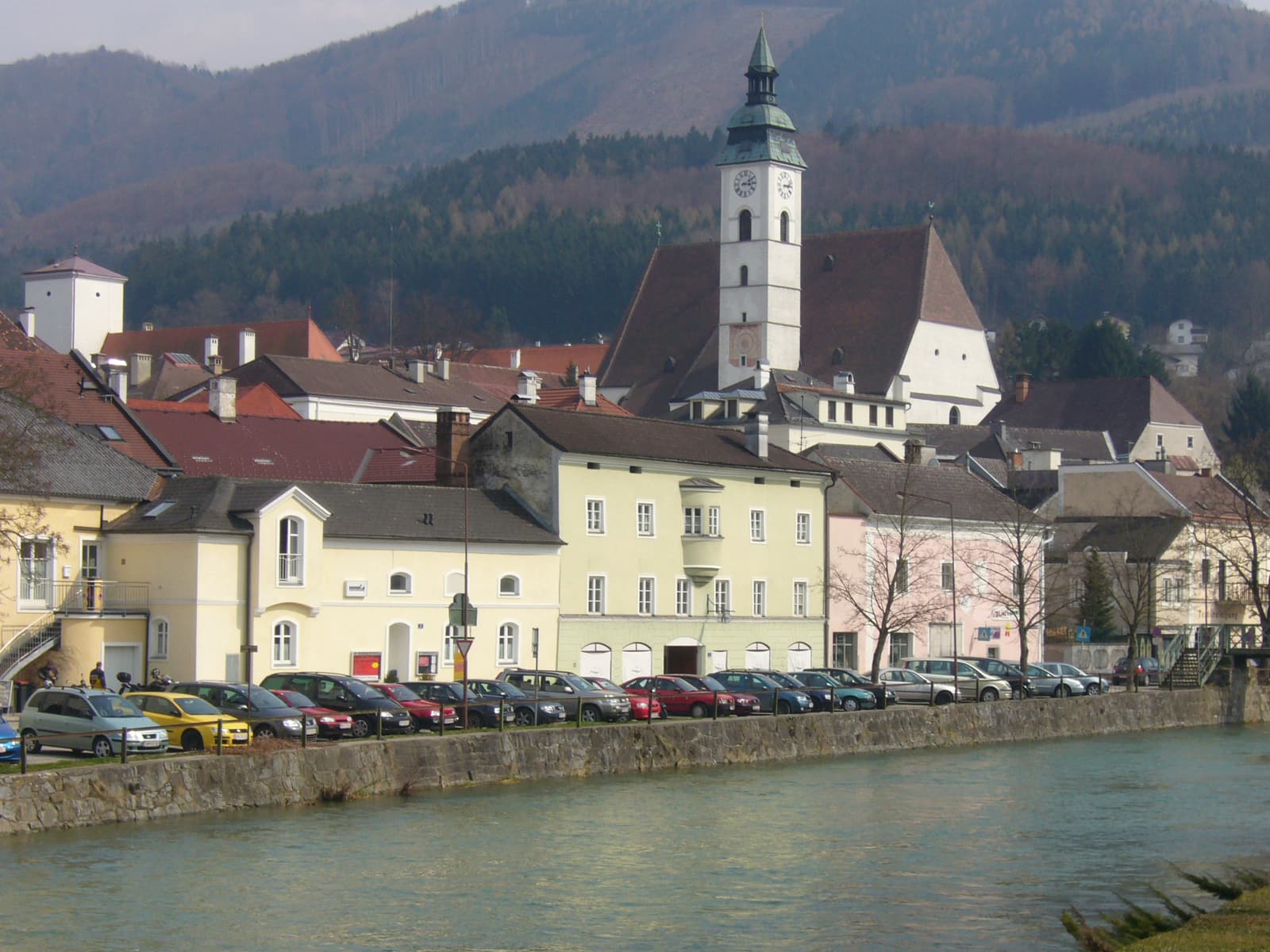
Scheibbs Town Square
Imagine a time before electric light was common, even in large cities. Scheibbs moved ahead, illuminating its streets with a revolutionary power source.
Full story unlocks in the tour
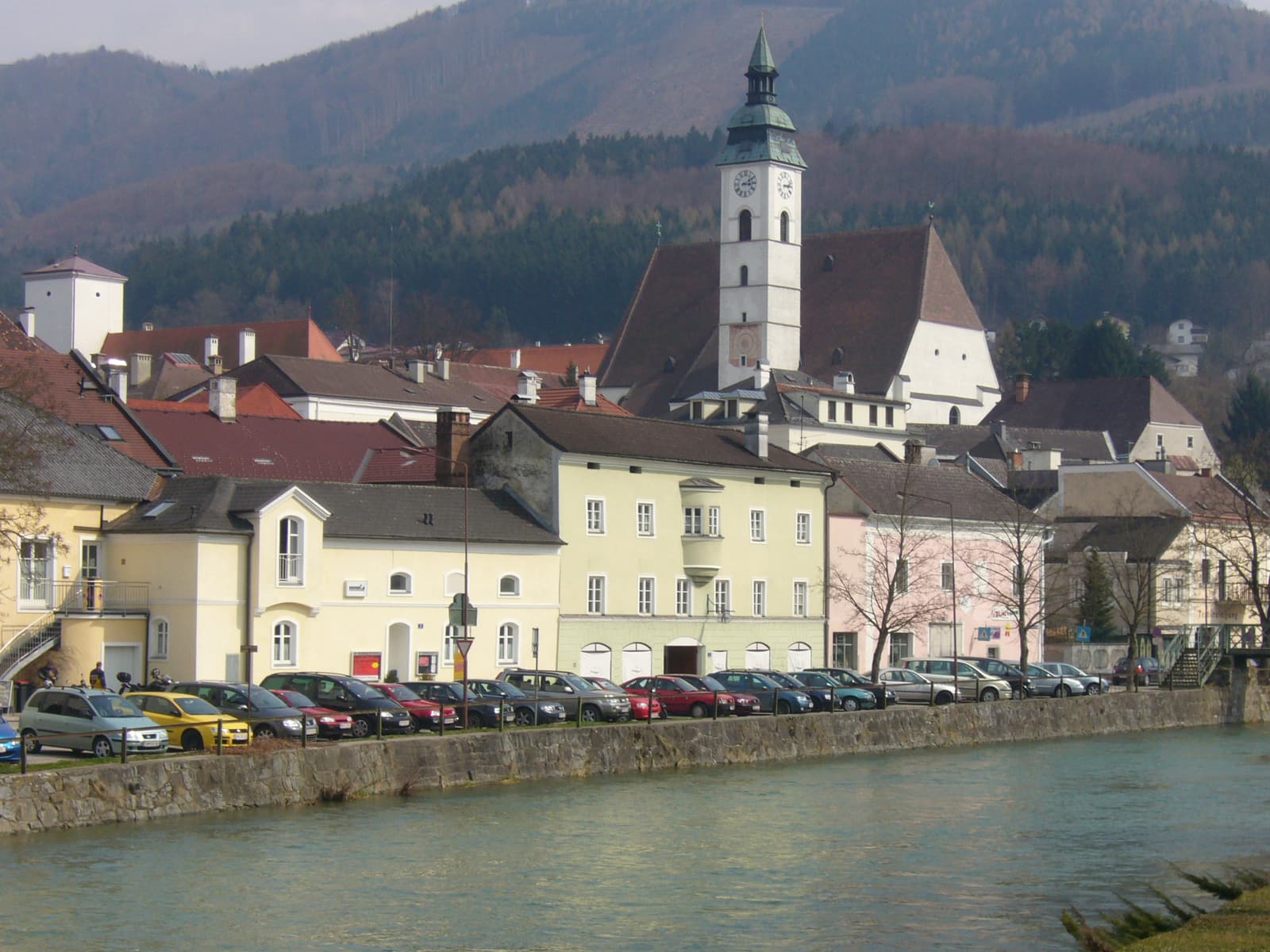 Calauer at German Wikipedia / CC BY-SA 3.0, via Wikimedia Commons
Self-guided audio walking tour of Scheibbs — GPS route, offline playback, story-driven narration in 32 languages.
“Where the pioneering spirit meets ancient pathways, etched into the Austrian landscape.”
Not the postcards. The stories even locals don't know — whispered in your ear, right where they happened.
Imagine a time before electric light was common, even in large cities. Scheibbs moved ahead, illuminating its streets with a revolutionary power source.
A bridge spans the river in Scheibbs, adorned with life-sized figures that tell a story not just of engineering, but of a powerful industrialist's personal connections.
This museum holds a surprising collection that traces the town's artistic and industrial heritage through a material often taken for granted.
Discover every secret of Scheibbs
Every address, every reveal in full — in your ear, right where it happened.
You pick your stops. You walk. The voice reveals what the others miss.
Your self-guided audio tour of Scheibbs is ready — pick your landmarks, choose your language, and start the moment you arrive.
BuyLume has a built-in augmented-reality guide. Hold your phone up and its camera shows the street ahead of you, with a glowing arrow laid over the real view that always points to your next stop — no map to puzzle over, no wrong turns. Like everything in Lume, it works fully offline.
Scheibbs, a town woven into the fabric of Austria's Mostviertel region, offers a compelling journey through time. Its streets, once illuminated by pioneering electric light, now invite thoughtful exploration. Here, the Erlauf River flows with stories of trade and connection, while the surrounding landscape cradles both human ingenuity and natural splendor.
This is a place where industrial ambition met monastic tradition, leaving behind a distinctive blend of architecture and lore. From the personal touches on an old bridge to the surprising collections within a ceramics museum, Scheibbs reveals its character slowly, rewarding those who linger and look closely. It is a destination that speaks of resilience, innovation, and a quiet, enduring spirit.
The origins of Scheibbs stretch back to a time when Slavic languages shaped the landscape. The town's name itself, likely derived from 'Ščipéčje' – meaning 'wild-growing dog rose' – suggests an area where land was cleared, allowing these resilient plants to flourish after the Migration Period. This linguistic echo connects Scheibbs to a much older, pre-Germanic past, hinting at the layers of culture that have settled upon this ground.
By the 14th century, Scheibbs had gained significance, evidenced by Duke Albrecht II granting it city status in 1352. For centuries, the town's destiny was closely intertwined with the powerful Gaming Charterhouse, a sprawling Carthusian monastery founded in 1330. Scheibbs served as a vital part of the monastery's dominion, its secular administration even housed within Scheibbs Castle. This period was not without tension; in the late 16th century, citizens and farmers rose in revolt against monastic rule, even imprisoning the Gaming Prior within the castle walls – a testament to the spirited independence of the local populace.
The 19th century brought a new era of industrial ambition to Scheibbs. The Erlauf River, which flows through the town, became a crucial artery for trade, facilitating the movement of agricultural products and iron. This made Scheibbs a significant transshipment point, comparable in importance to other industrial centers in the Eisenwurzen region. A striking example of this era's progress is the Töpper Bridge, built in 1855 by industrialist Andreas Töpper, adorned with life-size iron figures that reflect his personal and professional world. Perhaps the most forward-thinking development arrived in 1886 when Scheibbs became the first town in Austria to illuminate its streets with electricity, predating many larger European cities in this technological leap. This spirit of innovation continued into the 20th century, with Scheibbs officially regaining its city status on June 25, 1926, after centuries of being referred to as a 'Markt' or market town.
Today, Scheibbs continues to honor its multifaceted heritage. The Scheibbs Ceramics Museum, housed in a former hammer mill, showcases over 2,000 ceramic objects, illuminating the town's significant clay industry and artistic production across various periods. High above the town, the Urlingerwarte on Blassenstein offers expansive views, connecting the town to the broader natural grandeur of the Mostviertel region. Scheibbs remains a place where the echoes of pioneering spirit and ancient pathways converge, offering a compelling narrative for those who explore its streets and surrounding landscapes.
Begin your exploration in the Scheibbs Town Square, where the pioneering spirit of early electric street lighting once shone. From there, wander towards the Töpper Bridge, an engineering marvel from 1855, adorned with unique iron figures reflecting its builder's personal story. The Scheibbs Ceramics Museum, situated in a former hammer mill, offers a deep dive into the town's artistic and industrial past, displaying an extensive collection of ceramic objects.
For a glimpse into the town's administrative and defensive past, visit Scheibbs Castle, which now houses the district administration but carries centuries of history within its walls. A short journey from the town center leads to the Urlingerwarte on Blassenstein, a lookout tower providing expansive views across the Mostviertel region and beyond. Further afield, the Gaming Charterhouse (Kartause Gaming), once Central Europe's largest Carthusian monastery, offers a profound sense of medieval monastic life and its enduring connection to Scheibbs.
Scheibbs extends a welcoming atmosphere throughout the year. Spring and autumn provide mild temperatures, ideal for walking the town's streets and exploring the surrounding nature as colors shift. Summer brings warmth, perfect for enjoying outdoor cafes and events. Winter offers a quieter charm, with the possibility of snow lending a serene beauty to the historic architecture and nearby landscapes.
Scheibbs is readily accessible by car, with ample parking available near the town center. The train station connects the town to regional networks, making it convenient for those traveling by public transport. Within the town, most attractions are within walking distance, inviting leisurely strolls. For exploring the wider region, including the Urlingerwarte and Gaming Charterhouse, a car is recommended. Local eateries offer traditional Austrian cuisine, providing a taste of the region's culinary heritage.
Scheibbs in Korean, in Chinese or in Hebrew — and 29 more languages, every stop narrated by a native voice. The widest language range of any self-guided audio tour.
Available in: