The Town Hall (Rathaus)
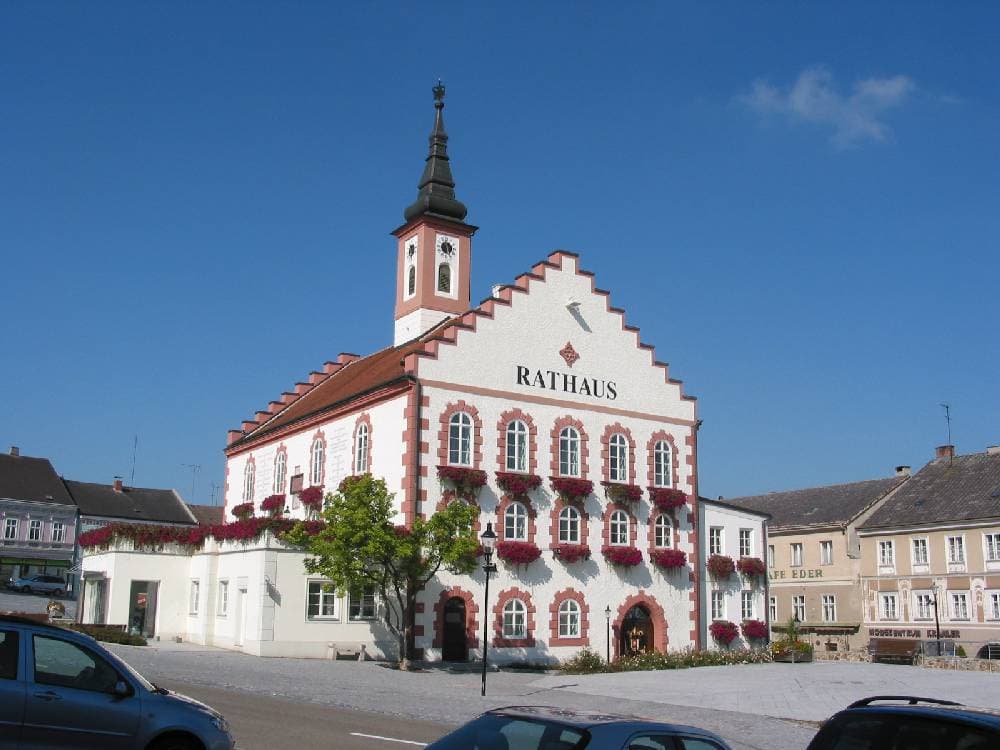
This striking building, with its distinctive stepped gables, once served purposes far removed from local governance.
Full story unlocks in the tour
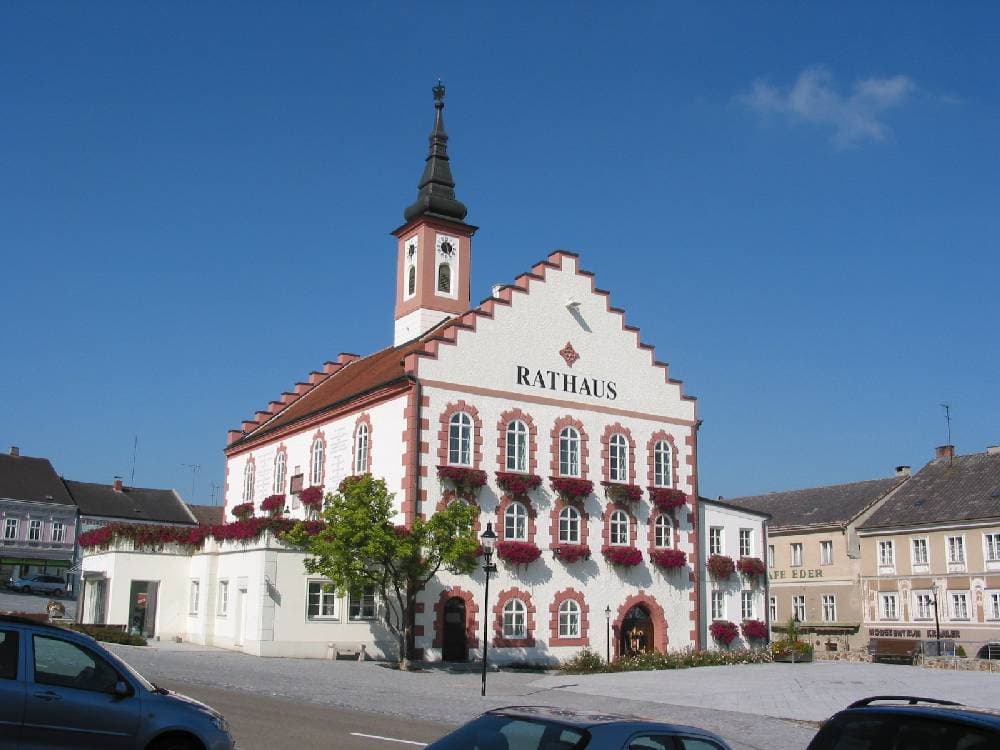 Extrawurst / CC BY-SA 3.0, via Wikimedia Commons
Self-guided audio walking tour of Waidhofen an der Thaya — GPS route, offline playback, story-driven narration in 32 languages.
“Ancient walls tell tales of trade, turmoil, and tenacious spirit.”
Not the postcards. The stories even locals don't know — whispered in your ear, right where they happened.
This striking building, with its distinctive stepped gables, once served purposes far removed from local governance.
Waidhofen holds a secret network beneath its historic center, hinting at a past filled with uncertainty.
A building that once fostered learning for a religious community underwent a surprising transformation.
Discover every secret of Waidhofen an der Thaya
Every address, every reveal in full — in your ear, right where it happened.
You pick your stops. You walk. The voice reveals what the others miss.
Your self-guided audio tour of Waidhofen an der Thaya is ready — pick your landmarks, choose your language, and start the moment you arrive.
BuyLume has a built-in augmented-reality guide. Hold your phone up and its camera shows the street ahead of you, with a glowing arrow laid over the real view that always points to your next stop — no map to puzzle over, no wrong turns. Like everything in Lume, it works fully offline.
Waidhofen an der Thaya, Austria's northernmost district capital, rests peacefully on the upper reaches of the German Thaya river. It is embraced by the granite and gneiss highlands of the Waldviertel region. This historic walled town, first mentioned in 1171, offers a captivating blend of medieval character and contemporary life. Its well-preserved town center invites exploration, where baroque architecture meets a rich cultural fabric.
The town's strategic location near the Bohemian border shaped much of its early history, marked by periods of both prosperity and conflict. Today, Waidhofen an der Thaya provides a tranquil escape, known for its picturesque natural surroundings and a strong sense of community. From unhurried walks through its historic core to engaging cultural events, it offers a unique window into the heart of the Waldviertel.
Beyond its historical significance, Waidhofen an der Thaya serves as a center for education and regional services, extending its influence beyond its immediate political district. It is a place where the past is tangible in its ancient walls and traditions, yet it embraces modern amenities and a diverse range of activities for visitors and residents alike.
Waidhofen an der Thaya emerged as a planned castle settlement in the second half of the 12th century, strategically placed on a rocky outcrop to protect the surrounding area from incursions from Bohemia and Moravia. The town's first documented mention dates back to 1171, referring to an "Ortolfus de Waidehouen." Shortly after transitioning from the Pernegg counts to the Babenbergs, Waidhofen was granted town rights around 1230. Its triangular layout, reinforced by a castle at its eastern tip and the Parish Church of the Assumption of Mary to the west, still reflects its medieval origins, with much of the original town fortifications remaining.
The town's proximity to Bohemia, while fostering trade along the Böhmsteig route, also brought centuries of threats and destruction. Waidhofen was captured by King Ottokar II in 1278 and largely destroyed by King John of Bohemia in 1328. The 15th century saw further devastation from Hussite (1426-1431) and Hungarian troops (1483). To aid its economic recovery, King Ladislaus granted the town a salt chamber in 1454, which operated for nearly three centuries. The 16th century brought increased autonomy with high jurisdiction within its walls, and the town hall, built around 1520, reflects this growing self-confidence.
The 18th century marked a significant economic boom for Waidhofen, becoming the most important commercial town in the Waldviertel after Krems. This prosperity was largely driven by the textile home industry in the surrounding areas. Since 1850, Waidhofen an der Thaya has served as a district capital, maintaining its role as a trading center and evolving into a significant educational hub with a gymnasium established in 1869 and a commercial academy in 1968. The "Iron Curtain" after World War II until 1989 once again impacted its cross-border connections, but relations with neighboring Czechia have since normalized. Today, Waidhofen continues to be a central point for the northwestern Waldviertel, balancing its historical legacy with a modern identity.
Begin your exploration in the historic town center, where the Baroque Parish Church and the distinctive stepped-gabled Town Hall are prominent landmarks. Walk along the remnants of the medieval town wall, one of the best-preserved in Lower Austria, offering a window into the town's defensive past. The Hauptplatz (main square) features the Holy Trinity Column, a testament to the town's endurance during past plagues.
Delve deeper into local history at the Waidhofen City Museum, which houses significant exhibitions, including the Waldviertel Weaving Museum, showcasing the region's textile heritage. For a unique experience, explore the medieval cellar systems beneath the city, thought to have served as escape routes. Nature enthusiasts will appreciate the world's largest Waldrapp aviary, a vital project for this endangered ibis species. For active visitors, the Thayarunde cycle path, built on a former railway line, offers 111 kilometers of scenic cycling. Do not forget to sample local culinary delights like the unique Waidhofner chocolate and ice cream.
Waidhofen an der Thaya offers a distinct charm throughout the year, but the shoulder seasons (March to May and September to October) are often considered ideal. During these months, the weather is pleasant for sightseeing and outdoor activities, and the crowds are generally smaller than during the peak summer period. June is also recommended for comfortable temperatures and fewer crowds before the main summer holidays. Winter (December to February) can be cold but offers a festive atmosphere with Christmas markets in the broader region.
Waidhofen an der Thaya is located in Lower Austria and is easily accessible. For public transport, you can plan your journey using the VOR route planner. The town offers various accommodation options, including hotels and guesthouses. The local administration, located in the historic Town Hall, provides citizen services with specific opening hours for different departments throughout the week. When visiting, remember to experience the local Waldviertel cuisine, with numerous coffee houses and restaurants serving regional delicacies. The town also has a shopping center, Thayapark, with over 25 stores. For those arriving by car, parking is generally available, and the town is well-connected for exploring the wider Waldviertel region.
Waidhofen an der Thaya in Korean, in Chinese or in Hebrew — and 29 more languages, every stop narrated by a native voice. The widest language range of any self-guided audio tour.
Available in: