The Secret Garden of Alcazar
Beyond the formal courtyards, a smaller, less-frequented garden offers a moment of quiet contemplation.
Full story unlocks in the tour
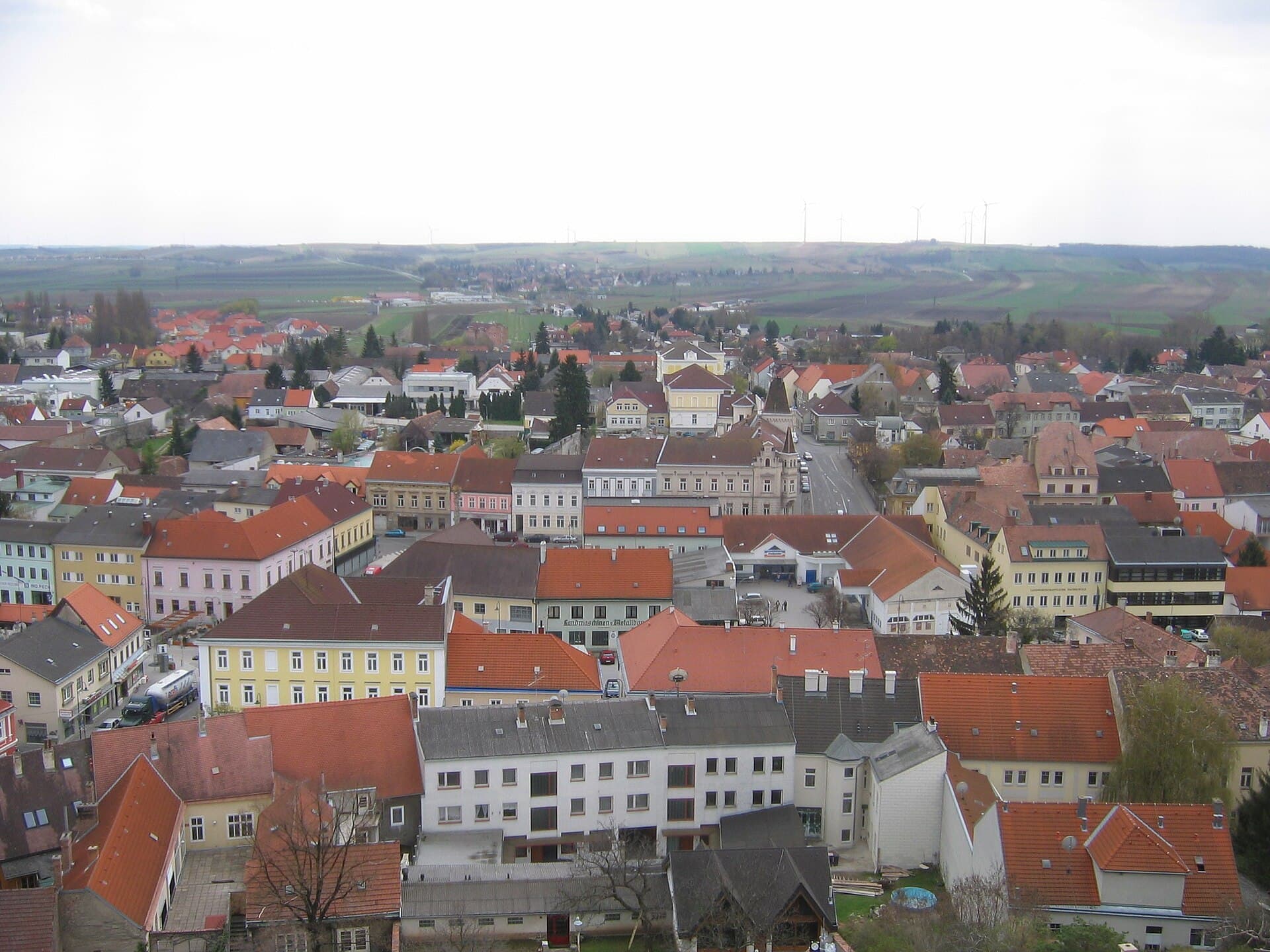 Herbert Ortner, Vienna, Austria / CC BY 2.5, via Wikimedia Commons
Self-guided audio walking tour of Poysdorf — GPS route, offline playback, story-driven narration in 32 languages.
“Where ancient stones meet the rhythm of modern life.”
Not the postcards. The stories even locals don't know — whispered in your ear, right where they happened.
Beyond the formal courtyards, a smaller, less-frequented garden offers a moment of quiet contemplation.
The colorful ceramics of Triana tell stories, but some workshops preserve techniques rarely seen today.
Climbing the Giralda is an iconic experience, but there's a particular time that transforms the journey.
Discover every secret of Poysdorf
Every address, every reveal in full — in your ear, right where it happened.
You pick your stops. You walk. The voice reveals what the others miss.
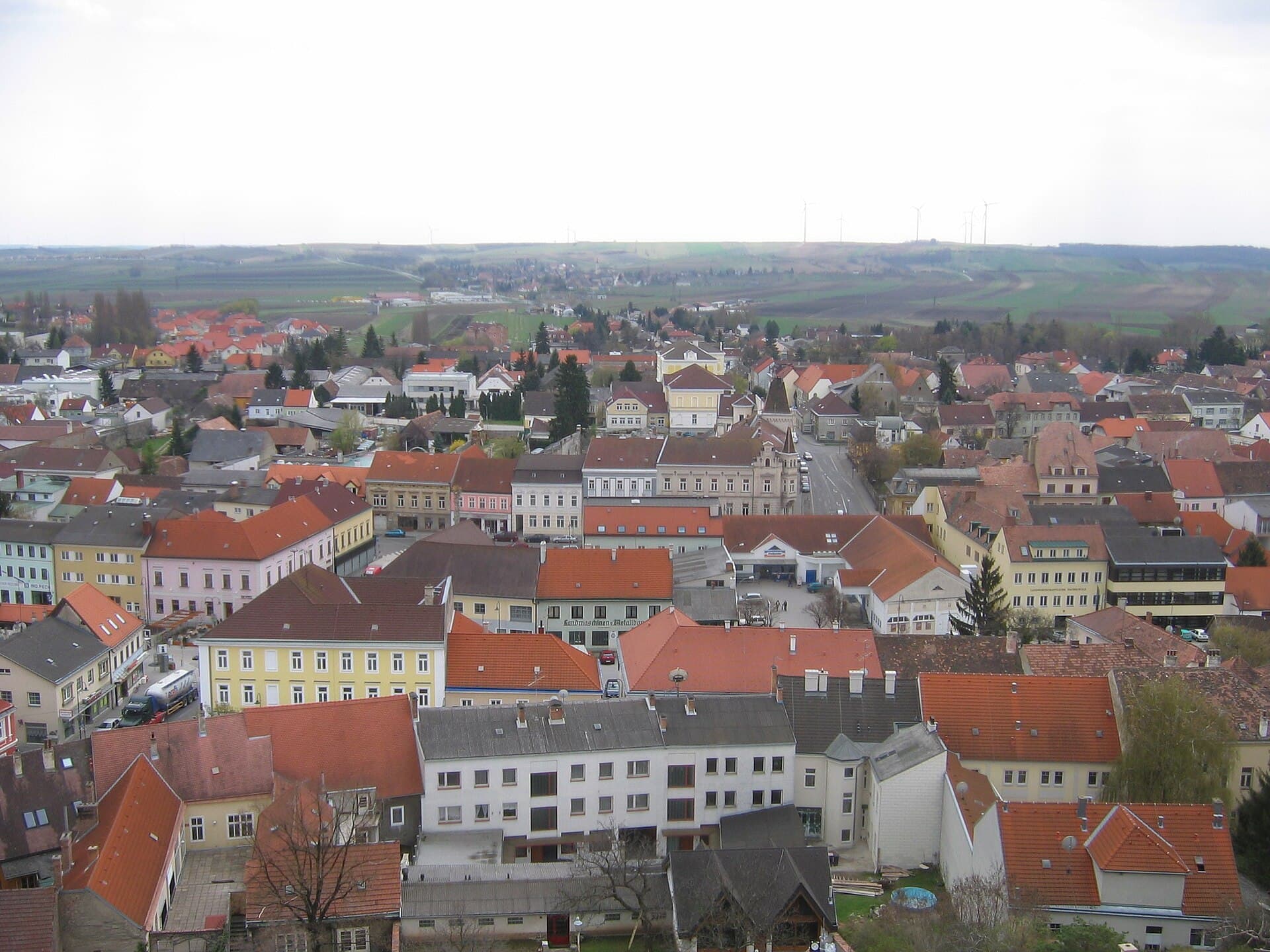
Your self-guided audio tour of Poysdorf is ready — pick your landmarks, choose your language, and start the moment you arrive.
BuyLume has a built-in augmented-reality guide. Hold your phone up and its camera shows the street ahead of you, with a glowing arrow laid over the real view that always points to your next stop — no map to puzzle over, no wrong turns. Like everything in Lume, it works fully offline.
Seville, the capital of Andalusia, unfurls along the Guadalquivir River, a city where the scent of orange blossoms mingles with the sound of flamenco guitars. It is a place of profound character, where sun-drenched plazas invite lingering conversations and intricate Mudejar architecture speaks of centuries of cultural exchange. The city's rhythm is both ancient and immediate, a captivating blend of solemn tradition and exuberant daily life.
Walk through its labyrinthine alleys, and you'll discover courtyards adorned with lively tiles and wrought-iron gates, each offering a glimpse into private beauty. The air often carries the aroma of jasmine and the distant toll of church bells, creating an atmosphere that is deeply evocative. Seville invites exploration, promising discoveries around every corner, from grand monuments to intimate, local experiences.
Seville's story stretches back over two millennia, shaped by a succession of civilizations that have left indelible marks on its character. Founded by the Romans as Hispalis, it became a significant center in their empire, evidenced by archaeological finds and the enduring layout of some of its oldest quarters. The city later fell under Visigothic rule, maintaining its prominence as a regional capital.
The most transformative period began in the 8th century with the arrival of the Moors. For over 500 years, under the name Isbiliya, Seville flourished as a major cultural and economic hub of Al-Andalus. This era saw the construction of magnificent mosques, palaces, and gardens, many of which form the foundations of today's most iconic structures. The Great Mosque, for instance, once stood where the Cathedral now rises, its minaret preserved as the Giralda. Islamic scholars, poets, and artisans contributed to an intellectual golden age, fostering advancements in science, philosophy, and art. The intricate tilework, horseshoe arches, and serene courtyards that define much of Seville's aesthetic are enduring legacies of this period.
In 1248, King Ferdinand III of Castile reconquered Seville, marking a significant shift in its identity. The city transitioned from a Muslim to a Christian capital, with many mosques converted into churches and new Christian structures rising alongside existing Moorish ones. This blending of architectural styles, known as Mudejar, is a hallmark of Sevillian design. The true zenith of Seville's influence arrived in the 16th century, following the discovery of the Americas. As the sole port for trade with the New World, Seville became the wealthiest city in Spain and one of the most important in Europe. Gold, silver, and exotic goods flowed through its docks, fueling an unprecedented period of growth and artistic patronage. This 'Golden Age' saw the construction of the Cathedral, the Alcázar's expansion, and the rise of renowned artists like Velázquez and Murillo, whose works reflect the city's newfound grandeur. The General Archive of the Indies, housing vast historical documents, stands as a testament to this global connection.
While its monopoly on American trade eventually waned, Seville adapted. The city continued to evolve, hosting major international expositions in 1929 and 1992, which modernized its infrastructure and introduced striking new architectural elements. Today, Seville remains a lively cultural center, a guardian of flamenco, bullfighting, and its distinctive Holy Week processions. Its enduring beauty and profound sense of identity continue to captivate visitors, inviting them to explore the layers of its remarkable past.
Begin your exploration at the Seville Cathedral, a colossal Gothic structure that stands as a testament to the city's wealth and power. Ascend the Giralda, its former minaret, for panoramic views across the rooftops and the winding Guadalquivir River. Adjacent to the Cathedral, the Real Alcázar beckons with its exquisite Mudejar palaces and serene gardens, a tranquil oasis of intricate tilework and fragrant orange trees. Allow ample time to wander through its courtyards and discover its peaceful corners.
Cross the river to the Triana neighborhood, a district with a distinct identity. Explore its lively market, browse ceramic workshops, and experience its authentic flamenco tablaos. Stroll along the Guadalquivir River, perhaps taking a boat trip, to appreciate the city from a different perspective. Discover the Barrio Santa Cruz, the former Jewish quarter, a labyrinth of narrow alleys, flower-filled patios, and charming squares that invite aimless wandering. For a contemporary contrast, visit the Metropol Parasol (Las Setas), a striking wooden structure offering elevated walkways and further city views. Finally, immerse yourself in the art of flamenco at a local performance, feeling the raw emotion and power of this Andalusian tradition.
The ideal times to experience Seville are during spring (March to May) and autumn (September to November). In spring, the city is awash in the scent of orange blossoms, and temperatures are pleasantly warm, perfect for strolling. Autumn offers similar agreeable weather, with fewer crowds than the peak spring festival season. Summers (June to August) are intensely hot, often exceeding 40°C (104°F), making daytime exploration challenging. Winters (December to February) are mild and generally sunny, though evenings can be cool.
Seville's city center is largely walkable, and its flat terrain makes exploring on foot a pleasure. For longer distances, an efficient public bus system covers the entire city. Taxis are readily available, and ride-sharing services also operate. Consider purchasing a Seville Card for discounts on attractions and public transport if you plan extensive sightseeing. Tap water is safe to drink, but bottled water is widely available. Spanish is the official language, and while English is spoken in tourist areas, learning a few basic Spanish phrases will enhance your interactions. Siestas are still observed, particularly in summer, so some smaller shops may close in the early afternoon.
Poysdorf in Korean, in Chinese or in Hebrew — and 29 more languages, every stop narrated by a native voice. The widest language range of any self-guided audio tour.
Available in: