Atlixco's Zócalo
The heart of Atlixco pulses with a rhythm of colorful tiles and a surprising architectural detail that acknowledges global influences.
Full story unlocks in the tour
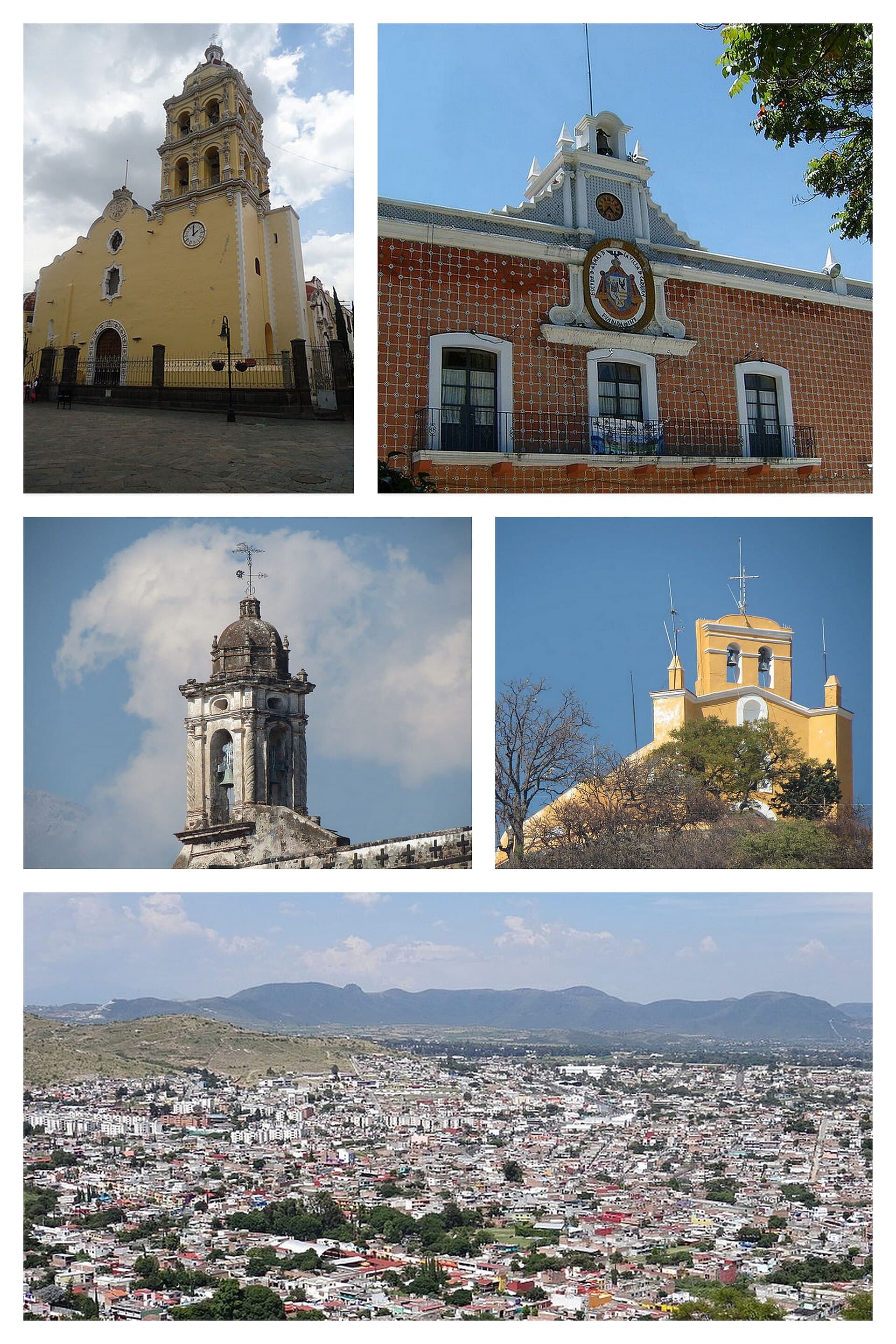 El Sombrerero / CC BY-SA 4.0, via Wikimedia Commons
Self-guided audio walking tour of Atlixco — GPS route, offline playback, story-driven narration in 32 languages.
“Where Popocatépetl watches over a valley of eternal spring and enduring traditions.”
Not the postcards. The stories even locals don't know — whispered in your ear, right where they happened.
The heart of Atlixco pulses with a rhythm of colorful tiles and a surprising architectural detail that acknowledges global influences.
Ascending this lively staircase is more than a climb; it is a journey through a local legend, depicted in a grand, unexpected mural.
This prominent hill offers more than just sweeping views; it is a sacred site where ancient beliefs and contemporary festivities intertwine.
Discover every secret of Atlixco
Every address, every reveal in full — in your ear, right where it happened.
You pick your stops. You walk. The voice reveals what the others miss.


Your self-guided audio tour of Atlixco is ready — pick your landmarks, choose your language, and start the moment you arrive.
BuyLume has a built-in augmented-reality guide. Hold your phone up and its camera shows the street ahead of you, with a glowing arrow laid over the real view that always points to your next stop — no map to puzzle over, no wrong turns. Like everything in Lume, it works fully offline.
Situated in a fertile valley at the foot of the majestic Popocatépetl volcano, Atlixco is a Pueblo Mágico in the state of Puebla, often affectionately called the 'City of Flowers' or 'City of Eternal Spring.' This appealing town, located about 30 kilometers southwest of Puebla City, captivates visitors with its vivid colors, colonial architecture, and a climate so agreeable it has been dubbed one of the best in the world.
Atlixco offers a singular blend of natural beauty and profound cultural heritage. From its bustling flower nurseries to its historic churches and the expansive views from Cerro de San Miguel, there is a palpable sense of tradition and a welcoming atmosphere that invites exploration. The ever-present backdrop of the active Popocatépetl volcano adds a dramatic touch to the landscape, reminding visitors of the fertile, volcanic soil that contributes to Atlixco's floral abundance.
The story of Atlixco stretches back to pre-Hispanic times, with the valley first settled by indigenous peoples such as the Xicalancas, Chichimecs, and Teochichimecs, who were drawn to its fertile lands and mild climate. During this era, the area was known as Cuauhquechollan, meaning 'Place of the Quecholli Eagle,' and later as Acapetlahuacan, 'Place of cane mats.' Its strategic geographical position made it a contested territory among various indigenous groups, including Calpan, Huejotzingo, and Cholula, before falling under the dominion of Tenochtitlán.
The Spanish officially founded the settlement on September 22, 1579, naming it Villa de Carrión after its founder, Alonso Díaz de Carrión. King Philip II granted the city its coat of arms in the same year. During the colonial period, Atlixco quickly earned the moniker 'Granary of New Spain' due to its exceptionally fertile soils, which yielded vast quantities of wheat, supplying not only nearby Puebla but also other regions of the Viceroyalty. This agricultural prosperity laid the foundation for the wealth of local landowners and shaped the city's early economy and cultural identity, a fusion of indigenous traditions and Spanish influences evident in its early temples and festivals.
Atlixco played a significant role in Mexico's history, serving as the headquarters for the Government of the State of Puebla during the American invasion in 1847. More notably, on May 4, 1862, the Battle of Atlixco saw Mexican troops defeat French sympathizers, a crucial victory that preceded and contributed to the more famous Battle of Puebla on May 5, 1862. This event earned the city its 'Heroic' status and fostered a strong sense of patriotic identity among its residents.
The 20th century saw Atlixco pivot towards industrial floriculture, earning it the enduring nickname 'Atlixco de las Flores' (Atlixco of the Flowers). A significant cultural milestone occurred in 1965 with the establishment of the Huey Atlixcáyotl festival, a grand celebration that revived ancient dance and musical traditions, dedicated to both the Archangel Michael and the pre-Hispanic deity Quetzalcóatl. In 1996, the Atlixcáyotl was recognized as Cultural Heritage of the State of Puebla. In 2015, the Mexican Federal Government further recognized Atlixco's unique atmosphere and cultural richness by declaring it a 'Pueblo Mágico' (Magical Town).
Begin your exploration at the Zócalo, Atlixco's lively main square, adorned with a distinctive Moorish-style gazebo and tiled benches showcasing local artistry. Nearby, the Palacio Municipal is worth a visit for its impressive murals by Juan Manuel Martínez Caltenco, depicting the city's story and culture. Just meters away, the Parroquia de Santa María de la Natividad features two Churrigueresque-style altars and artworks by Luis Berrueco.
For expansive views of the city and the imposing Popocatépetl volcano, embark on the climb up Cerro de San Miguel. On your way, you will encounter La Escalera Ancha, a colorful staircase adorned with a mural of traditional dancers. At the top, you will find the Capilla San Miguel Arcángel. Also on the hill is the Ex-Convento de San Francisco, one of Atlixco's oldest buildings, showcasing a blend of Baroque, Gothic, and Mudéjar architectural styles.
Embrace Atlixco's floral identity with a visit to the Viveros de Atlixco (plant nurseries), especially in the Cabrera neighborhood, where you will discover a vast array of flowers and ornamental plants. For a singular botanical experience, the John Naka Bonsai Museum houses an extensive collection of ancient bonsai trees. Do not miss the Old Hospital of San Juan de Dios, a late 16th-century structure preserving colonial artworks and traditional Puebla tiles.
If your visit aligns with late September, immerse yourself in the Huey Atlixcáyotl Festival, a lively celebration of indigenous dance and music.
Atlixco enjoys a pleasant, temperate climate year-round, earning it the nickname 'City of Eternal Spring.' The dry season, from November to April, offers minimal precipitation and abundant sunshine, making it ideal for outdoor activities. The warmest months are typically April and May. The rainy season runs from May to October, with increased precipitation, though showers are often brief, refreshing the air, and mornings often remain sunny. For general outdoor tourist activities, mid-March to late May is considered the best time, with a peak in the third week of April. If you are hoping to experience the lively Huey Atlixcáyotl Festival, plan your visit for the last Sunday of September.
Atlixco is easily accessible, located about 30 kilometers (19 miles) southwest of Puebla City. From Puebla CAPU bus station, you can take an ORO bus, with the journey lasting approximately 30 minutes to an hour. Buses run frequently, and tickets can be purchased at the station. If traveling from Mexico City, direct buses are available, taking around 2-3 hours. Taxis and ride-sharing services are also options for getting to and around Atlixco.
While many people in the tourism industry speak basic English, knowing some basic Spanish phrases will enhance your experience. Atlixco is generally considered safe for tourists, but standard safety precautions are always recommended. Comfortable walking shoes are a necessity for exploring the city's streets and climbing Cerro de San Miguel. Do not forget sunscreen, sunglasses, and a hat, as the sun can be strong at this altitude.
Atlixco in Korean, in Chinese or in Hebrew — and 29 more languages, every stop narrated by a native voice. The widest language range of any self-guided audio tour.
Available in: