Histoire monétaire de Pinos
En période de pénurie de pièces de monnaie dans le Mexique colonial, Pinos était l'un des rares endroits où la monnaie locale était frappée.
L'histoire complète se débloque dans le tour
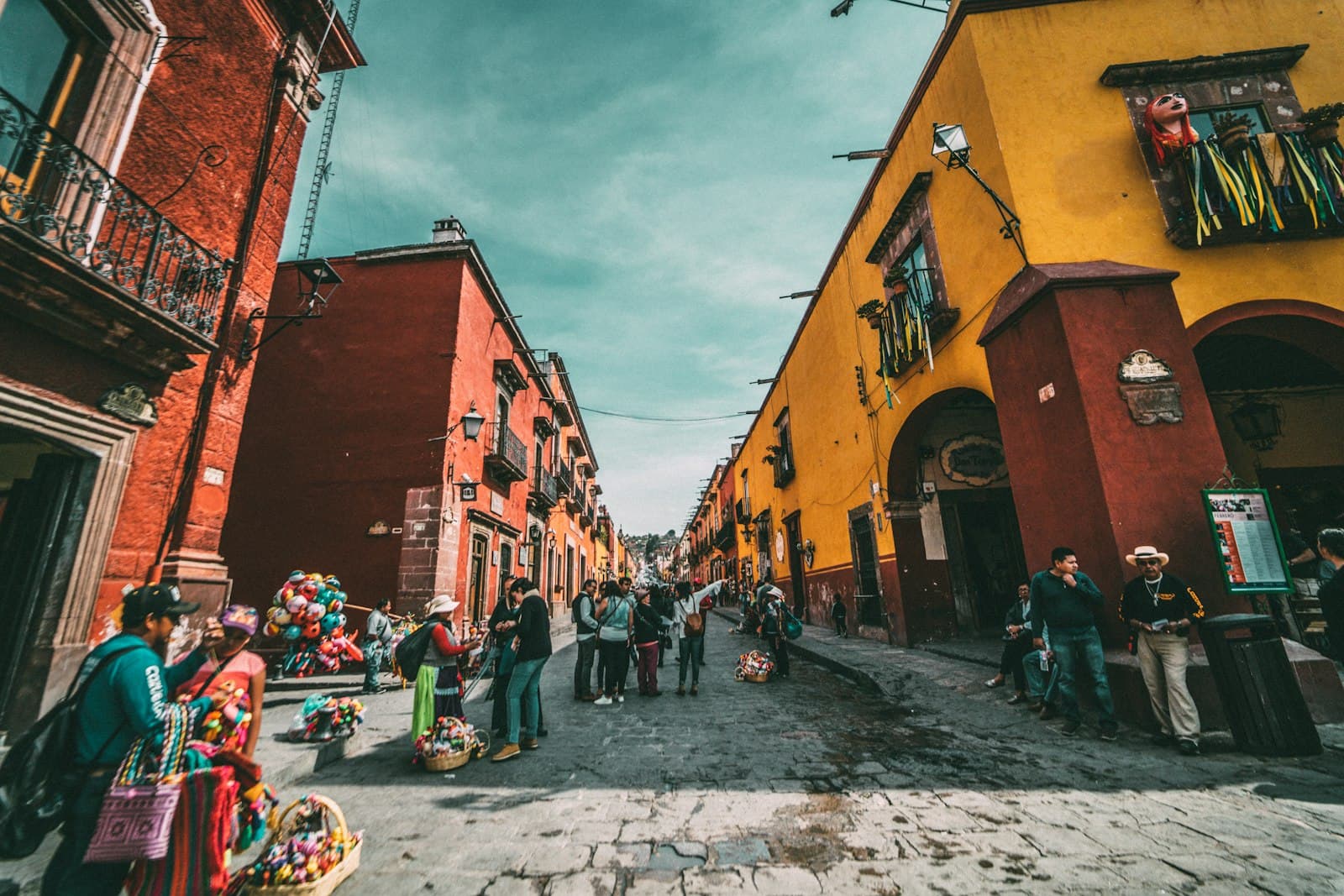 Photo: Jezael Melgoza / Unsplash
Visite audio autoguidée de Pinos — parcours GPS à pied, lecture hors ligne, narration en 32 langues.
“Là où l'argent coulait autrefois, les histoires résonnent aujourd'hui.”
Pas les cartes postales. Les histoires que même les habitants ignorent — soufflées à l'oreille, là où elles se sont passées.
En période de pénurie de pièces de monnaie dans le Mexique colonial, Pinos était l'un des rares endroits où la monnaie locale était frappée.
Pinos holds a revered religious artifact with an intriguing origin story, deeply connected to a historic trade route.
The very name 'Pinos' hints at a natural resource that fueled its early prosperity, beyond just the silver mines.
Découvrez tous les secrets de Pinos
Chaque adresse, chaque révélation en entier — dans ton oreille, là où elle s'est passée.
Tu choisis tes lieux. Tu marches. La voix te révèle ce que les autres ignorent.


Votre visite audioguidée de Pinos vous attend — choisissez vos lieux, votre langue, et lancez-vous dès votre arrivée.
AcheterLume intègre un guide en réalité augmentée. Levez votre téléphone : sa caméra montre la rue devant vous, avec une flèche lumineuse posée sur l'image réelle qui pointe toujours vers votre prochain arrêt — aucune carte à déchiffrer, aucun mauvais virage. Comme tout dans Lume, ça fonctionne entièrement hors-ligne.
Pinos, un Pueblo Mágico désigné dans l'état de Zacatecas, offre un voyage captivant dans le passé colonial du Mexique. Cette ville historique, officiellement fondée le 12 février 1594, fut autrefois un centre minier d'argent vital et une étape cruciale le long du Camino Real de Tierra Adentro, un site classé au patrimoine mondial de l'UNESCO. Son nom, dérivé des pins abondants qui couvraient autrefois les montagnes environnantes, fait allusion aux ressources naturelles qui ont alimenté sa prospérité précoce, le bois étant essentiel pour la fusion des métaux.
Aujourd'hui, Pinos conserve une grande partie de son caractère original avec sa topographie irrégulière, son architecture de l'époque coloniale et son atmosphère tranquille. Les visiteurs peuvent flâner dans ses charmantes places et jardins, explorer d'anciennes églises et découvrir l'héritage de son passé minier. L'emplacement de la ville à l'extrémité sud-est de Zacatecas la place également près des frontières de Jalisco, Guanajuato et San Luis Potosí, ce qui en fait un carrefour unique de culture et d'histoire régionales.
L'histoire de Pinos commence au milieu du XVIe siècle avec l'arrivée de prospecteurs et de religieux explorant la région. La ville fut officiellement fondée par les Espagnols en 1594 sous le nom de Real de Nuestra Señora de Sierra de Pinos, devenant rapidement un important centre minier d'argent. En 1621, les mines de la Sierra de Pinos et de Peñón Blanco étaient florissantes, ce qui conduisit à la consolidation de la ville en tant que chef-lieu de paroisse.
Sa situation stratégique en fit une étape obligatoire sur le Camino Real de Tierra Adentro, la « Route Royale de l'Intérieur », une route commerciale vitale reliant Mexico aux territoires du nord. Cette désignation en tant que site du patrimoine mondial de l'UNESCO souligne son importance mondiale et ses bâtiments coloniaux bien conservés. Au XVIIe siècle, de nombreuses haciendas furent établies dans la région, dont certaines jouèrent un rôle essentiel dans les opérations minières et sont aujourd'hui des monuments historiques, certaines en ruines, d'autres toujours fonctionnelles.
L'architecture religieuse de la ville reflète sa richesse coloniale et ses traditions artistiques. La Parroquia de San Matías, construite entre 1682 et 1697, fut un projet ambitieux initialement envisagé avec trois nefs, bien qu'une seule ait été achevée. L'Église de San Francisco, datant du début du XVIIe siècle, faisait autrefois partie d'un monastère et abrite le vénéré Christ noir d'Esquipulas, un saint patron du Camino Real. La Capilla de Tlaxcalilla, du XVIIIe siècle, présente un opulent retable churrigueresque.
Pinos a également joué un rôle modeste mais intéressant dans l'histoire monétaire du Mexique. Pendant les périodes de pénurie de pièces, en particulier au XVIIe siècle, la Sierra de Pinos fut l'un des rares endroits où des pièces de cuivre furent frappées. Les traditions culturelles durables de la ville comprennent la foire régionale de San Matías et le Festival des Lanternes, célébré chaque année le 8 décembre.
Commencez votre exploration dans le Jardín Hidalgo, le principal lieu de rassemblement de la ville. De là, vous pouvez facilement accéder à la Parroquia de San Matías, une église coloniale frappante avec une façade en pierre baroque. Remarquez les deuxième et troisième nefs incomplètes, témoignant de sa vision grandiose et inachevée.
De l'autre côté de la place principale, découvrez le Templo y Ex Convento de San Francisco, un ancien monastère du début du XVIIe siècle. À l'intérieur, vous trouverez le vénéré Christ Noir d'Esquipulas. Ne manquez pas la Capilla de Tlaxcalilla, une chapelle du XVIIIe siècle réputée pour son extraordinaire retable churrigueresque orné de feuilles d'or.
Pour une immersion plus profonde dans l'histoire locale, visitez le Museo Comunitario IV Centenario, qui expose des artefacts et des récits des 400 ans d'histoire de Pinos. Explorez Los Arquitos (Aqueduc), un parc pittoresque centré autour d'un aqueduc du XVIIe siècle. Les ruines de l'Hacienda Grande, une hacienda minière du XVIIe siècle, offrent un aperçu du patrimoine industriel de la ville. Envisagez une visite au village de La Pendencia pour voir l'historique Hacienda La Pendencia, l'une des nombreuses distilleries de mezcal de la région, où vous pourrez en apprendre davantage sur la production artisanale de mezcal et profiter de dégustations.
Pinos est également connue pour son artisanat, en particulier la poterie en argile. Recherchez des ateliers où les artisans locaux créent de petits pots traditionnels et d'autres pièces uniques.
La période la plus agréable pour visiter Pinos pour les activités par temps chaud s'étend de début mai à mi-juin, lorsque les températures quotidiennes moyennes sont confortables. Cependant, pour les activités touristiques générales en extérieur avec des journées claires et sans pluie et des températures perçues entre 18°C et 27°C, la période de mi-novembre à mi-avril est idéale, avec un pic la troisième semaine de février. La saison sèche au Mexique s'étend généralement de décembre à avril, offrant un minimum de pluie. Gardez à l'esprit que les mois d'été peuvent être plus chauds, avec une température moyenne d'environ 19°C, tandis que les hivers peuvent voir les températures chuter près de 0°C.
La grande ville la plus proche avec un aéroport et une gare routière est San Luis Potosí, à environ 100 km (environ 60 minutes de route). De San Luis Potosí, vous pouvez prendre un bus jusqu'à Crucero - Pinos, avec des services horaires proposés par Transportes Frontera. La marche est le moyen le plus pratique d'explorer le centre-ville de Pinos, car il ne présente pas de collines importantes. Des taxis sont disponibles pour les déplacements vers les zones extérieures à la ville.
La monnaie officielle est le peso mexicain (MXN). Bien que les cartes de crédit soient acceptées dans certains établissements, il est conseillé d'avoir de l'argent liquide pour les petits achats et les vendeurs locaux. L'espagnol est la langue officielle. Bien que de nombreux acteurs du tourisme puissent parler un peu anglais, connaître quelques phrases de base en espagnol améliorera votre expérience. Le Mexique utilise l'heure normale du Centre (UTC-6) avec l'heure d'été en été.
Pinos en coréen, en chinois ou en hébreu — et dans 29 autres langues, chaque étape narrée par une voix native. La plus large gamme de langues de tous les audioguides autoguidés.
Disponible en :