Jardín Rafael Páez
Cette place centrale animée recèle un secret de son passé, bien avant de devenir un lieu de parties de dominos et de fanfares.
L'histoire complète se débloque dans le tour
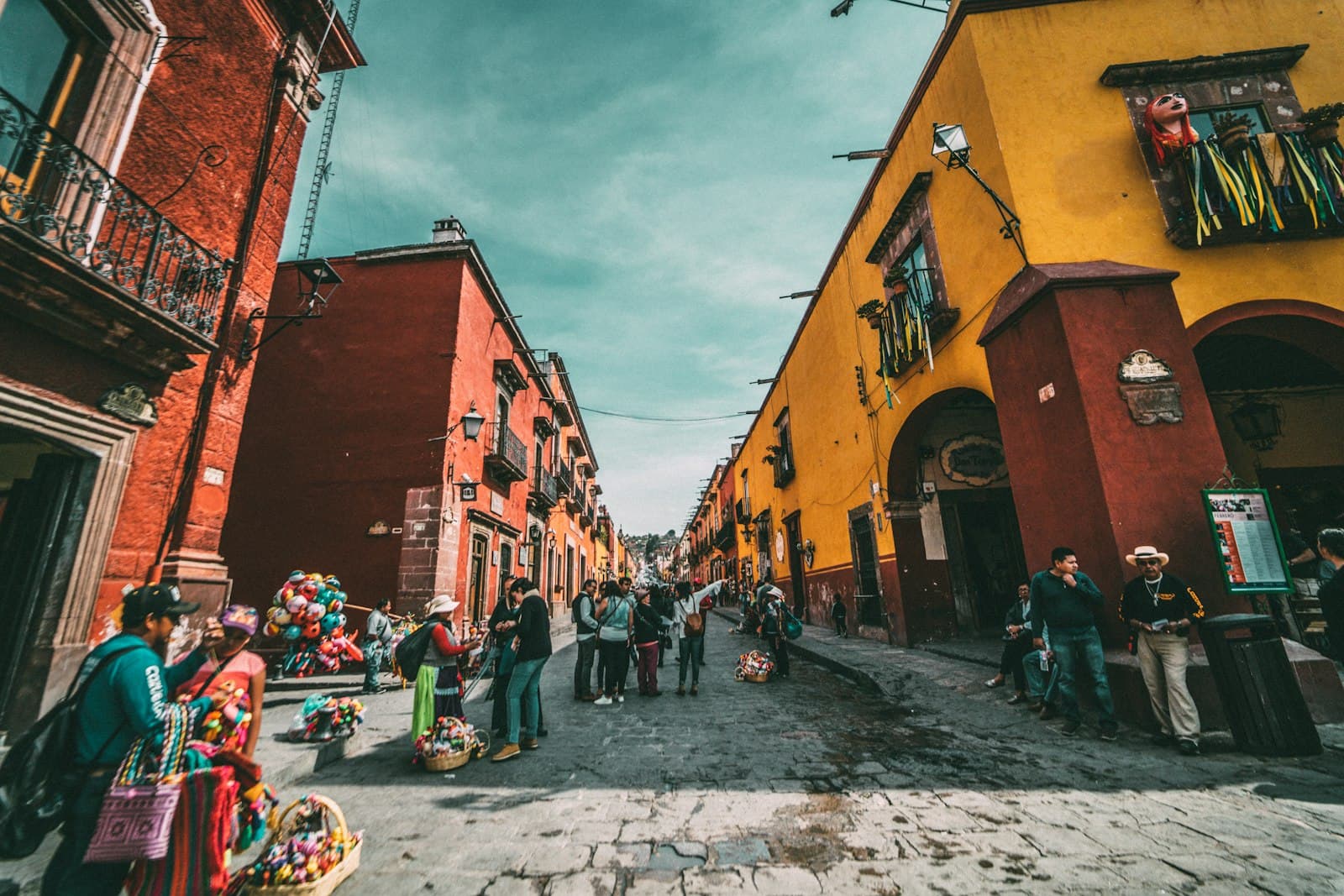 Photo: Jezael Melgoza / Unsplash
Visite audio autoguidée de Jerez de García Salinas — parcours GPS à pied, lecture hors ligne, narration en 32 langues.
“Où l'élégance coloniale danse au rythme du tamborazo.”
Pas les cartes postales. Les histoires que même les habitants ignorent — soufflées à l'oreille, là où elles se sont passées.
Cette place centrale animée recèle un secret de son passé, bien avant de devenir un lieu de parties de dominos et de fanfares.
Observez les arches du Portal Humboldt, et vous remarquerez une conversation architecturale entre deux cultures distinctes.
Le bâtiment du gouvernement de la ville, un grand édifice baroque, contient un détail qui honore une figure pivot de l'histoire de Jerez.
Découvrez tous les secrets de Jerez de García Salinas
Chaque adresse, chaque révélation en entier — dans ton oreille, là où elle s'est passée.
Tu choisis tes lieux. Tu marches. La voix te révèle ce que les autres ignorent.
Votre visite audioguidée de Jerez de García Salinas vous attend — choisissez vos lieux, votre langue, et lancez-vous dès votre arrivée.
AcheterLume intègre un guide en réalité augmentée. Levez votre téléphone : sa caméra montre la rue devant vous, avec une flèche lumineuse posée sur l'image réelle qui pointe toujours vers votre prochain arrêt — aucune carte à déchiffrer, aucun mauvais virage. Comme tout dans Lume, ça fonctionne entièrement hors-ligne.
Jerez de García Salinas, souvent simplement appelée Jerez, est un Pueblo Mágico dans l'état mexicain de Zacatecas. Elle est connue pour son architecture coloniale bien préservée, ses traditions durables et son patrimoine musical singulier. Située dans une vallée fertile entourée de vergers et de forêts, la ville offre une retraite calme avec une atmosphère mexicaine distinctement authentique.
Les rues pavées invitent à une exploration tranquille, menant à des places historiques et des bâtiments qui racontent des histoires de siècles passés. De son kiosque d'influence mauresque sur la place principale aux façades complexes de ses églises, Jerez offre un délice visuel pour ceux qui apprécient le caractère historique. C'est un endroit où le rythme de la vie quotidienne est fréquemment accompagné par les sons entraînants du tamborazo, un genre musical né ici même.
## Des terres Chichimèques à l'avant-poste colonial L'histoire de Jerez remonte plus loin que sa fondation officielle. Avant l'arrivée des Espagnols, le territoire était habité par divers peuples Chichimèques, un terme que les Mexicas (Aztèques) utilisaient pour désigner des groupes semi-nomades. Ces Chichimèques se sont avérés être de redoutables adversaires à la colonisation espagnole.
La ville elle-même a été officiellement établie le 20 janvier 1570 par le Capitaine Don Pedro Carrillo Dávila, bien que certains récits suggèrent une création antérieure en 1536 pour protéger la route entre Guadalajara et Zacatecas des incursions indigènes. Les fondateurs, originaires de Jerez de la Frontera, en Espagne, ont nommé la nouvelle colonie d'après leur ville natale. Le nom 'Jerez' lui-même a des origines arabes, 'scherich', signifiant 'beaucoup de produits', une description appropriée pour la région fertile de Zacatecas.
## Croissance, Révolution et Réforme En 1898, Jerez était un centre animé avec des compagnies minières, des imprimeries et même des fabricants de calèches. La ville a joué un rôle dans la guerre d'indépendance mexicaine, les soldats espagnols l'occupant en 1811 et exécutant ceux soupçonnés d'aider les rebelles, ce qui a à son tour solidifié le soutien de la ville au mouvement d'indépendance. Sa reprise après la Révolution a été lente, encore plus affectée par la guerre des Cristeros, un conflit qui a vu une bataille livrée près de la communauté de Santa Fe, aboutissant à une victoire des Cristeros.
En 1952, la ville a été officiellement renommée Jerez de García Salinas, en l'honneur de Francisco García Salinas, un important réformateur et gouverneur de Zacatecas du XIXe siècle. García Salinas était un politicien visionnaire qui, entre autres réalisations, a organisé une force de police pour combattre le banditisme, a rouvert des mines d'argent abandonnées et a introduit des maîtres artisans pour développer une industrie textile. Son héritage est profondément lié au tissu de Jerez, et son portrait est accroché au Palacio Municipal.
Commencez votre exploration au Jardín Rafael Páez, la place centrale de la ville, dotée d'un kiosque distinctif de style mauresque et entourée d'une clôture en fer ornée. Le dimanche, vous pourriez observer les habitants jouer aux dominos ou profiter des sons animés de la musique tamborazo.
À côté de la place, découvrez le Palacio Municipal, une ancienne demeure de deux étages avec une façade baroque en grès et une cour centrale. À proximité, le Portal Humboldt présente un mélange captivant de styles architecturaux roman et arabe dans ses arches. Ne manquez pas le Portal Inguanzo, un bâtiment de 1797 qui était autrefois une maison privée et qui abrite maintenant un charmant café et un glacier.
L'architecture religieuse abonde, avec la Parroquia de la Inmaculada Concepción du XVIIIe siècle, dotée d'un extérieur baroque et d'un intérieur néoclassique orné de feuilles d'or. Derrière elle se trouve la Plaza Tacuba, un lieu animé pour les festivals. Le Sanctuaire de Nuestra Señora de la Soledad, construit en 1805, est une autre église importante, réputée s'inspirer de la cathédrale de Saint-Jacques-de-Compostelle.
Pour une dose de culture, visitez l'Edificio de la Torre, aujourd'hui le Centre Culturel de Jerez et la bibliothèque municipale, reconnu pour son mélange de styles roman et mauresque. Le Théâtre Hinojosa, une merveille architecturale de style mauresque construite entre 1876 et 1890, continue d'être utilisé pour des spectacles vivants. Les amateurs de littérature apprécieront le Musée-Maison Ramón López Velarde, la maison d'enfance de l'un des poètes les plus célèbres du Mexique, qui préserve des meubles du XIXe siècle et des objets personnels.
Pour des vues imprenables sur Jerez et ses paysages environnants, montez au Cerro de los Muros. Et pour un aperçu de la vie locale, explorez le Mercado Benito Juárez pour des spécialités régionales et des souvenirs, ou le marché artisanal pour des objets artisanaux uniques comme le piteado (ceintures en cuir brodées).
Les périodes les plus agréables pour visiter Jerez de García Salinas sont le printemps (mars à mai) et l'automne (septembre à novembre), lorsque le temps est agréable et confortable pour les activités de plein air. Les températures pendant ces périodes varient généralement entre 18°C et 27°C, avec moins de précipitations. Mai, en particulier, offre un ciel clair et un temps chaud, idéal pour l'exploration. Si vous êtes intéressé par les festivals locaux, envisagez de planifier votre visite avec la Foire de Printemps (Feria de Primavera), un événement important avec des défilés, de la musique et des danses traditionnelles, ou le 'Samedi de Gloire' pendant la Semaine Sainte, qui présente la charrería, des combats de coqs et une course de taureaux.
Jerez est une ville très agréable à parcourir à pied, surtout son centre historique, qui est principalement plat et organisé en quadrillage. Les taxis sont facilement disponibles dans le centre-ville pour les plus longues distances, et les tarifs peuvent souvent être négociés. L'aéroport principal le plus proche est celui de Zacatecas City (ZCL), à environ 60 km, avec des services de bus et des locations de voitures disponibles pour le trajet vers Jerez. Bien qu'il soit utile de connaître un peu d'espagnol, les habitants sont généralement accueillants et désireux d'aider. La monnaie locale est le peso mexicain (MXN) ; les cartes de crédit sont acceptées dans de nombreux établissements, mais il est conseillé d'avoir de l'argent liquide pour les petits achats et dans les zones rurales. Jerez est généralement considérée comme sûre pour les touristes, mais les précautions habituelles, comme être conscient de son environnement, sont toujours recommandées.
Jerez de García Salinas en coréen, en chinois ou en hébreu — et dans 29 autres langues, chaque étape narrée par une voix native. La plus large gamme de langues de tous les audioguides autoguidés.
Disponible en :