Templo de la Purísima Concepción
This austere 17th-century church, built by Jesuit and Augustinian friars, contains a collection of art far older than its walls suggest.
Full story unlocks in the tour
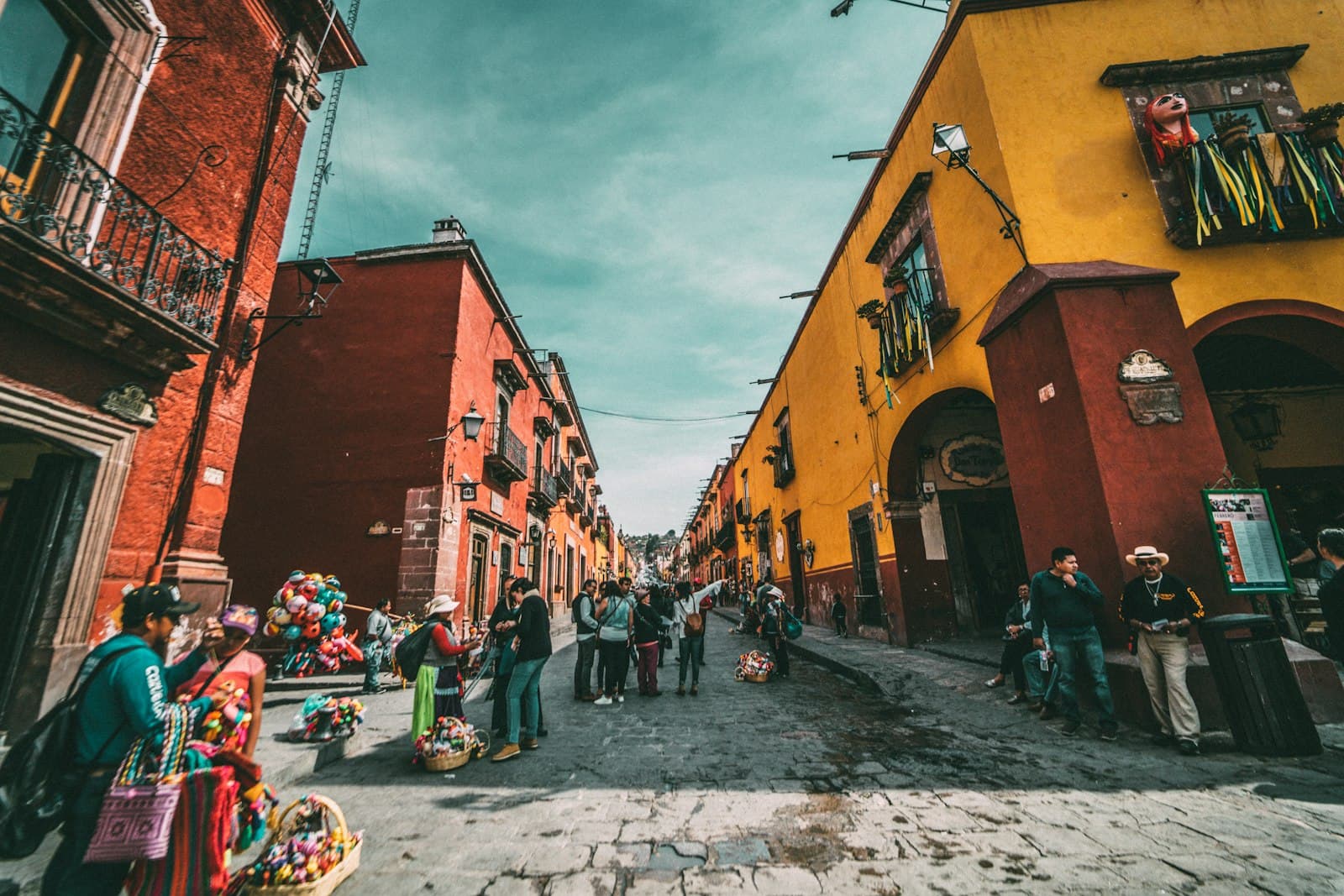 Photo: Jezael Melgoza / Unsplash
Self-guided audio walking tour of Mocorito — GPS route, offline playback, story-driven narration in 32 languages.
“Where ancient whispers meet the savor of chilorio: Mocorito, a Pueblo Mágico with a profound spirit.”
Not the postcards. The stories even locals don't know — whispered in your ear, right where they happened.
This austere 17th-century church, built by Jesuit and Augustinian friars, contains a collection of art far older than its walls suggest.
The town's very name carries a dual meaning, reflecting both its indigenous roots and a more somber interpretation.
The largest bell in the Templo de la Purísima Concepción had a journey to installation as weighty as its own bronze.
Discover every secret of Mocorito
Every address, every reveal in full — in your ear, right where it happened.
You pick your stops. You walk. The voice reveals what the others miss.


Your self-guided audio tour of Mocorito is ready — pick your landmarks, choose your language, and start the moment you arrive.
BuyLume has a built-in augmented-reality guide. Hold your phone up and its camera shows the street ahead of you, with a glowing arrow laid over the real view that always points to your next stop — no map to puzzle over, no wrong turns. Like everything in Lume, it works fully offline.
Mocorito, a designated Pueblo Mágico in the Mexican state of Sinaloa, is a town where colonial grandeur converges with profound local culture. Founded as a Jesuit mission in 1594, it carries an important historical legacy as one of the first Spanish settlements in northwestern Mexico. Strolling through its center, you will encounter eighty historic mansions, picturesque squares, and monuments that speak to a deep past, inviting visitors on a journey through time.
Beyond its architectural beauty, Mocorito is renowned for its deep artistic and literary traditions, once earning it the moniker "The Athens of Sinaloa." It is a place where legends are woven into the fabric of daily life, with tales of wandering souls and shape-shifting animals passed down through generations. The town's lively spirit is also evident in its gastronomy, particularly its claim as the birthplace of chilorio, a beloved regional dish. Mocorito offers a unique blend of indigenous heritage, Sinaloan traditions, and the warm hospitality of its people.
Before the arrival of the Spanish, the Mocorito valley was home to the Cáhita tribes, who established permanent villages along the Mocorito, Sinaloa, and Fuerte rivers. These indigenous communities spoke a language related to Pima and Cora, laying the groundwork for the region's unique cultural tapestry. Spanish exploration began in 1531 with Nuño de Guzmán, who founded San Miguel de Navito, initiating the demarcation of the Culiacán province. A year later, Sebastián de Evora explored the Mocorito valley, naming both the town and the river after himself.
The true colonial foundation of Mocorito is largely attributed to the Jesuit missionaries Juan Bautista Velasco and Hernando de Santarán, who established the Mocorito Mission in 1594. This mission quickly became an important religious center and the first Spanish settlement in Mexico's northwest, imbuing the town with a distinct colonial atmosphere that remains palpable today.
Over the centuries, Mocorito's administrative status evolved. By 1732, the expanding Spanish territory led to the division of land into provinces, with Mocorito initially falling under the Culiacán area. The Constitution of Cádiz in 1813 brought significant change, allowing towns with over 1,000 inhabitants to form their own municipalities. Mocorito officially became a municipality on April 8, 1915, though its geographical size would see some adjustments with the formation of neighboring municipalities.
Mocorito's cultural identity deepened throughout its history, earning it the esteemed title "The Athens of Sinaloa" due to its remarkable contributions to the fine arts. This reputation was fostered by a lively community that inspired numerous literary, artistic, and historical works. The town has been home to notable figures such as muralist Ernesto Ríos and writer Jose Ramon Velazquez, who diligently collected local stories and facts. Even the internationally acclaimed muralist David Alfaro Siqueiros recognized Mocorito as a gathering point for revolutionary forces, highlighting its historical significance beyond local renown. This profound heritage continues to define Mocorito as a place where history and creativity intertwine.
Begin your exploration at the Plazuela Hidalgo, the town's lively heart, adorned with palm and fruit trees. Directly facing it is the Templo de la Purísima Concepción, a striking 16th-century church with a sober, almost militaristic, stone and brick facade. Step inside to discover a treasured collection of fourteen 16th-century engravings depicting the Via Crucis.
Across from the main square, the Municipal Presidency is an elegant building featuring beautiful balconies and an impressive mural titled "Granito de Oro" (Golden Grain) by local artist Ernesto Ríos. Wander through the town's streets to admire the numerous historic mansions, with over 80 colonial-era homes in the center alone.
For a deeper dive into local history, visit the Regional History Museum of Mocorito, offering exhibits focused on the town and its surrounding areas. Do not overlook the Hemiciclo y Mural de Mocorito in Rafael Buelna Square, where a colorful mosaic mural, "Mocorito Ateneo Sinaloense," vividly depicts over 400 years of the town's history and culture. You can also visit the Museo de Los Tigres del Norte, dedicated to the iconic norteño band that originated in the municipality. For a taste of local life, explore the Alameda Park and the Plaza Cívica.
The ideal time to visit Mocorito, and Mexico in general, is during the dry season, which extends from December to April. During these months, you will experience minimal rain and pleasant temperatures. The coolest months are December to February, with average highs around 82°F (28°C). If you prefer warmer weather, May to mid-June and mid-to-late October are excellent for hot-weather activities. The Feast of the Immaculate Conception in December offers lively celebrations with music and fireworks, while Carnival in late February or early March is a spirited event with parades and dancing.
Mocorito is located approximately 121 km (about an hour and 45 minutes) from Culiacán and 120 km (about an hour and a half) from Los Mochis. The nearest commercial airport is in Los Mochis (LMM). Renting a car and driving during daylight hours is recommended for flexibility, though security considerations outside of Los Mochis should be noted. Alternatively, ACN Autobuses offers a daily night bus from Los Mochis to Guamúchil, which is a short 15-minute taxi ride from Mocorito.
Once in Mocorito, the town is small and easily navigable on foot. Taxis are available near the main square (Plazuela), or your hotel can arrange one. Ride-hailing apps generally do not operate in Mocorito. The local currency is the Mexican Peso (MXN). While many establishments may accept cards, it is always wise to carry some cash for smaller purchases and local markets.
Mocorito in Korean, in Chinese or in Hebrew — and 29 more languages, every stop narrated by a native voice. The widest language range of any self-guided audio tour.
Available in: