Basílica de la Inmaculada Concepción
Detrás de la modesta fachada de la Basílica de Chignahuapan se esconde un secreto de escala monumental.
La historia completa se desbloquea en el tour
 Menfis1negro / CC BY 3.0, via Wikimedia Commons
Tour de audio autoguiado de Chignahuapan — ruta GPS a pie, reproducción offline, narración en 32 idiomas.
“Donde el espíritu navideño brilla todo el año y fluyen aguas ancestrales.”
No las postales. Las historias que ni los locales conocen — al oído, justo donde ocurrieron.
Detrás de la modesta fachada de la Basílica de Chignahuapan se esconde un secreto de escala monumental.
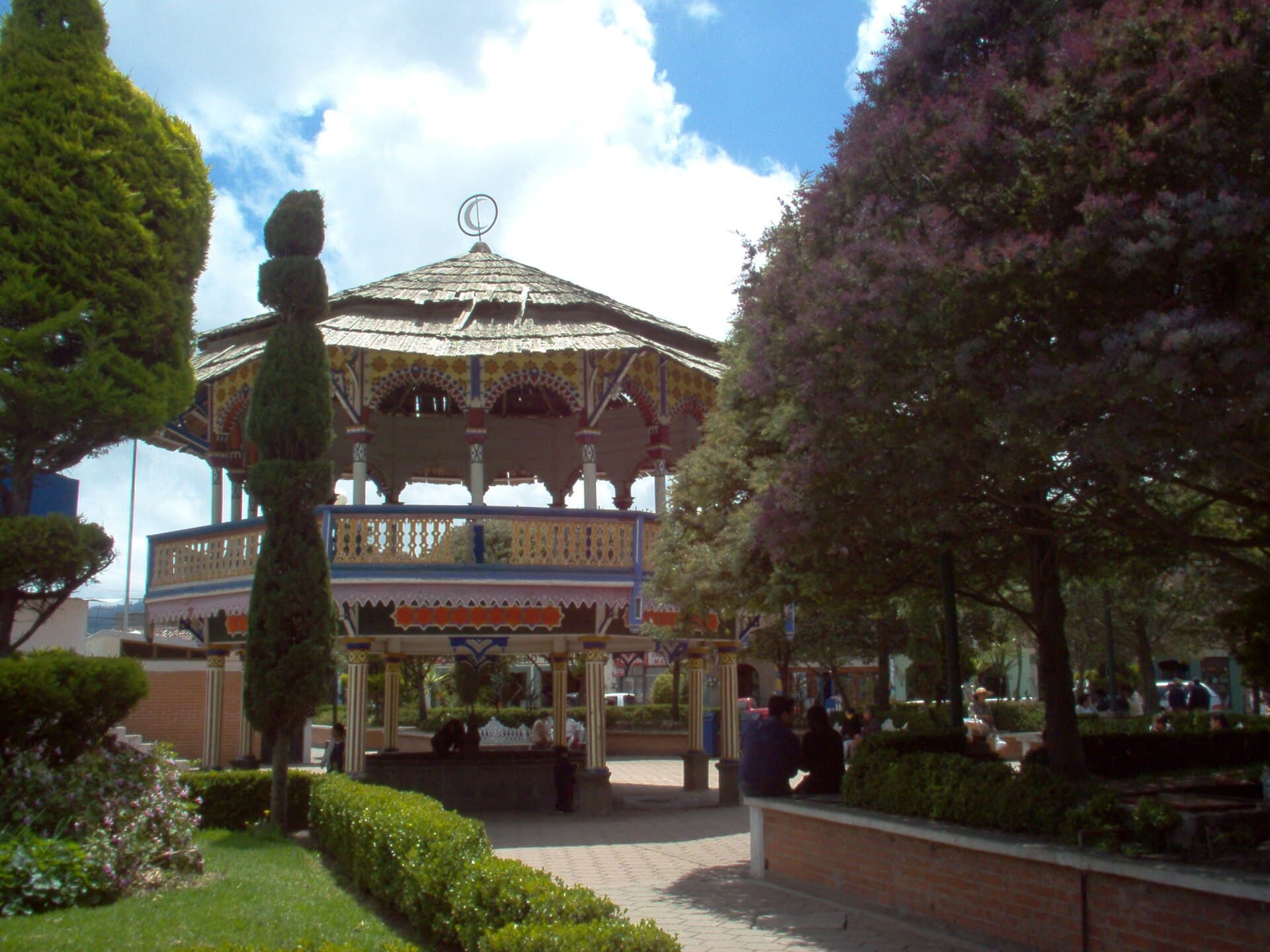
La animada plaza principal alberga una estructura de madera única en México, con un sorprendente propósito pasado.
Chignahuapan es conocida como la 'capital mexicana de las esferas navideñas', pero el origen de esta artesanía aquí es relativamente reciente.
Descubre todos los secretos de Chignahuapan
Cada dirección, cada revelación al completo — a tu oído, justo donde ocurrió.
Eliges tus paradas. Caminas. La voz te revela lo que los demás ignoran.


Tu tour de audioguía por Chignahuapan te espera — elige tus lugares, tu idioma y empieza al llegar.
ComprarLume incluye una guía de realidad aumentada. Levanta el móvil y su cámara muestra la calle que tienes delante, con una flecha luminosa sobre la imagen real que siempre apunta a tu próxima parada — sin mapas que descifrar, sin giros equivocados. Como todo en Lume, funciona completamente sin conexión.
Chignahuapan, un 'Pueblo Mágico' designado en el estado de Puebla, ofrece una cautivadora mezcla de belleza natural, reverencia espiritual y encanto artesanal. Situado en la Sierra Norte, este pueblo es famoso por sus paisajes encantadores, que incluyen densos bosques, cascadas y aguas termales terapéuticas. Su animada plaza central, adornada con un distintivo quiosco de madera, sirve como un bullicioso centro tanto para locales como para visitantes.
Más allá de su pintoresco entorno, Chignahuapan ocupa un lugar único en la cultura mexicana como la 'capital mexicana de las esferas navideñas'. Aquí, hábiles artesanos elaboran millones de adornos de vidrio soplado durante todo el año, transformando la ciudad en un paraíso festivo, especialmente durante la temporada navideña. El corazón espiritual del pueblo late dentro de la Basílica de la Inmaculada Concepción, hogar de una monumental escultura de la Virgen María, una de las más grandes de América Latina.
La historia de Chignahuapan, que significa "sobre las nueve aguas" o "donde abunda el agua" en náhuatl, está profundamente entrelazada con sus abundantes manantiales naturales y sus raíces prehispánicas. El área fue inicialmente habitada por los totonacas, y para el siglo X, coexistían con nahuas, otomíes y tepehuas. En 1527, se fundó el pueblo de Santiago Chiquinahuitle, o "nueve pozos de agua", marcando la llegada de los misioneros y el comienzo de su capítulo colonial.
Durante la época colonial, Chignahuapan se desarrolló, con hitos arquitectónicos como la Iglesia del Señor Santiago Apóstol del siglo XVI arraigándose en el centro del pueblo. La Plaza de la Constitución central del pueblo, o zócalo, se convirtió en un punto focal, presentando finalmente el distintivo Kiosco Mudéjar, una estructura completamente de madera construida en 1871, que muestra un delicado arte mudéjar. Este quiosco es notable por su construcción única y su uso histórico por los músicos del pueblo debido a su excelente acústica.
La identidad moderna de Chignahuapan comenzó a tomar forma significativamente a mediados del siglo XX. En 1944, se estableció el balneario de Aguas Termales de Chignahuapan, aprovechando las aguas termales terapéuticas de la zona. Un momento crucial para el paisaje espiritual del pueblo fue el inicio de la Basílica de la Inmaculada Concepción en 1960. Esta monumental empresa vio la construcción de una iglesia que alberga la escultura de la Virgen María de interior más grande de América Latina, tallada en madera de cedro por el artista local José Luis Silva. El arte de elaborar adornos navideños de vidrio soplado, que ahora define a Chignahuapan como la "capital mexicana de las esferas navideñas", fue introducido en 1966 por Rafael Méndez Nuñez. Chignahuapan fue oficialmente reconocido como 'Pueblo Mágico' por la Secretaría de Turismo de México en 2012, un testimonio de sus tradiciones culturales únicas, belleza natural y significado histórico.
Chignahuapan ofrece una deliciosa variedad de lugares de interés, mezclando la grandeza espiritual con la artesanía local y las maravillas naturales. Comience su exploración en la Basílica de la Inmaculada Concepción, una maravilla arquitectónica que alberga la monumental escultura de madera de cedro de 12 metros (40 pies) de la Virgen María, la escultura religiosa de interior más grande de América Latina.
Luego, diríjase a la Plaza de la Constitución, la animada plaza principal del pueblo. Aquí, encontrará el singular Kiosco Mudéjar, un quiosco completamente de madera construido en 1871, conocido por su intrincado diseño y sus colores brillantes. Al otro lado de la plaza se encuentra la Parroquia de Santiago Apóstol, una iglesia del siglo XVI con una fachada de colores vivos.
Ninguna visita a Chignahuapan está completa sin experimentar su corazón artesanal. Explore uno de los muchos talleres y fábricas de adornos navideños, como Esferas Campanita o El Castillo de la Esfera, donde podrá presenciar el intrincado proceso de creación de adornos de vidrio soplado a mano y comprar recuerdos únicos.
Para una dosis de naturaleza y relajación, visite la Laguna de Chignahuapan. Este tranquilo lago, alimentado por nueve manantiales, ofrece oportunidades para paseos en bote y pesca recreativa, y es uno de los pocos hábitats naturales para el ajolote. A poca distancia en coche se encuentran las Aguas Termales de Chignahuapan, un complejo de aguas termales ricas en azufre conocidas por sus propiedades terapéuticas, que ofrecen varias piscinas para una experiencia rejuvenecedora.
Considere tomar el Axolot-Bus, un recorrido en autobús de dos pisos que ofrece una visión general de las principales atracciones del pueblo y lo lleva a sitios clave como las fábricas de adornos y el lago.
El mejor momento para visitar Chignahuapan es durante la estación seca, de noviembre a abril, cuando el clima es agradable con temperaturas promedio que oscilan entre 18°C y 23°C (64°F y 73°F). Marzo y abril ofrecen los cielos más despejados y la mínima niebla. Si desea experimentar el pueblo en su momento más festivo, visite en diciembre para la temporada navideña, cuando el pueblo está adornado con luces y decoraciones, y se celebra la Feria Nacional del Árbol y la Esfera. Otro momento animado es finales de octubre a principios de noviembre para el Festival de la Luz y la Vida, una celebración centrada en el Día de Muertos en la Laguna de Chignahuapan. Esté preparado para noches más frescas durante el final del otoño y el invierno.
Chignahuapan es accesible desde la Ciudad de México en un viaje de 2.5 a 3 horas en coche o un viaje en autobús de 3 a 4 horas desde la estación de autobuses TAPO. Desde la Ciudad de Puebla, los autobuses de la terminal CAPU tardan aproximadamente 2 horas. Una vez en Chignahuapan, el centro de la ciudad es transitable a pie con calles empedradas, por lo que se recomiendan zapatos cómodos. Los taxis, identificables por sus puertas azul celeste y amarillas, están fácilmente disponibles para destinos fuera del área inmediata del centro. El Axolot-Bus ofrece un recorrido guiado conveniente y asequible por las principales atracciones.
Aunque algunas personas en el turismo pueden hablar inglés, conocer frases básicas en español es útil. Es aconsejable beber agua embotellada para evitar posibles problemas estomacales. México utiliza tomas de corriente tipo A o tipo B, así que traiga el adaptador de corriente adecuado. Para su tranquilidad, considere un seguro de viaje.
Chignahuapan en coreano, en chino o en hebreo — y 29 idiomas más, cada parada narrada por una voz nativa. La mayor variedad de idiomas de cualquier audioguía autoguiada.
Disponible en: