Ex-Convento de San Juan Bautista
Beneath the floor of Tlayacapan's primary monastery church, an unexpected discovery emerged during restoration.
Full story unlocks in the tour
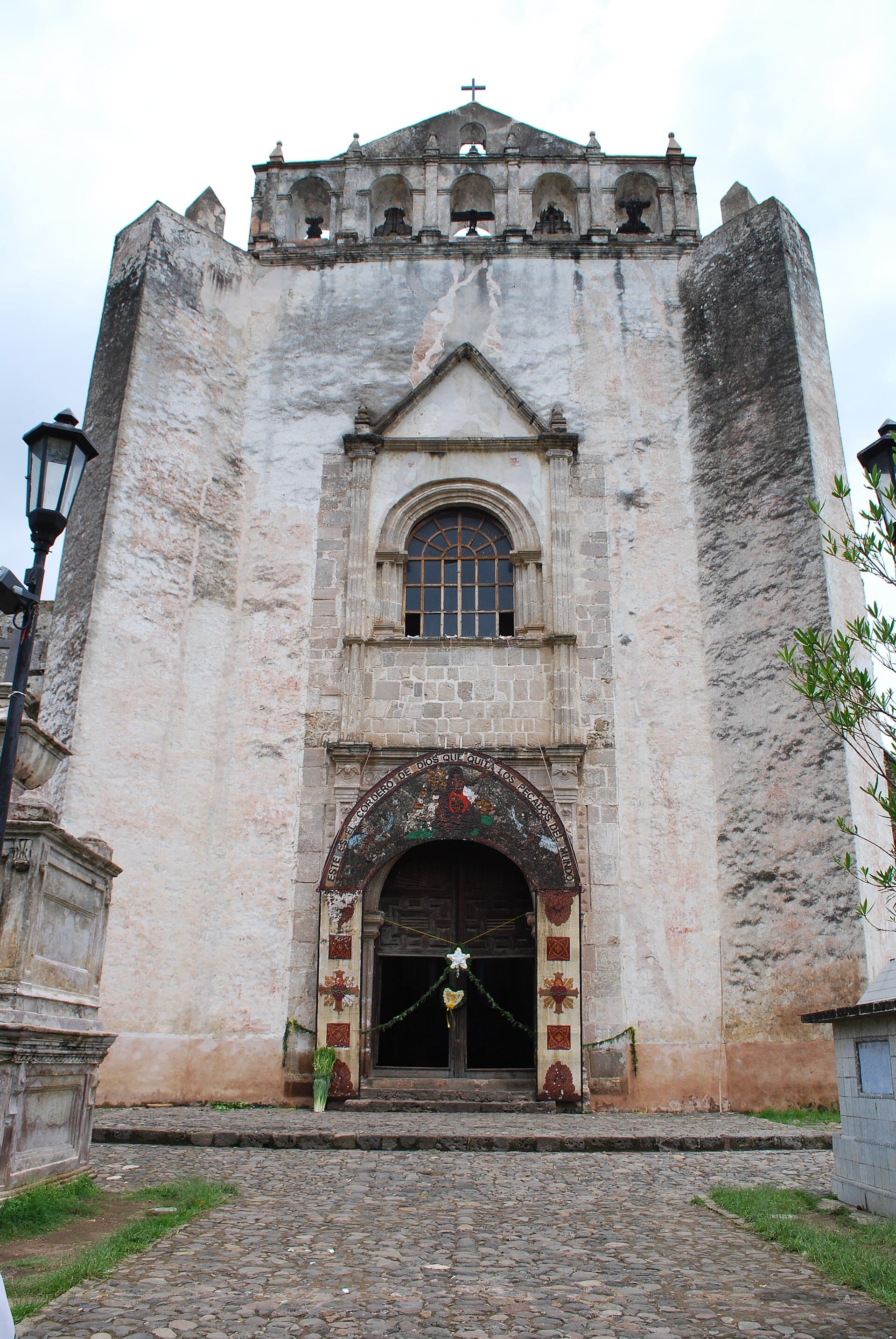 AlejandroLinaresGarcia / CC BY-SA 4.0, via Wikimedia Commons
Self-guided audio walking tour of Tlayacapan — GPS route, offline playback, story-driven narration in 32 languages.
“Where ancient traditions interlace with echoes of the colonial era.”
Not the postcards. The stories even locals don't know — whispered in your ear, right where they happened.
Beneath the floor of Tlayacapan's primary monastery church, an unexpected discovery emerged during restoration.
The spirited Chinelos dance, a hallmark of Mexican Carnival, has a playful, defiant origin story rooted directly in Tlayacapan.
This colonial edifice, once a candle-making establishment, played a significant, if fleeting, role in the Mexican Revolution.
Discover every secret of Tlayacapan
Every address, every reveal in full — in your ear, right where it happened.
You pick your stops. You walk. The voice reveals what the others miss.


Your self-guided audio tour of Tlayacapan is ready — pick your landmarks, choose your language, and start the moment you arrive.
BuyLume has a built-in augmented-reality guide. Hold your phone up and its camera shows the street ahead of you, with a glowing arrow laid over the real view that always points to your next stop — no map to puzzle over, no wrong turns. Like everything in Lume, it works fully offline.
Tlayacapan, a designated Pueblo Mágico in the state of Morelos, extends an inviting journey into Mexico's past and present. Situated merely 1.5 hours south of Mexico City, this rural town maintains a way of life largely unaltered through the 20th century, with many residents still relying on agriculture. Its appeal resides in its venerable mansions, houses crowned with red tile roofs, and streets paved with stones, all intersected by numerous ravines and stone bridges.
At the core of Tlayacapan's cultural identity are two deeply rooted traditions: its status as the birthplace of the spirited Chinelos dance and its role as home to the nationally recognized Banda Tlayacapan, considered Mexico's oldest 'Banda' group. The town's principal landmark, the soaring Ex-Convento de San Juan Bautista, a UNESCO World Heritage Site, stands as a testament to its colonial history, while 26 dispersed chapels unveil layers of spiritual conquest built upon ancient pre-Hispanic sites.
Beyond its historical and cultural treasures, Tlayacapan is set within a landscape of verdant mountains and poetic desert plains, offering a serene escape. It is a place where one can stroll charming streets, explore lively artisan markets, and savor authentic local cuisine, all while embracing a slower, more traditional rhythm of life.
The story of Tlayacapan extends back to the Pre-Hispanic period, with the earliest known culture in the area being the Olmec, evidenced by archaeological remnants and clay figures. Around 1400 CE, Tlayacapan was already documented as a significant commercial center, later dominated by the Xochimilcas until the arrival of the Spanish. The town's name itself, derived from Nahuatl, signifies 'On the tip of the earth' or 'Place of the limits or boundaries,' hinting at its ancient importance.
In 1521, the Spanish first encountered the natives of Tlayacapan, engaging in battle on the hill called Ziualopapalozink, or El Cerro del Sombrero. Tlayacapan was not fully brought under Cortés's military control until 1539. The 'spiritual conquest' commenced in the 1530s with the Augustinians constructing the Ex-Convento de San Juan Bautista, alongside 26 chapels strategically erected over older pre-Hispanic ritual sites throughout the town. This monastery complex, an amalgamation of Roman, Medieval, Plateresque, Gothic, and Moorish architectural styles, is now a UNESCO World Heritage Site.
The 19th century brought considerable changes, with indigenous populations losing much of their land to haciendas. This period also marked the emergence of the iconic Chinelos dance in Tlayacapan. Around the 1800s, indigenous and mixed-race laborers, often excluded from Spanish religious festivals, created this satirical dance, donning masks and elaborate costumes to mimic European colonialists. The Chinelos tradition, with its distinctive 'brinco' or jump, became a symbol of cultural resistance and is now celebrated throughout Morelos.
Tlayacapan also played a role in the Mexican Revolution. The Liberation Army of the South, led by Emiliano Zapata, was stationed here for a time, and Zapata's first documented combat occurred in nearby Tlayecac in 1911. The historic La Cerería building, once a candle shop, served as a barracks for Zapata's troops. Despite the upheavals of history, Tlayacapan has largely retained its rural character, with agriculture remaining a primary livelihood for many. The town's cultural heritage is also preserved through its renowned Banda Tlayacapan, established in 1870, and its flourishing pottery tradition, which employs unique ancient techniques.
Tlayacapan presents a captivating fusion of history, culture, and natural splendor. Your exploration should commence at the Ex-Convento de San Juan Bautista, a grand 16th-century Augustinian monastery and a UNESCO World Heritage Site. Admire its colonial architecture, intricate murals, and the distinctive museum within, which displays remarkably preserved mummified remains unearthed beneath the church floor.
Beyond the main monastery, seek out the 26 dispersed chapels, each constructed on a pre-Hispanic site, offering a glimpse into the spiritual blending of the colonial era. Eighteen of these chapels remain in use and are gradually undergoing restoration. Do not overlook the Capilla de la Exaltación, home to a miraculous Black Christ figure.
Wander through the town's charming stone-paved streets, appreciating the venerable mansions and red-tiled roofs. Immerse yourself in the local culture by visiting the Museo del Alfarero (Potters' Museum) in the Capilla de la Natividad, celebrating Tlayacapan's ancient pottery tradition. The La Cerería (The Wax Shop), a colonial building that once served as Zapata's barracks, now functions as a museum showcasing the municipality's history and traditions. For a deeper dive into the region's ancient past, consider a hike to the Tlatoani archaeological corridor and its cave paintings.
Experience the lively local life at the artisan markets, where you can find unique handicrafts, including pottery, engravings, wood carvings, and items related to the Chinelo costumes. Listen for the sounds of the Banda Tlayacapan, Mexico's oldest 'Banda' group, frequently performing at local events.
The ideal time to experience Tlayacapan for general outdoor tourist activities extends from late February to mid-May, with a peak in the third week of April. During these months, the weather is agreeably warm, with clear, rainless days and perceived temperatures between 65°F and 80°F. March is particularly bright, averaging 8.8 hours of sunshine daily. The dry season, from December to April, generally offers warm and dry conditions across Mexico. Conversely, the wet season spans from June to October, with September being the cloudiest and wettest month. If you aspire to witness the spirited Chinelos dance, Carnival, which occurs just before Lent, presents an opportune time.
Tlayacapan is situated in the northeast part of Morelos state, approximately 60 km east of Cuernavaca and about 1.5 hours south of Mexico City. To reach Tlayacapan from Mexico City, you can take a bus from the Taxqueña bus terminal (Terminal Central Del Sur). TER (Transportes Estrella Roja) buses depart hourly for the approximately 2.5-hour journey. From Cuernavaca, TER buses leave every 30-40 minutes, with a travel time of about 2 hours.
Once in Tlayacapan, the town is compact and best explored on foot. While it offers a tranquil atmosphere, it is advisable to be mindful of local customs and help maintain the town's cleanliness. Tlayacapan is known for its local cuisine, including red pipián, green pipián, mole de fiesta, and bean and salt tamales. The town also provides a selection of hotels, making it a viable weekend escape from Mexico City.
Tlayacapan in Korean, in Chinese or in Hebrew — and 29 more languages, every stop narrated by a native voice. The widest language range of any self-guided audio tour.
Available in: