Basilica Lateranense de Nuestra Señora de la Asunción
Observe closely the Virgin Mary depicted on the façade of Jala's historic Convent of Limpia y Purísima Concepción de María.
Full story unlocks in the tour
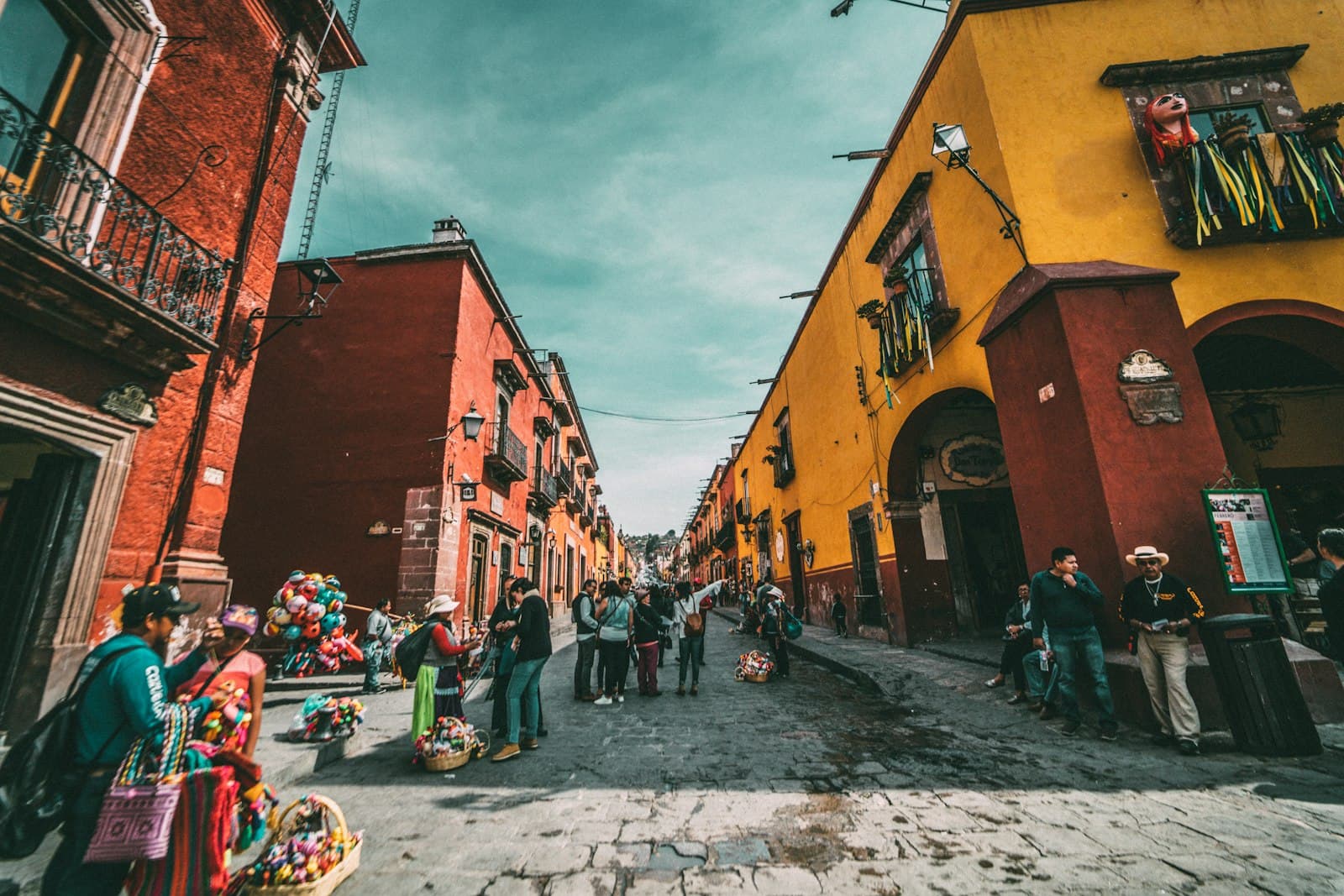 Photo: Jezael Melgoza / Unsplash
Self-guided audio walking tour of Jala — GPS route, offline playback, story-driven narration in 32 languages.
“Where colossal corn stalks touch the sky and ancient legends linger.”
Not the postcards. The stories even locals don't know — whispered in your ear, right where they happened.
Observe closely the Virgin Mary depicted on the façade of Jala's historic Convent of Limpia y Purísima Concepción de María.
Beneath the colonial streets of Jala lie subterranean passages connecting historic mansions.
Jala is renowned for its corn, but its sheer size might astonish you.
Discover every secret of Jala
Every address, every reveal in full — in your ear, right where it happened.
You pick your stops. You walk. The voice reveals what the others miss.


Your self-guided audio tour of Jala is ready — pick your landmarks, choose your language, and start the moment you arrive.
BuyLume has a built-in augmented-reality guide. Hold your phone up and its camera shows the street ahead of you, with a glowing arrow laid over the real view that always points to your next stop — no map to puzzle over, no wrong turns. Like everything in Lume, it works fully offline.
Jala, a designated Pueblo Mágico in the heart of Nayarit, offers a journey back in time, where thoroughfares wind past vividly colored colonial mansions and the imposing silhouette of an active volcano looms in the distance. This appealing town, whose name derives from the Nahuatl words Xali (sand) and Tla (place where it abounds), meaning "place where sand abounds," stands as a testament to Mexico's profound pre-Hispanic and colonial heritage.
Beyond its architectural beauty, Jala is known for its agricultural marvel: the world's largest corn. The town's distinctive volcanic soil and deep-rooted traditions have fostered a special landrace of corn that produces colossal ears, celebrated annually in a lively festival. A visit here promises an authentic Mexican experience, blending history, nature, and captivating local legends.
Jala's story stretches back long before the arrival of the Spanish, rooted in the ancestral lands of the Cora and Tepehuan peoples. Archaeological sites near Jala, such as Los Toriles, reveal a sophisticated pre-Hispanic past, with remnants of ancient cities and distinctive circular pyramids dating back to 300 BC. These sites offer invaluable clues about the social organization and religious beliefs of early Mesoamerican civilizations.
With the arrival of Franciscan missionaries in 1582, Jala transitioned into an important agricultural and religious center along key western trade routes. The Convent of Limpia y Purísima Concepción de María, built in 1582, stands as a significant colonial landmark, its pink façade displaying a unique depiction of the Virgin Mary with indigenous features. The town's colonial architecture, characterized by adobe houses with red tile roofs and vivid facades, reflects this deep historical blend.
Jala officially became a municipality within the state of Nayarit in 1918. In 2012, it earned the prestigious designation of Pueblo Mágico (Magical Town), recognizing its exceptional cultural, historical, and natural heritage. This distinction underscores Jala's commitment to preserving its living traditions, significant architecture, and offering visitors a genuine, immersive experience.
The town's history is also intertwined with the majestic Ceboruco Volcano, an active volcano whose last eruption occurred between 1870 and 1872. The mineral-rich volcanic soil left behind is believed to be a key factor in Jala's agricultural prosperity, particularly in the cultivation of its world-renowned giant corn.
Begin your exploration in Jala's historic center, a lively arrangement of thoroughfares and colorful colonial buildings. The Basilica Lateranense de Nuestra Señora de la Asunción, an impressive Baroque cathedral built in 1856 from local yellow, pink, and green volcanic stone, merits a visit. Its dome features a compelling depiction of the Virgin Mary.
Nearby, discover the Former Convent of Limpia y Purísima Concepción de María, originally constructed in 1582 by the Franciscan Order. Its pink façade is notable for an image of the Virgin Mary with indigenous features and pre-Hispanic clothing. For a deeper dive into local history, visit the Jala Community Museum, housed in a 19th-century mansion, which showcases priceless pre-Columbian artifacts.
Beyond the town, the Ceboruco Volcano offers an adventurous excursion. You can drive part of the way and then hike to its crater to observe fumaroles and enjoy expansive views. For nature lovers, the El Salto Waterfall, located east of Jomulco, provides a refreshing escape with a scenic hike through a verdant valley. Do not miss a short trip to Ixtlán del Río to explore the Los Toriles Ruins, a unique archaeological site with circular pyramids from the ancient Aztlán people.
Jala experiences mild temperatures for most of the year, averaging between 18 and 28 degrees Celsius (64-82°F). The dry season, from November to May, is generally considered the best time to visit for warm-weather activities, with more stable weather and less rainfall. The annual Corn Festival (Feria del Elote) is a highlight, typically held in early August, culminating on August 15th with the Feast of the Assumption of Mary. If some rain is agreeable, the rainy season (June to September) transforms the landscape into a deep green.
Jala is approximately a 2.5 to 3-hour drive from Puerto Vallarta International Airport and about 50 minutes from Tepic, the capital of Nayarit. You can reach Jala via the Tepic-Guadalajara highway or Federal Highway 15. Once in Jala, the best way to explore the town's appealing thoroughfares and historic sites is on foot. Taxis are available for trips to nearby attractions like El Salto Waterfall or Los Toriles Ruins. Accommodations include boutique hotels and guesthouses that reflect the town's colonial character.
Local cuisine is a highlight, with traditional dishes often featuring corn, such as tostadas de pata, enchiladas, and corn cookies. Small craft shops and family-run restaurants offer authentic local flavors and products.
Jala in Korean, in Chinese or in Hebrew — and 29 more languages, every stop narrated by a native voice. The widest language range of any self-guided audio tour.
Available in: